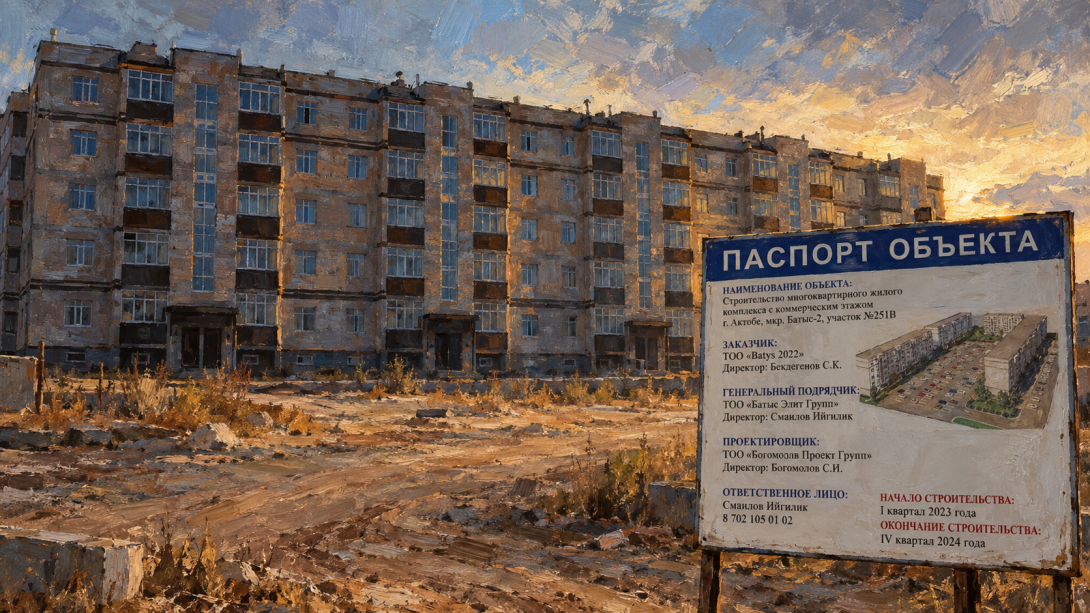
Buyers at the Jibek Joly residential complex in Aktobe have been waiting almost three years for their flats. Under the original agreements, the development was supposed to be handed over at the end of 2023, but construction is still not complete. During this time, the project deadlines have repeatedly changed, the company's management has changed, and state bodies have identified violations in the raising of buyers' money. FBRK looked into why the buyers are still without housing and what is happening with the construction.
This concerns the Jibek Joly residential complex in Aktobe. The construction customer is listed in the documents as Batys 2022 LLP, the general contractor as Batys Elit Group LLP, and the designer as Bogomolov Project Group LLP.
THREE YEARS OF WAITING
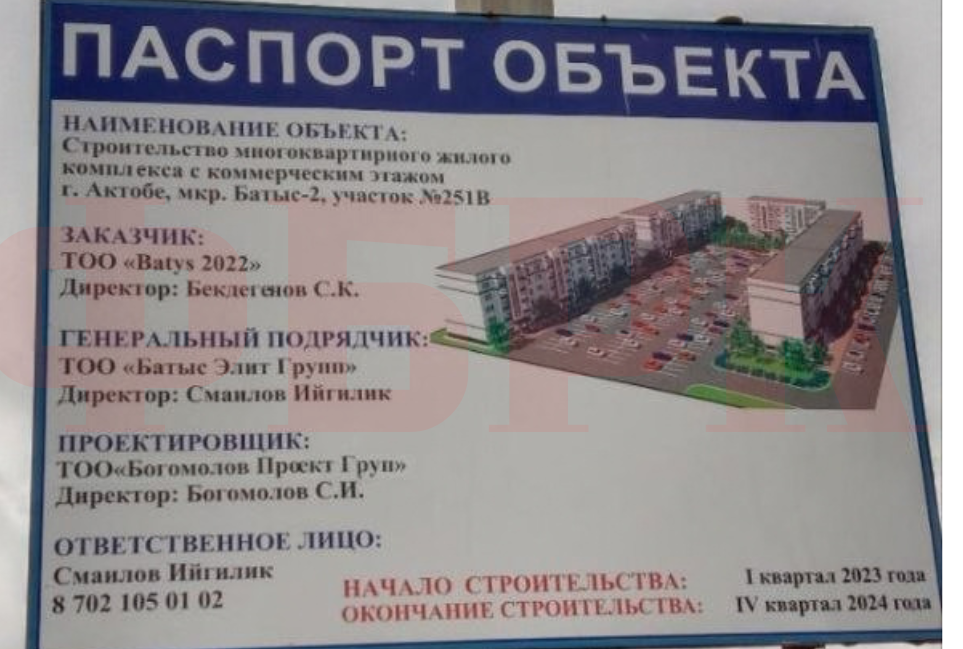
According to the buyers' collective appeal, under the preliminary agreements the development was supposed to be completed and handed over for use by 31 December 2023. This did not happen. Some buyers have continued to rent housing all this time and incur additional costs.
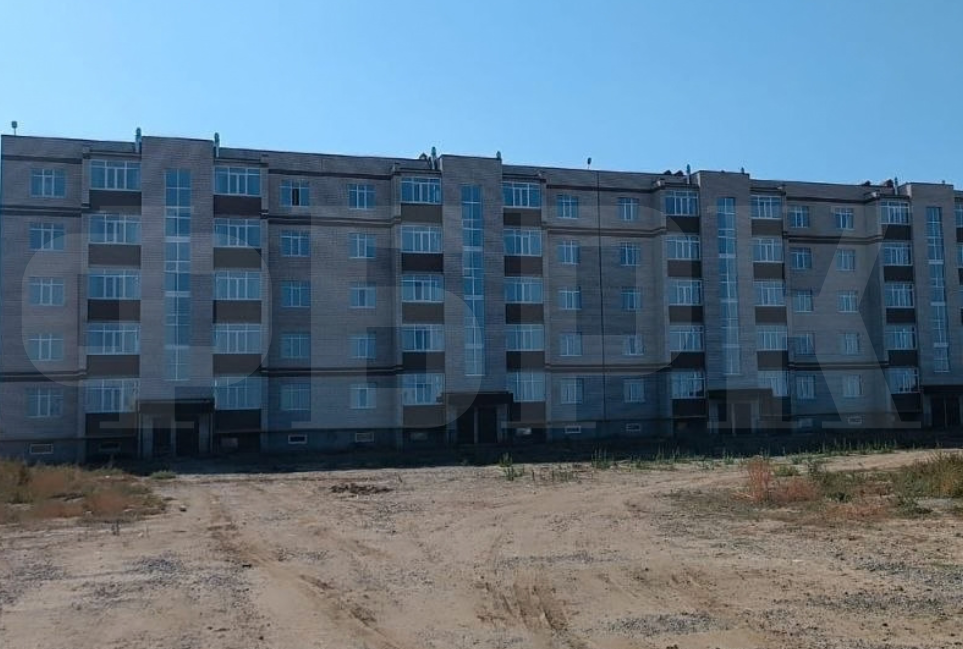
One of them is Zhasulan Abdikalyk. He bought a flat in the first block of the Jibek Joly residential complex. In a conversation with FBRK, the man said that the project provides for four buildings. The first block, according to him, has been built but is not ready for occupancy — there is no gas supply, electricity, sewerage or water, and the internal works have not been completed. The second block is at the foundation stage, and the third and fourth have not yet been built.
"The first block is standing there. I bought a flat there, the first block. I can't get it because there is no gas supply, no electricity supply, no sewerage, no water, and the internal finishes have not been done," Abdikalyk said.
The completion dates for the Jibek Joly residential complex have also changed in open sources. On KN.kz, in July 2024 the completion of the development was stated as the third quarter of that year, then the date shifted to the first quarter of 2025, later to the second, and then to the fourth quarter of 2025. At present, the Jibek Joly residential complex is still listed on the platform as under construction.
This is not an official construction schedule, but the data shows that the publicly stated deadlines for the project have changed several times.
THE COMPANY'S MANAGEMENT HAS CHANGED
Against the backdrop of the protracted construction, changes have also occurred within Batys 2022 LLP. In his appeal, Abdikalyk writes that on 12 May 2026 the director and the membership of the company changed. According to the applicant, buyers were not notified of this in writing.
In earlier documents, the director of Batys 2022 LLP is listed as Sangibay Bekdegenov. The company's head is now listed as Algar Iskakov. According to open data, this information was verified through the electronic government in August 2026. Batys 2022 LLP was registered in March 2022.
Abdikalyk claims that after the changes within the company, buyers were told that there was money to continue construction. However, according to him, there was no noticeable progress at the site. Later, the former head is said to have become involved in the project again.
"When he was handing it over to the new founder, the founder said he had money. From January 2026, he did nothing, he has no money. Then, after we started writing from July, they called in the old founder, the director. And now he is taking it back, the old director," the man said.
The editorial team does not have any documents confirming the reverse change of head. FBRK therefore reports this information as the buyer's position.
CUSTOMER AND GENERAL CONTRACTOR
The general contractor for the Jibek Joly residential complex is listed in the documents as Batys Elit Group LLP. The company was registered in 2010, and its head is listed as Iigilik Smailov. This information is also reflected in the open database.
Batys 2022 LLP and Batys Elit Group LLP are registered at the same address. The coincidence of legal addresses alone does not indicate affiliation or a violation. However, this concerns two companies that act as customer and general contractor in the same construction project.
At the same time, on KN.kz, the developer of the Jibek Joly residential complex is listed as Batys Elit Group LLP.
FROM 2023 TO 2026
The main discrepancy in this story is the dates.
Buyers refer to the preliminary agreements, under which the development was supposed to be completed by 31 December 2023. The Department of State Architectural and Construction Control of Aktobe Region, in turn, is already going by 18 December 2026.
The department explained that this date is stated in the latest valid notification of construction and installation works. Therefore, GASK currently sees no grounds to consider the current construction deadline breached — it has not yet expired.
Thus, the original deadline that buyers relied on and the deadline that construction control is now taking into account differ by almost three years. At the same time, it is unclear from GASK's response how many times the completion of construction was officially postponed, what caused the changes, and how the original obligations to buyers relate to the current deadline.
MONEY WAS RAISED IN BREACH OF REQUIREMENTS
While GASK currently has no complaints about the current construction deadline, questions have already arisen about the procedure for raising buyers' money.
The Municipal State Institution "Centre for Urbanism and Land Monitoring of the City of Aktobe" under the Department of Land Relations, Architecture and Urban Planning of the City of Aktobe has established that Batys 2022 LLP committed actions aimed at raising buyers' money without complying with the requirements of the legislation on shared participation in housing construction.
An administrative protocol was drawn up against the company under Part 2-1 of Article 320 of the Administrative Offences Code of the Republic of Kazakhstan ("Violation of the requirements of the Law of the Republic of Kazakhstan on shared participation in housing construction and the housing legislation of the Republic of Kazakhstan").
At the same time, an administrative protocol does not yet mean that a ruling has already been issued and has entered into force holding the company liable.
HOW MANY PEOPLE INVESTED IN THE PROJECT
The exact number of buyers and the total amount of money raised are unknown from the documents available to the editorial team.
According to Abdikalyk, there are around 80 flats in the first block alone. There are also buyers in the second building, he claims. Moreover, the man states that flats were even offered in the third block, construction of which has not yet begun.
"Two blocks have already been bought. They are even starting to sell the third block, which does not exist at all," he said.
FBRK was unable to confirm the exact number of contracts concluded from the available documents. Without information on the number of buyers and the volume of funds raised, it is impossible to determine the scale of the identified violation and the number of people it could have affected.
BUYERS HAVE GONE TO THE PROSECUTOR GENERAL'S OFFICE
The buyers have sent a collective appeal to the Prosecutor General's Office. They ask for the reasons for the construction delay to be investigated, for a legal assessment to be given of the fulfilment of obligations by the customer and contractor, for a completion date for the development to be determined, and for measures to be taken to commission it.
Abdikalyk also contacted the akimat of Aktobe Region and the prosecutor's office. However, according to the man, after the appeals there was no clarity on the completion of construction.
Shortly before his conversation with FBRK, he again travelled to the Jibek Joly residential complex.
"I was only there yesterday, I spoke to the former director. There is nothing. It is standing just as it was," Abdikalyk said.
The official responses available to the editorial team do not state the current percentage of readiness of each of the four buildings.
WHO WILL COMPENSATE FOR THE YEARS OF WAITING
Buyers are separately concerned about the costs they incur while waiting for their flats. GASK explained that claims for reimbursement of housing rental costs, losses and the fulfilment of contractual obligations relate to civil-law relations and may be resolved, among other ways, through the courts.
Buyers also ask for the financial side of the project to be checked — how much money was raised and whether the company has the money to complete construction. The responses received by the editorial team do not contain the results of such a financial audit. Therefore, claims that the money was stolen, disappeared or misappropriated are not documented.
POSSIBLE CONSEQUENCES
18 December 2026 is when the construction deadline currently taken into account by GASK expires. If the development is not completed by that date, the construction control body will have grounds to assess the situation after the current deadline has expired.
At the same time, possible claims by buyers for compensation for losses and the fulfilment of contractual obligations remain a separate civil-law matter. The administrative proceedings initiated after the identified violations in raising money must also be completed separately.
EDITORIAL OPINION
The problem of the Jibek Joly residential complex goes beyond a single unfinished complex. People invest money in housing at the construction stage, expecting that state control mechanisms should not only respond to violations after complaints, but also prevent situations where a buyer learns of problems only after handing over the money.
In the case of the Jibek Joly residential complex, the question about the system arises precisely for this reason: the violation of requirements in raising funds was identified when the flats had already been sold, the deadlines had passed, and buyers had begun contacting state bodies.
And this forces us to talk not only about the fate of a specific development. How many more construction sites in Kazakhstan are raising citizens' money in breach of the rules, but have not yet come to the attention of the regulatory authorities? And why does thorough control begin only when buyers already have to write appeals and seek inspections?
State control in shared construction makes sense primarily when it prevents a problem rather than recording its consequences. Otherwise, the risk remains with the buyer: a person hands over money today, and the state begins to establish years later whether the developer had the necessary grounds to raise it.


