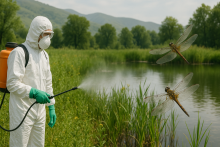
The FBRC editorial team continues its series of articles on insect control in the regions of Kazakhstan. For the fourth consecutive year, we are analysing which preparations local authorities use to treat urban environments for insects and what information about such work is provided to the public. This year, the capital is once again on the agenda.
SCOPE OF THE CAMPAIGN AND DISCREPANCIES IN PUBLISHED DATA
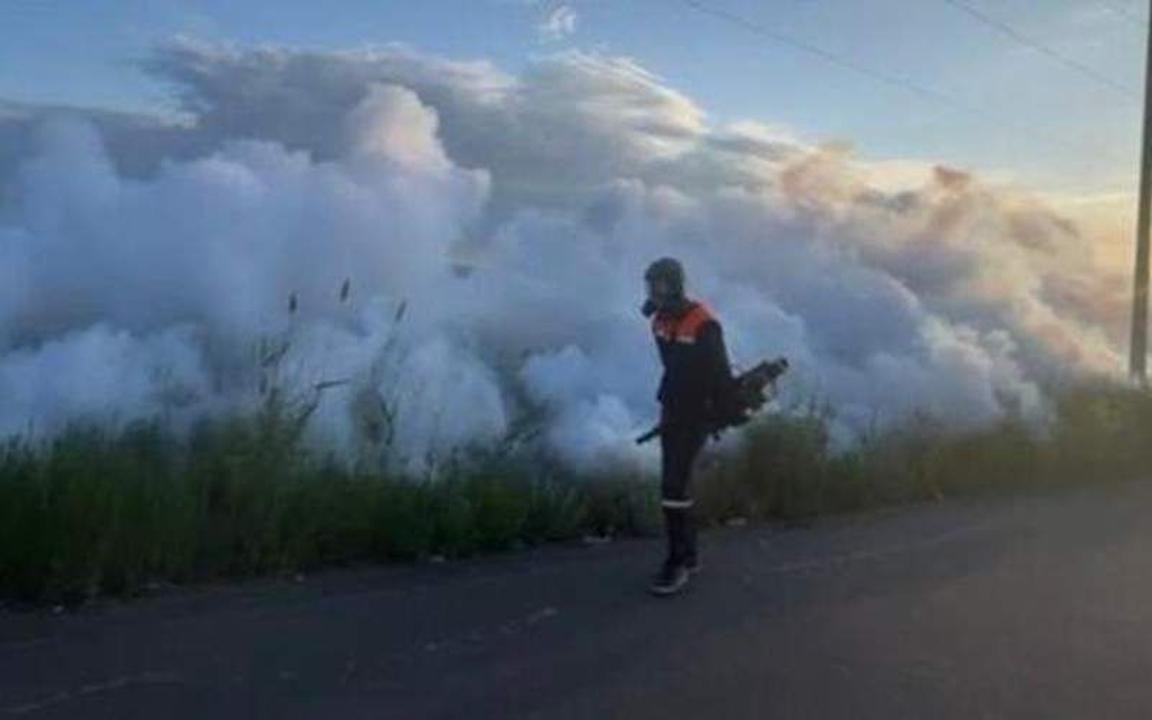
According to the Department of Environmental Protection and Natural Resources of the City of Astana, chemical treatment of green spaces against pests and diseases in 2026 is scheduled to take place from 10 May to 30 September, during the night-time hours of 20:00 to 06:00.
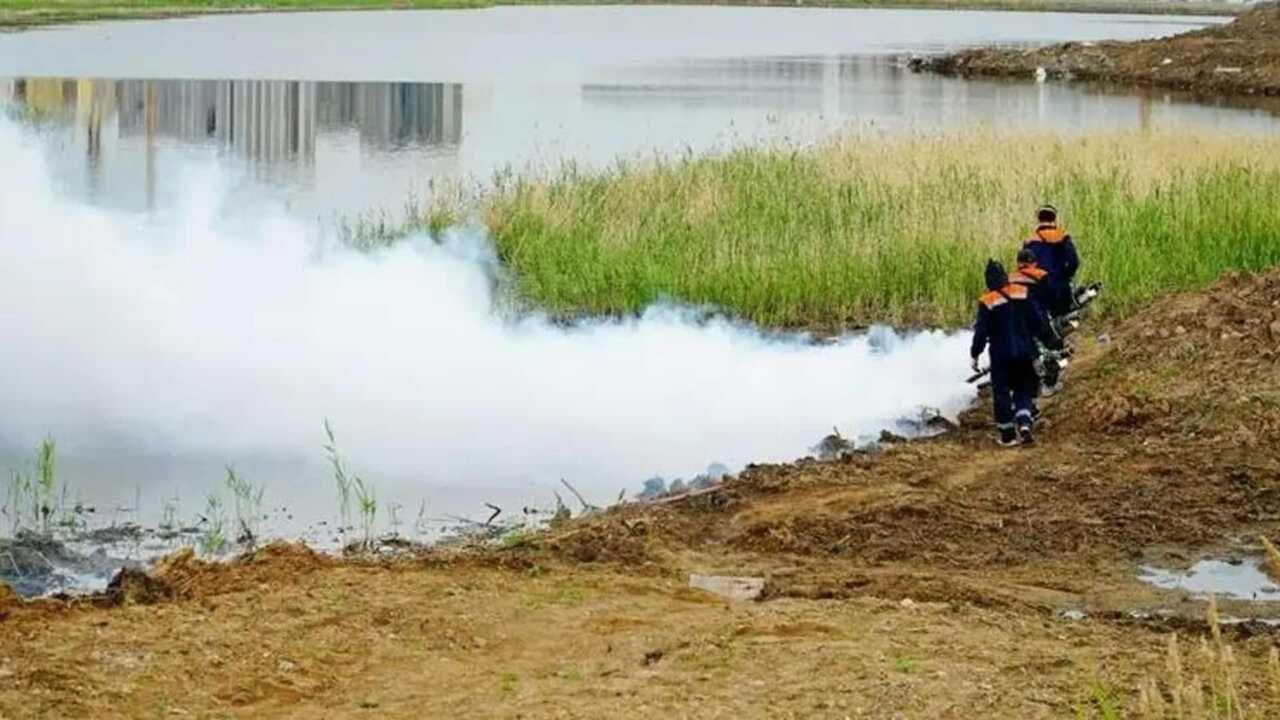
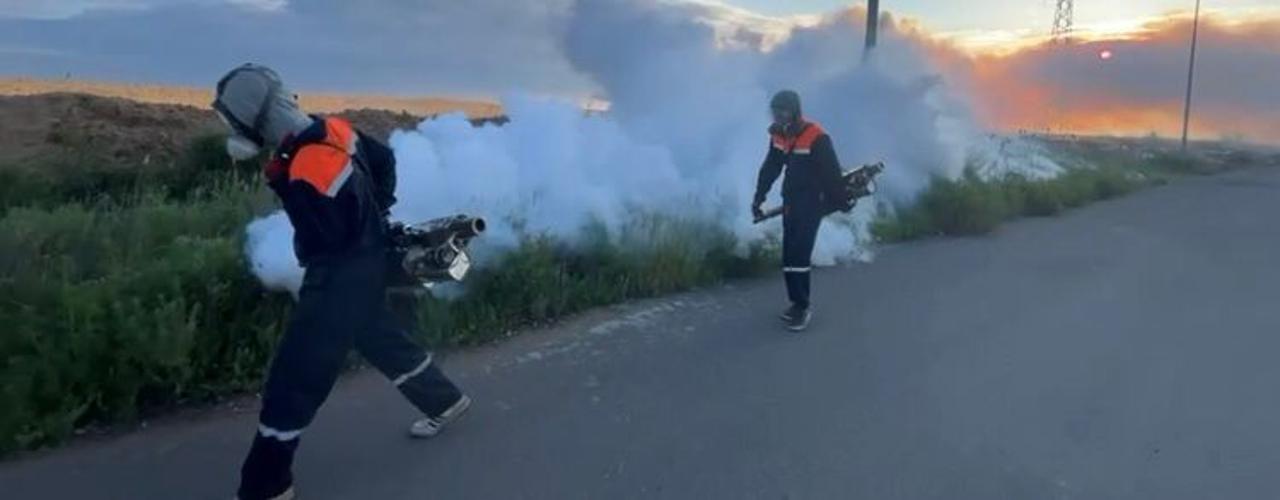
Meanwhile, as early as 24 April, the official website of the Akimat reported that full-scale insect control operations against mosquitoes, midges and other insects were already underway in the city, with the first stage of water body treatment starting in early April. By that time, 8,600 hectares of water bodies where mosquito larvae had been found had been treated. The entire campaign is taking place over six rounds of 20 days each, involving more than 150 pest control operatives, quadcopters, rotary sprayers and specialist equipment.
There are discrepancies in the published data. In the response to the editorial team, the working hours are given as 20:00 to 06:00, whereas the April publication from the Akimat cited a different interval of 21:00 to 04:00. Furthermore, from the overall list of preparations, it is not entirely clear which ones are specifically used for insect control and which are part of a broader treatment programme for green spaces: alongside insecticides, the list includes a rodenticide, a herbicide and fungicides.
WHAT IS INCLUDED IN THE LIST
The list includes the insecticides 'Aktara' and 'Orpheus' (thiamethoxam), 'Decis Expert' (deltamethrin), 'Klord' (imidacloprid), 'Aliot' (malathion), 'Sharpey' (cypermethrin), as well as the rodenticide 'Klerat', the herbicide 'Virtuoso' and three fungicides - 'Previcur Energy', 'Propicon' and 'Triaktiv'. Biological preparations - 'Fitosporin-M' and 'Ekstrasol' - are both based on strains of Bacillus subtilis, which are safe for humans and the environment.
WHAT IS KNOWN ABOUT THE ACTIVE SUBSTANCES
Some of the active substances are not new to the FBRC monitoring.
Thiamethoxam and imidacloprid belong to the neonicotinoid class, whose outdoor use in European Union countries is restricted due to their impact on bees and other pollinators. Both substances are moderately toxic to humans: acute poisoning can cause dizziness, nausea and respiratory difficulties.
Deltamethrin is toxic to bees and can cause acute reactions in humans, including breathing problems. Some specialists consider it an outdated insecticide: many insect species, including mosquitoes, have developed resistance to it.
Malathion is classified as a probable human carcinogen. Its toxicity increases sharply if application and storage rules are violated; it is highly hazardous to bees and toxic to aquatic organisms.
Cypermethrin is toxic to aquatic organisms, bees and animals. It can persist in the environment for up to several weeks.
The Akimat itself advises residents to take precautions: limit visits to treated areas and keep windows closed during the work period.
FOURTH YEAR OF MONITORING
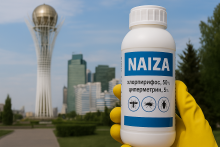
The situation is not new for Astana. In 2023, the capital used both biological and chemical agents, including 'Aktara', 'Engeo' and 'Ultragran'. In 2024, the city once again applied 'Ultragran'. In 2025, the FBRC raised the issue of the composition of the preparation 'Naiza', which was initially not disclosed in open sources - its composition only became known after an additional request from the editorial team.
This year, the Akimat provided the FBRC editorial team with a complete list of the products used. However, questions regarding public information and opportunities for public oversight remain: in its response, the department stated that no proposals for public oversight had yet been received from independent experts, but expressed its readiness to cooperate within the framework of current legislation.