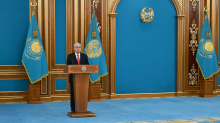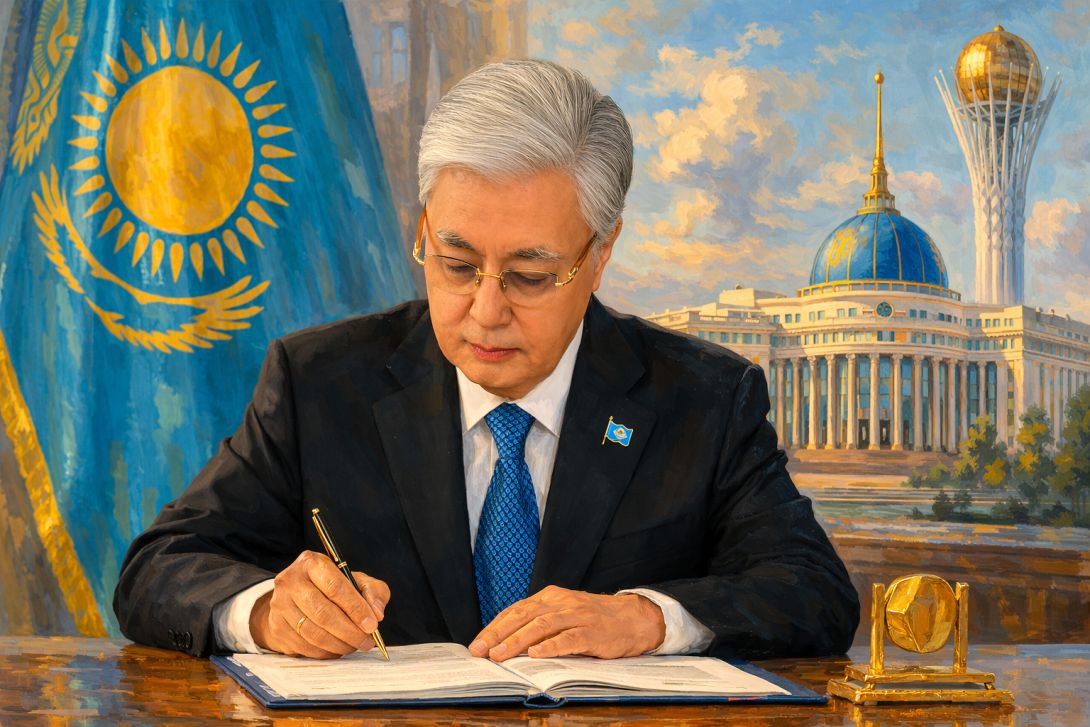
Kassym-Jomart Tokayev has signed the new Constitution of the Republic of Kazakhstan and a decree on its implementation, effectively launching a large-scale reform of the country's legal and political system. The upcoming changes involve synchronising legislative reforms, parliamentary elections, and the renewal of state institutions.
WHICH LAWS MUST BE ADOPTED AFTER THE CONSTITUTION
The Decree signed by the President, "On Measures to Implement the Constitution of the Republic of Kazakhstan, Adopted on 15 March 2026", defines the directions for implementing the provisions of the new Fundamental Law.
In the near future, it is planned to introduce five new constitutional laws to Parliament, which will regulate:
- the status of the President
- the activities of the Kurultai
- the work of the Khalyk Kenesi
- the status of the capital
- the administrative-territorial structure of the country
In addition to this, systematic editing of another eight constitutional laws and more than 60 existing laws, including key codes, will be required.
WHY THE REFORMS ARE BEING SYNCHRONISED WITH PARLIAMENTARY ELECTIONS
According to Kassym-Jomart Tokayev, the legislative process will be synchronised with the upcoming parliamentary elections, which are planned to be held before the opening of the new parliamentary session.
By this time, the legal framework for implementing the new Constitution must be fully established. Completing legislative preparations before the new representative bodies begin their work is seen as an important condition for the legitimacy of the political reform and public trust in its outcomes.
TRANSFORMATION OF THE PUBLIC ADMINISTRATION SYSTEM
The President noted that the country is only at the beginning of a large-scale modernisation process.
The upcoming changes involve not just piecemeal adjustments to laws, but reforming existing institutions and creating new ones. This concerns a deep restructuring of the architecture of public administration in accordance with the principles of the updated Constitution.
As part of the reform, a structural and personnel renewal of state institutions is planned.
HOW THE SYNCHRONISATION OF REFORMS SHOULD ENSURE CONTINUITY OF CHANGE
The linkage of legislative reforms with the upcoming elections means that the future composition of the Kurultai will begin its work already within the framework of the established legal system.
This will allow the new representative bodies to operate under an already created regulatory framework, rather than forming it in parallel with the start of their work.
WHY THE REFORM NEEDS PUBLIC EXPLANATION
The scale of the upcoming changes calls for broad public discussion of the reform. Citizens must understand the logic of the institutional changes and see in them not a formal renewal of the power structure, but real changes in the principles of public administration.
According to the reform's design, the personnel renewal of state institutions is linked to the development of the civil service as a professional system. It is expected that this will create a demand for specialists focused on professionalism, transparency, and accountability.
WHAT THE INSTITUTIONAL GOAL OF THE REFORM MEANS
In his address, Kassym-Jomart Tokayev emphasised that the new constitutional principles must become part of the functioning of the state at all levels — legal, economic, and social.
The materials note that the long-term goal of the reform is to create a system in which state institutions work sustainably and effectively, regardless of specific political figures.