Between the agricultural censuses of 2006–2007 and 2025, the number of personal subsidiary farms in Kazakhstan fell by 31%, while the number of agricultural enterprises more than doubled. At the same time, the FRBK's own survey of farmers and owners of personal subsidiary farms found discrepancies between the stated census procedure and how respondents themselves describe its conduct.
HOW THE NUMBER OF AGRICULTURAL HOLDINGS CHANGED
According to data from the Bureau of National Statistics, in 2025 Kazakhstan had 289,500 agricultural holdings. This is 42% more than following the 2006–2007 census.
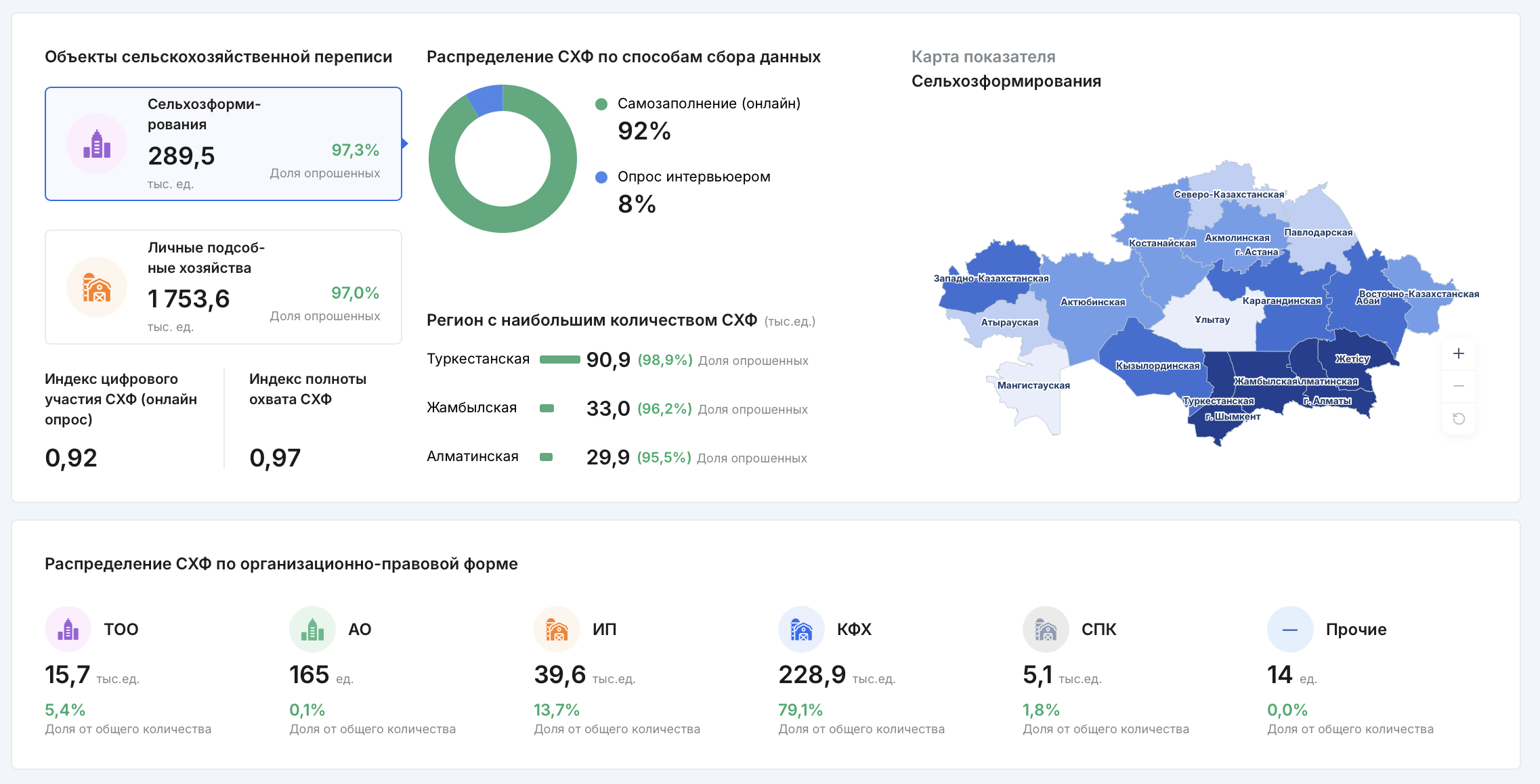
At the same time, the dynamics of individual categories differ markedly. The number of agricultural enterprises increased by 120% — from 9,500 to 20,900 — while peasant and farming holdings together with sole traders rose by 38%, to 268,300.
At the same time, the number of personal subsidiary farms (PSFs) fell from 2.19 million to 1.5 million. The BNS notes a shift in the structure of the agricultural sector towards organised forms of activity.
HOW THE HORSE POPULATION GREW
In livestock farming, the most notable increase was recorded for horses: their population grew by 266%, reaching 4.52 million head. The number of camels rose by 106%, to 285,600, while cattle and sheep with goats each rose by 51%. The poultry population stood at 45.54 million head, an increase of 61%.
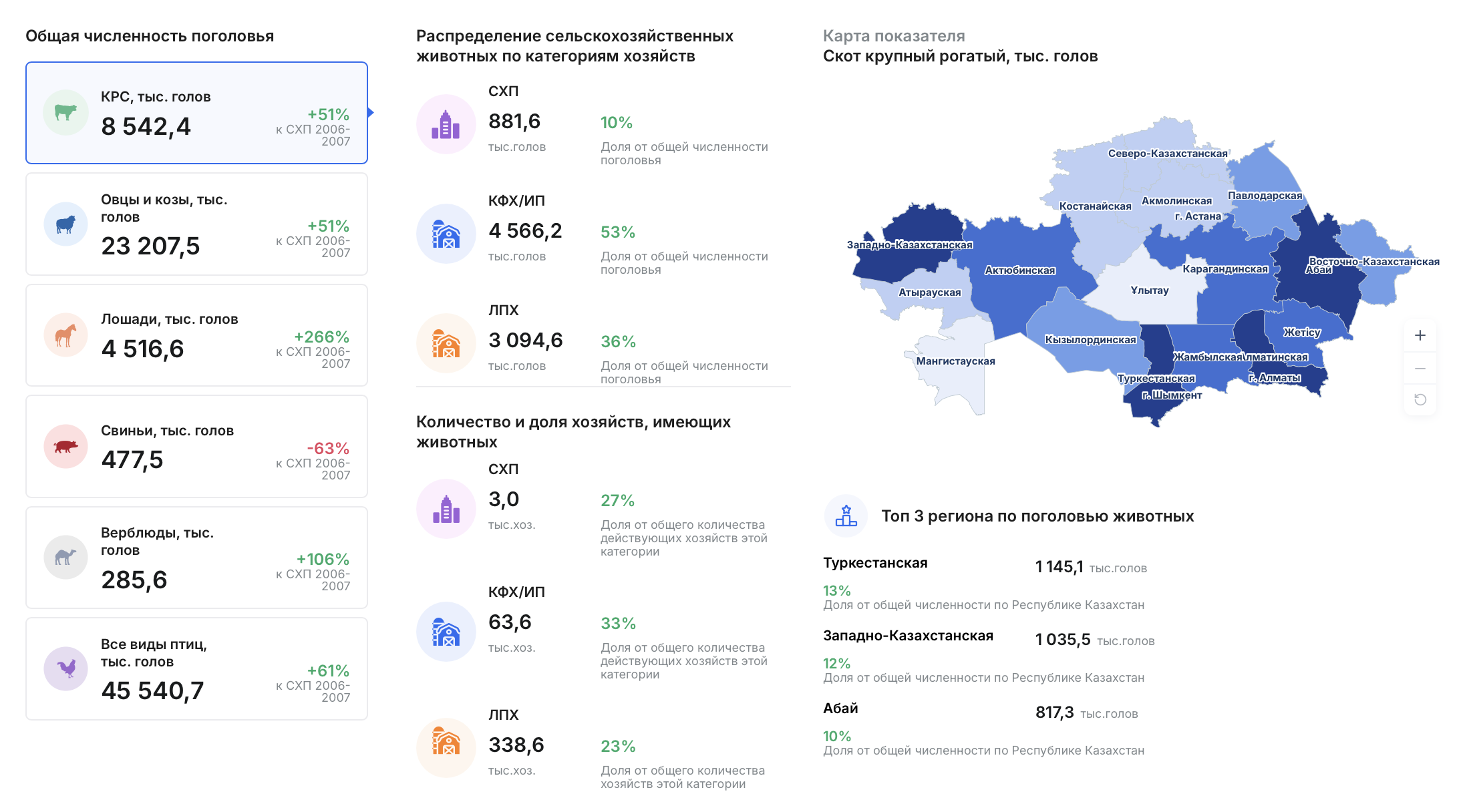
The opposite trend is seen in pig farming: the number of pigs fell by 63%, to 477,500 head.
The structure of livestock keeping has also changed. For example, 53% of cattle are held by peasant and farming holdings, 36% by personal subsidiary farms and 10% by agricultural enterprises. By total number of animals, Turkistan Region leads with 1.15 million head, followed by West Kazakhstan Region with 1.04 million and Abai Region with 817,300.
HOW GREENHOUSE FARMING EXPANDED
The total area of agricultural land stood at 90.1 million hectares. Of this, 62.3% is pasture and 31% is arable land. The open-ground sown area reached 23.2 million hectares, an increase of 26.7% compared with the previous census. The main crop is wheat, which accounts for 53% of sown areas.
At the same time, actually irrigated land covers 1.27 million hectares, or only 5.4% of the sown area.
The dynamics of greenhouse farming stand out separately. The country has 10,300 greenhouses with a total area of 14.3 million square metres. Compared with the 2006–2007 census, their number grew by 430.3% and their total area by 1711%. There are only 622 industrial greenhouses, yet they account for 57.1% of all greenhouse area.
HOW MANY PEOPLE WORK IN THE SECTOR
Agricultural holdings employ 706,900 workers, of whom 587,500 are permanent and 119,400 seasonal. 539,500 people are employed directly in production.
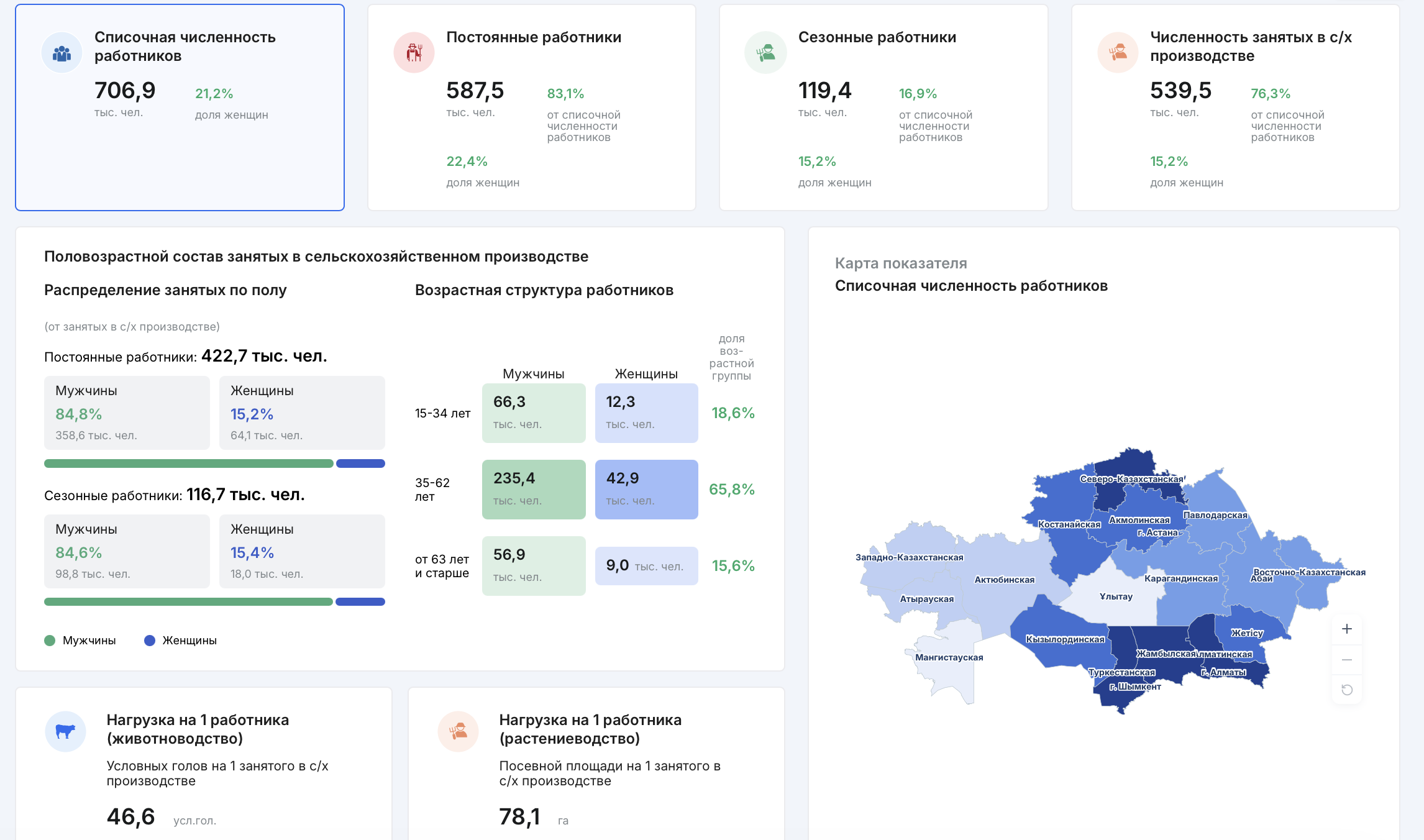
The census also covered aquaculture. The country counted 775 fish farms with a total design capacity of 31,900 tonnes per year. The most common species is carp, which is farmed by 60.3% of holdings.
WHAT THE FRBK FOUND
The FRBK editorial team surveyed more than 30 farmers from various regions, including Akmola, Kostanay, Karaganda, Zhambyl and Turkistan Regions and Abai Region. None of those surveyed confirmed that census takers had personally visited them to conduct the agricultural census.
A similar situation emerged when surveying owners of personal subsidiary farms: none of our interviewees reported a visit from census takers either. At the same time, respondents said that information about holdings was actively collected through village akimats, where the necessary information was requested.
Based on the survey results, the FRBK suggests that some of the information may have been collected through village akimats, including on the basis of data the Bureau already held, without directly surveying farmers and owners of personal subsidiary farms. The published data remain the official statistical basis of the census, but the circumstances of the collection of primary information require further attention.