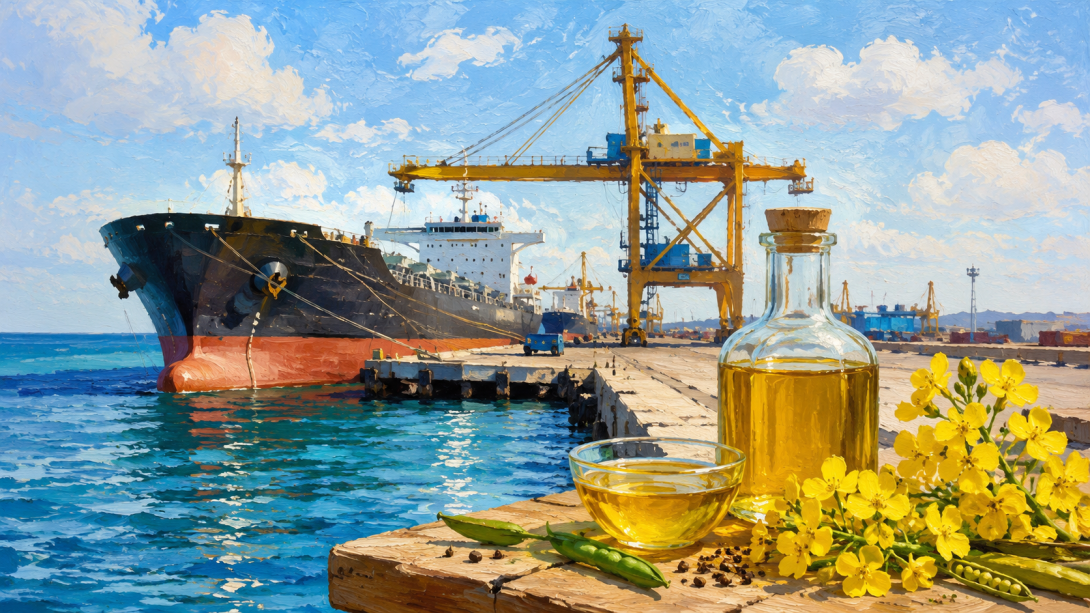
For the first time, a shipment of rapeseed oil amounting to 5,000 tonnes was exported from the port of Aktau. This despatch marked the first instance of using the new Caspian route for supplying Kazakh oil and fat products to Iran.
HOW THE FIRST SHIPMENT WENT
According to the National Association of Oilseed Processors (NAOP), the first vessel carrying rapeseed oil was despatched on 4 April. Full loading took approximately 2.5 days.
The buyer of the product was the Iranian company Kourosh Food Industry. The sender was one of the Kazakh oil extraction plants that are members of the NAOP.
Furthermore, on 13 May, the loading of a second vessel carrying 5,000 tonnes of sunflower oil was completed. The NAOP believes this confirms the interest of foreign importers in Kazakh products and the viability of the new route across the Caspian Sea.
WHY IRAN IS CONSIDERED AN IMPORTANT MARKET
Chairman of the NAOP Board, Yadykar Ibragimov, stated that Iran's annual import of vegetable oils and meal totals approximately 3.5 million tonnes. Of this volume, around 1.5 million tonnes accounts for vegetable oils directly.
According to him, Kazakhstan and Iran have direct transport links via the Caspian Sea and also utilise a preferential customs regime under the free trade agreement between the Eurasian Economic Union (EAEU) and Iran.
He noted that over the past three years, Kazakh enterprises have exported more than 100,000 tonnes of oil and fat products to Iran. Of this, 94% of the supplies consisted of meal.
WHAT EXPORT VOLUMES ARE BEING CONSIDERED
The NAOP noted that the port of Aktau can organise the despatch of 3–4 vessels per month. According to the association's estimates, this corresponds to a volume of 150,000–200,000 tonnes of vegetable oil per year.
In the long term, exports of vegetable oils and meal to Iran could exceed 500,000 tonnes annually.
WHAT THE LAUNCH OF THE NEW ROUTE MEANS
The association reported that previously this route was virtually unused for supplying oil and fat products. The development of processing and logistics has made it possible to start exports via the Caspian Sea and expand access to new markets.
According to the NAOP, the launch of this new supply channel will help diversify export destinations and reduce pressure on the main logistics routes. The association also links the development of exports to the goal of increasing the industry's foreign currency earnings to over $1 billion, as stipulated in the Roadmap for 2026–2028.