
Tax security expert Dmitry Kazantsev has assessed the consequences of a possible increase in the minimum wage (MW) to 150 thousand tenge for individual entrepreneurs (IEs) and their employees. According to him, the increase will primarily affect small businesses.
WHAT IS KNOWN ABOUT THE MINIMUM WAGE INCREASE
Previously, First Vice-Minister of National Economy Azamat Amrin reported a possible increase in the MW from the current 85 thousand to 150 thousand tenge. The ministry plans to raise it based on international practice — around 50% of the median salary. Specific implementation timelines have not yet been determined.
HOW THIS WILL AFFECT INDIVIDUAL ENTREPRENEURS
In an interview with Digital Business, Dmitry Kazantsev said that the increase in the MW will directly affect the tax burden.
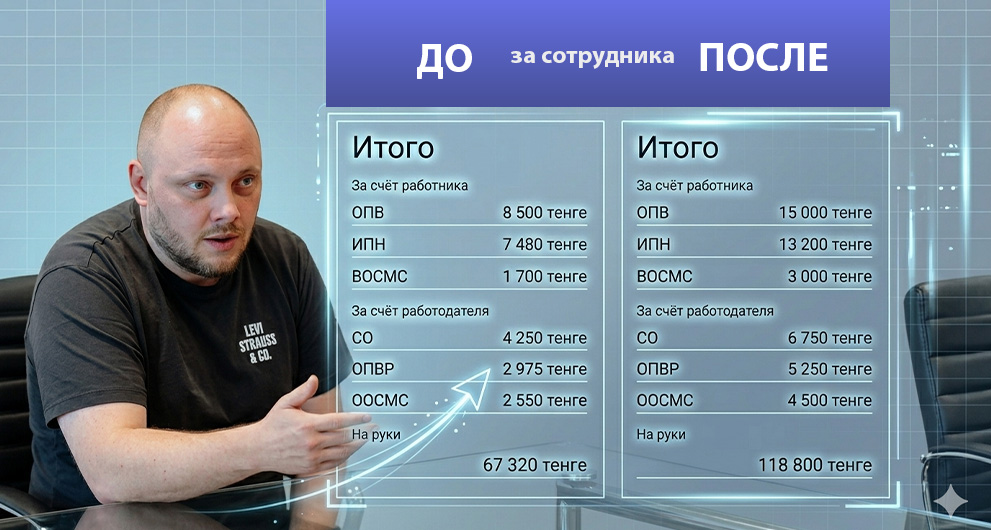
"Let's start with the fact that we have around two million individual entrepreneurs in Kazakhstan. Previously, they had the right to pay taxes on a minimum wage of 85 thousand tenge, but now they will pay on 150 thousand — both for themselves and for their employees. Let's not hide the fact that the majority of workers at IEs declare the 'minimum wage'," Kazantsev stated.
WILL WORKERS' REAL INCOMES CHANGE
However, the expert believes that the increase in the MW will not necessarily lead to higher 'take-home' pay for the majority of workers.
According to Dmitry Kazantsev, the increase will mainly be felt by those who already received the minimum wage, particularly public sector employees. For other workers, the changes may be limited to an increase in mandatory payments.
TAX BURDEN AND PROPOSALS FOR REFORM
Dmitry Kazantsev points out that the total burden on small businesses reaches 42–45%, and under such conditions, measures to 'legalise' salaries, in his opinion, lose effectiveness.
In this regard, he supports the initiative of deputy Aituar Koshmanbetov to introduce a single payment with a rate of around 22%, which could replace the current system of contributions.