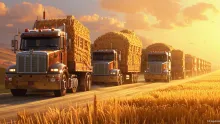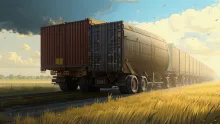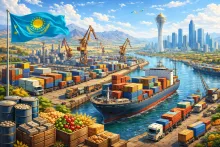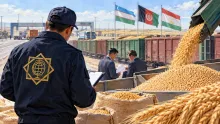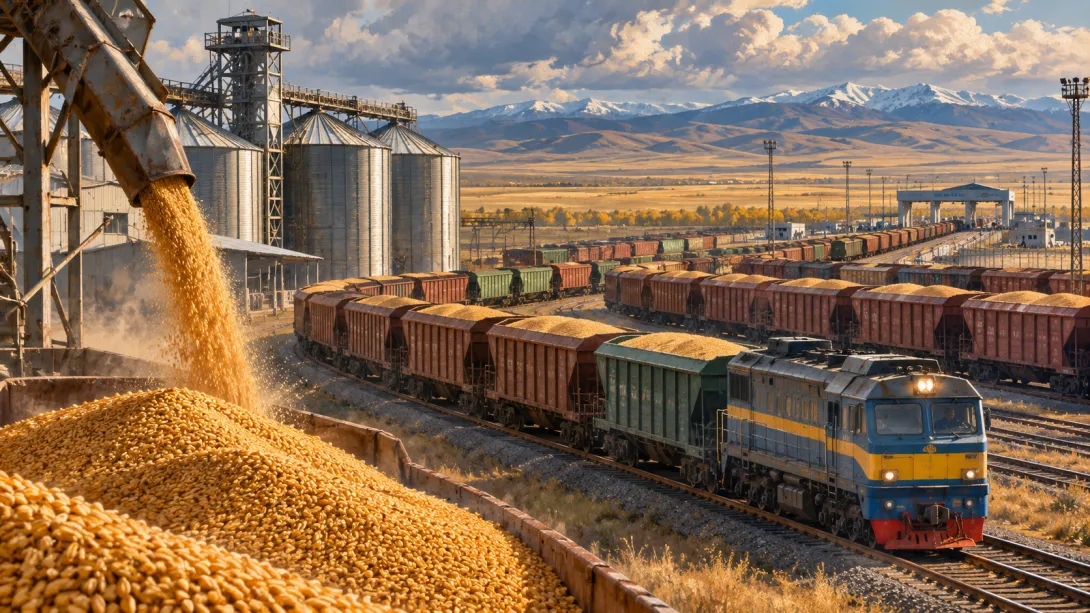
In the 10 months of 2026, Kazakhstan exported 9.46 million tonnes of grain, which is 11% more than in the same period last year. Despite the growth in supplies, carriers have faced infrastructure constraints and a build-up of wagons on certain routes.
WHERE KAZAKH GRAIN IS HEADING
According to the Grain Union of Kazakhstan, the situation was discussed at an operational headquarters meeting attended by representatives of the Ministry of Transport of the Republic of Kazakhstan, National Company JSC, Kazakhstan Temir Zholy (KTZ), the National Chamber of Entrepreneurs (NCE) Atameken and business.
The total volume of grain transportation for January–October 2026 amounted to 12.15 million tonnes, an increase of 9%. Of this, 9.46 million tonnes were sent for export. The main growth came from supplies to Central Asian countries and Afghanistan.
Back in February 2025, FBRK wrote that Kazakh millers were opposed to subsidising grain exports to these countries: according to them, neighbouring countries process Kazakh grain and squeeze Kazakh flour out of the Afghan market.
WHERE WAGONS ARE GETTING STUCK
Participants in the meeting identified several problems complicating export transportation.
More than 10,000 wagons have accumulated on the Saryagash route. Passage through Uzbekistan is limited by the capacity of the railway infrastructure and unloading stations.
Additional difficulties arise during transit through Russia towards the Baltic and Azov-Black Sea ports.
Business representatives also raised the issue of transparency in the approval of main and additional transportation plans.
WHAT KTZ AND THE MINISTRY OF TRANSPORT WERE INSTRUCTED TO DO
Following the meeting, KTZ was instructed to ensure uniform approval of applications and transportation plans for all market participants, and to rule out unjustified refusals.
Within a week, participants intend to revisit the situation with applications and the most congested routes.
The Ministry of Transport was instructed to continue work on increasing the capacity of the Saryagash route, interacting with Uzbekistan and resolving the issue of transport subsidies.
The headquarters meeting took place several days after the detention of the company's leadership: on 11 November, the Anti-Corruption Service of the National Security Committee (SPK KNB) detained the Chairman of the Management Board of KTZ, Yelzhas Otynshiyev.
WHY NEGOTIATIONS WITH CHINA ARE NEEDED
The Grain Union of Kazakhstan proposed initiating negotiations with the Chinese side on creating a joint working group.
It is proposed to conduct time-and-motion studies of wagon handling at the Dostyk–Alashankou border crossing. This will make it possible to determine the duration of individual operations and find opportunities to reduce idle times.