Kazakhstan's economy grew by 3% in the first quarter of 2026, despite a notable decline in the oil sector. A key factor in this resilience was the strengthening of non-resource industries and a change in the growth structure.
FOREIGN TRADE SHIFTS TOWARDS PROCESSING
According to data from a government meeting reviewing the results of socio-economic development for January–March, the economy is showing a transition towards a more diversified model.
In January–February, external trade turnover amounted to $21.7 billion, an increase of 11.3%. Exports reached $12 billion, while shipments of processed goods rose sharply by 24.4% — to $4.5 billion.
The positive trade balance exceeded $2.4 billion.
The key trend is the accelerated growth of exports of value-added products. This means that Kazakhstan is gradually moving away from its raw material model and strengthening its position in external markets through more sophisticated products.
This shift is directly linked to economic diversification: the higher the share of processing, the more sustainable the economic growth and the lower the dependence on commodity prices.
DECLINE IN OIL EXTRACTION DID NOT STOP THE ECONOMY
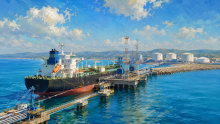
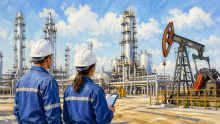
In the first quarter, a decline of 11.4% was recorded in the mining industry. Oil extraction fell by 19.8%, and gas extraction by 15.1%.
The reasons are external and technical in nature, including the geopolitical situation, threats of unmanned aerial vehicle attacks, and weather conditions.
However, the key point is that the economy continued to grow. This demonstrates structural changes: the decline in the oil sector no longer automatically leads to a slowdown in the entire economy.
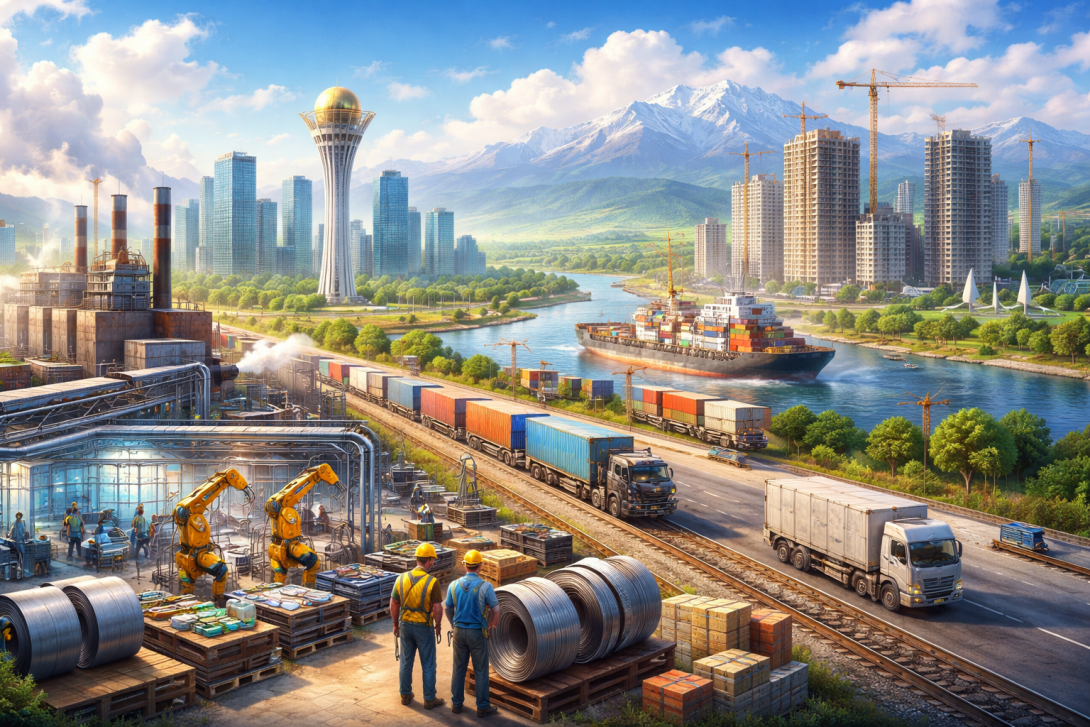
Non-resource industries — primarily manufacturing, transport, and construction — partially compensate for the external pressure.
THE ECONOMY IS BECOMING LESS DEPENDENT ON OIL
A long-term trend confirms the changes in the structure of Gross Domestic Product (GDP). The share of the oil sector fell from 16.5% in 2010 to 8.1% in 2024.
At the same time, the share of the manufacturing industry rose to 12.7% and has now exceeded the contribution of the extractive industry for the second consecutive year.
This is changing the quality of economic growth:
- budget stability is increased;
- dependence on external prices is reduced;
- domestic demand is strengthened;
- investment attractiveness is growing.
This transformation is also seen as a step towards escaping the 'middle-income trap' by developing a more complex and productive economy.
CONSTRUCTION AND HOUSING SUPPORT DOMESTIC DEMAND
The construction industry remains one of the main drivers of growth. The volume of work increased by 14.8%, and housing commissioning reached 3.9 million sq. m, which is 3.8% higher than the level of the previous year.
The highest rates were recorded in the Abay region, Karaganda region, and Shymkent.
Construction creates a multiplier effect: it stimulates the production of building materials, transport, trade, and employment. As a result, the industry becomes an important pillar of domestic economic growth.