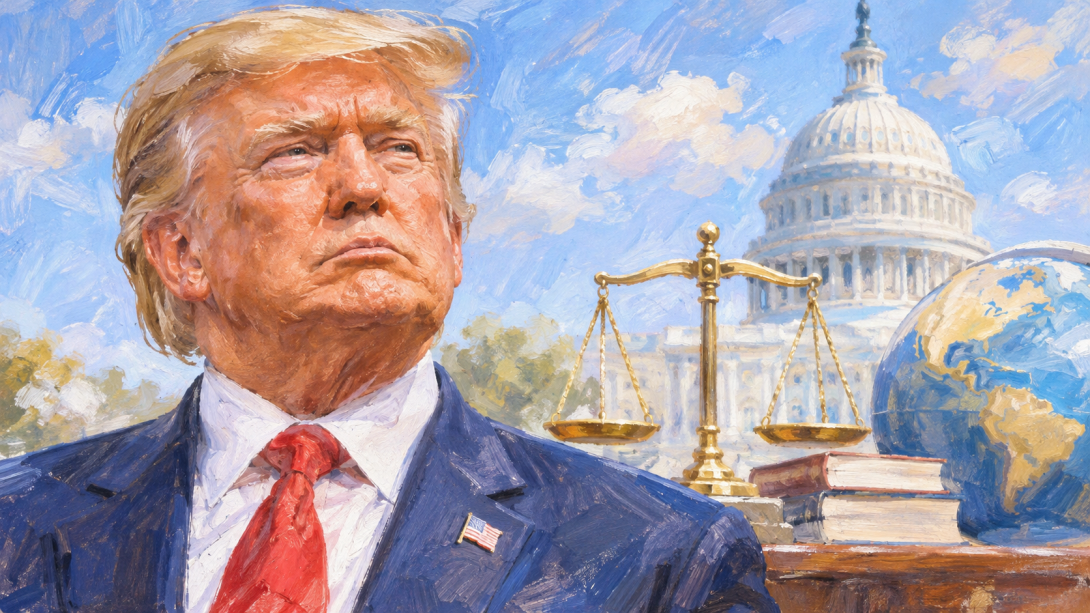
The administration of US President Donald Trump has changed its approach to enforcing the law against bribery of foreign officials. According to political economist Lorenzo Crippa, the weakening of international cooperation and the possible selective application of anti-corruption norms create risks for the global anti-corruption system.
HOW US ANTI-CORRUPTION POLICY HAS CHANGED
According to OCCRP, in early 2025 the administration of Donald Trump suspended enforcement of the Foreign Corrupt Practices Act (FCPA). The document has been in force for almost 50 years and prohibits US citizens and companies from bribing foreign officials to obtain commercial advantages.
Six months later, enforcement of the law resumed, but the US Department of Justice was instructed to narrow its investigation priorities.
Another change was the announcement of the US withdrawal from the Council of Europe's Group of States against Corruption (GRECO). The American authorities intend to focus on unilateral instruments, including sanctions and visa restrictions.
WHY THE EXPERT DOUBTS THE EFFECTIVENESS OF THE NEW APPROACH
Political economist and lecturer at the University of Strathclyde Lorenzo Crippa believes that unilateral measures are inferior to international cooperation in the fight against corruption.
He cites the history of the FCPA as an example. Although the law was adopted back in 1977, it was hardly applied during its first two decades. The situation changed after the conclusion of the Organisation for Economic Co-operation and Development (OECD) Convention on Combating Bribery of Foreign Public Officials in the late 1990s.
According to Crippa, international agreements helped create conditions under which American companies stopped finding themselves at a disadvantage compared with competitors from other countries where bribery of foreign officials was not prosecuted as strictly.
HOW THE CHANGES AFFECTED THE STOCK MARKET
In a study conducted by Crippa together with co-authors, they examined the reaction of financial markets to the suspension of FCPA enforcement.
Subsequently, shares of companies previously subject to investigations rose amid expectations of a relaxation of anti-corruption controls. At the same time, the rise mainly affected American companies, while foreign counterparts did not receive a similar effect.
Crippa believes that such a difference may indicate expectations of more lenient treatment of US businesses and stricter control of foreign companies. However, the expert notes that not enough time has passed since the rules changed, and there are still few new cases.
WHY INTERNATIONAL AGREEMENTS MAY NOT BE ENOUGH
In another joint paper, Crippa and his co-authors studied the impact of the OECD Convention on corporate behaviour.
The results showed that the reduction in bribery among companies covered by the agreement was in fact offset by an increase in such practices on the part of competitors from countries that had not joined it.
Researchers call this the effect of shifting corruption beyond the agreement. According to Crippa, solving the problem requires expanding international participation in anti-corruption treaties.
CAN US POLICY CHANGE
Crippa also mentioned a legislative initiative by a group of American senators led by Elizabeth Warren — the FCPA Reinforcement Act. The bill proposes increasing the statute of limitations in cases related to FCPA violations in order to protect the application of the law from possible political decisions to suspend it again.
The expert assesses the prospects for the document's adoption as low and regards it primarily as a political signal.
In his view, legislative guarantees of consistent FCPA enforcement could strengthen investors' confidence in anti-corruption rules and reduce incentives to count on a weakening of controls.
At the same time, Crippa emphasises that the proposed changes by themselves do not solve the problem of possible differences in approach to American and foreign companies.