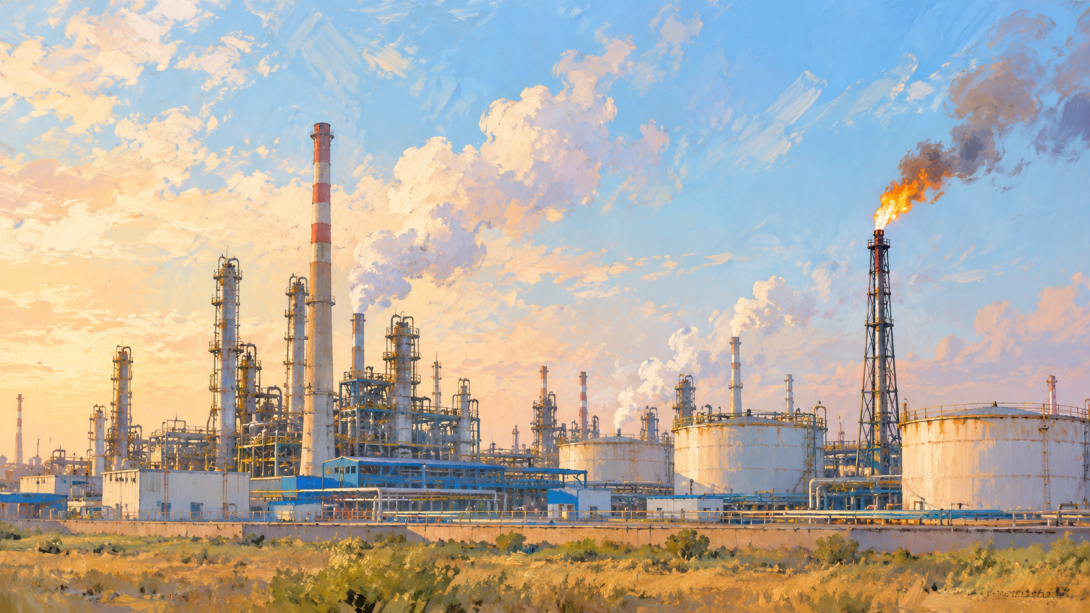
Atyrau Oil Refinery (ANPZ) has denied information that the enterprise failed to carry out emission calculations for certain process furnaces. The refinery also explained the flaring of more than 100 tonnes of gas at the flare unit.
WHAT THE REFINERY SAID IN RESPONSE
According to ANPZ, the calculations were carried out as part of the project for maximum permissible emission standards and the current environmental permit. The enterprise stated that it determined emissions from the combustion of fuel gas and natural gas, as well as furnace fuel.
The refinery's statement says that the standards for the specified sources were calculated in accordance with approved methodologies. ANPZ also announced its readiness to provide state authorities with technical and project documentation confirming the existence of calculations and regulatory materials.
HOW THE REFINERY EXPLAINED MEASURES DURING UNFAVOURABLE WEATHER
ANPZ separately commented on information regarding compliance with measures during unfavourable meteorological conditions. According to the calculations provided by the enterprise, these measures make it possible to reduce emission capacity from 35,370.1 to 20,664.3 g/s, that is, by approximately 42%.
WHY GAS IS SENT TO THE FLARE
ANPZ explained reports of the flaring of more than 100 tonnes of gas by technological reasons. According to the enterprise, sending gas to the flare unit is provided for by the technological process and is used, among other things, during disruptions in the operation of the units.
The refinery stated that the flare system ensures the safe combustion of gas and is an element of industrial safety provided for by the project.
WHAT MEASUREMENTS AT THE BOUNDARY OF THE SANITARY ZONE SHOWED
According to ANPZ, from 2 to 7 September 2026, no exceedances of hydrogen sulphide were recorded at the boundary of the sanitary protection zone.
The enterprise stressed that it does not call into question the need to comply with environmental requirements and interacts with state authorities as part of control measures.
The refinery considers it necessary to wait for the completion of the procedures provided for by law and the court's legal assessment.
CONTEXT
Earlier, an unscheduled inspection of ANPZ revealed violations of environmental requirements, including exceedances of industrial emission standards and emergency gas releases. The materials of the administrative offence cases were sent to court.
The inspection was carried out after complaints from Atyrau residents about a thick haze and a sharp unpleasant odour, which is especially noticeable at night and in the early morning. Laboratory tests confirmed exceedances of the content of certain pollutants in the air, and the authorities began checking possible sources of pollution.
At the same time, environmental claims regarding ANPZ's operations and related inspections had also been recorded earlier.
In January 2026, Atyrau residents complained about the smell and smoke in the area of the enterprise. ANPZ stated that the visible clouds above the refinery were water vapour, and its own measurements did not reveal any exceedances. At the same time, the ecology department reported an exceedance of hydrogen sulphide concentration in residential areas.
In February, it became known that Atyrau Oil Refinery LLP had been held administratively liable for sanitary violations. The reason was also issues related to air quality in Atyrau and appeals from residents. The enterprise disagreed with the decision and appealed it in court.
In April, it was reported that another inspection of ANPZ had taken place, following which the court imposed a fine on the enterprise of 520.5 million tenge for violations of environmental requirements.