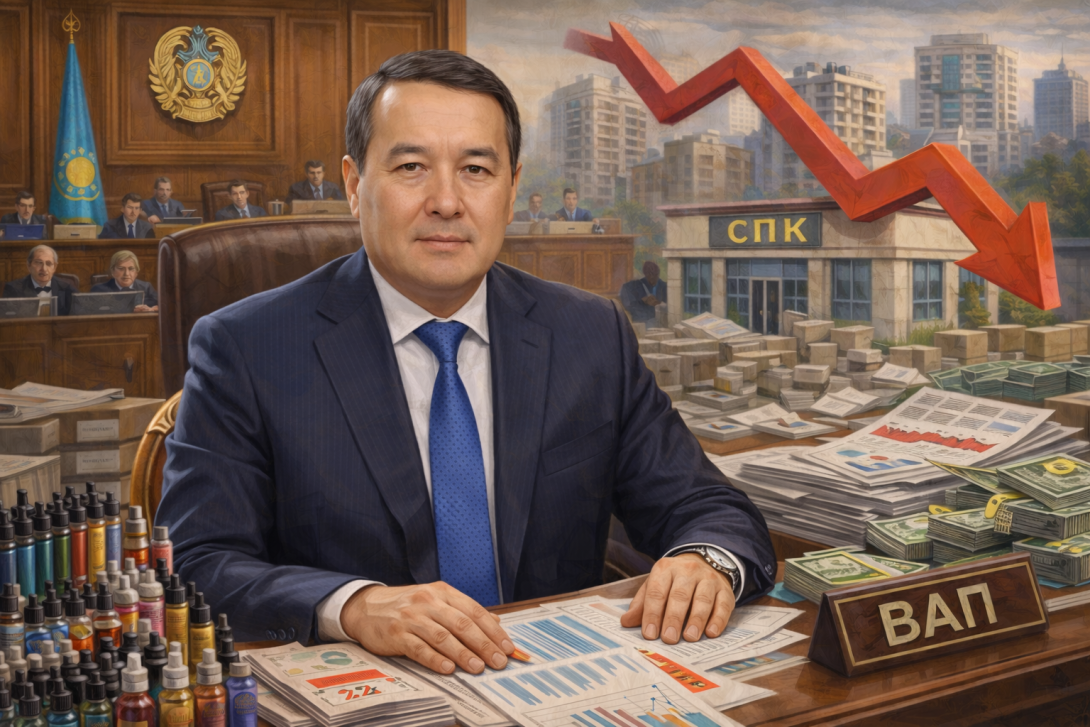
The activities of social-entrepreneurial corporations (SECs) in Kazakhstan remain loss-making and do not meet the initially set goals. This was stated by the Chairman of the Supreme Audit Chamber (SAC) Alikhan Smailov, speaking at a session of the Mazhilis of the Parliament of the Republic of Kazakhstan.
According to Informburo.kz, he stated that the SECs were established as regional development institutions and were meant to serve as a link between the state and business.
However, in practice, the corporations perform functions that are not typical for them — engaging in equity participation, asset leasing, and acting as authorised agents.
“This has been the result of a lack of systemic coordination and strategic management on the part of the central government body. Today, the SECs have no clear goals, unified performance benchmarks, or a comprehensible development model,” noted Smailov.
According to him, the corporations’ involvement in developing entrepreneurship is largely limited to concessional lending, even though the SECs are not financial institutions.
Furthermore, Smailov noted that the SECs have effectively fallen outside the oversight of the authorised agency, which negatively impacts the competitive environment and prevents the formation of sustainable economic results.
“Despite the transfer of significant state assets and regular financial support, the majority of SECs remain loss-making,” concluded the Chairman of the Supreme Audit Chamber.
For context, the Supreme Audit Chamber previously published the findings of an audit on the efficiency of budget funds and state asset usage, conducted in the Zhambyl Region.
That audit revealed systemic shortcomings in budget planning, public procurement, the management of investment projects, as well as in the activities of JSC “SEC ‘Taraz’”.