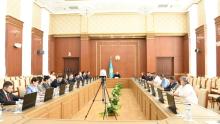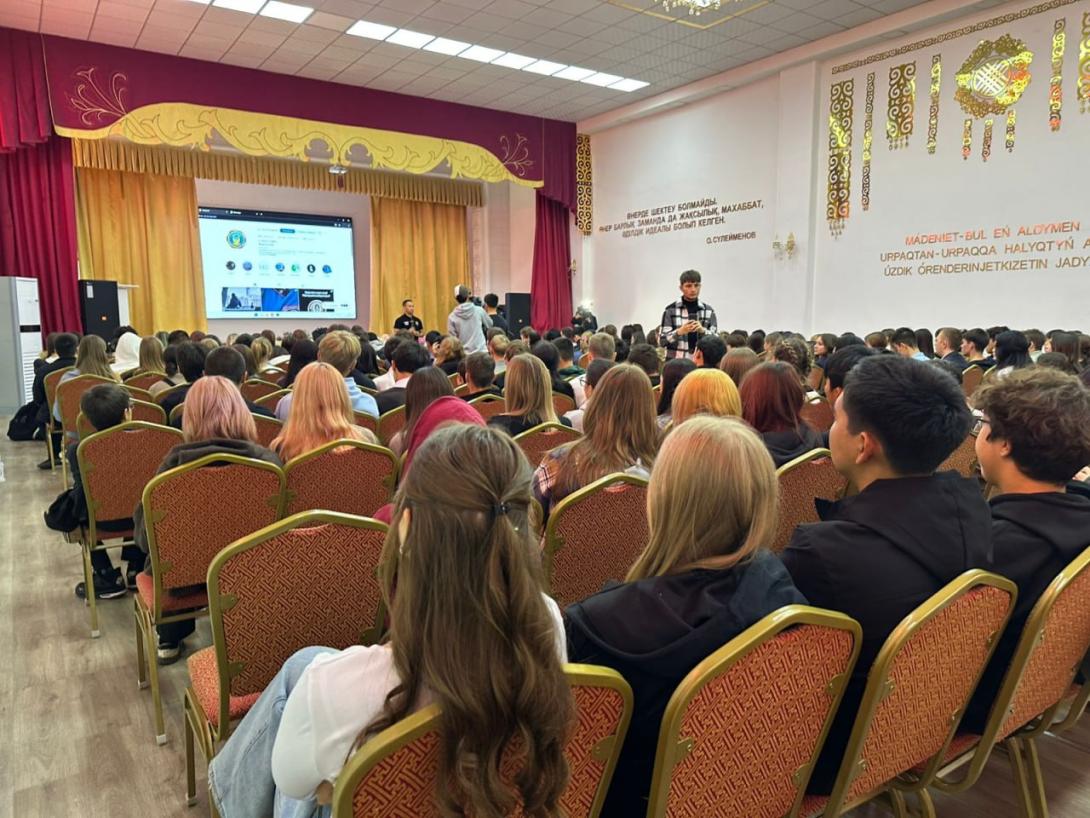
On 15 September, a series of preventive measures aimed at working with young people, as part of the information campaign for the "Law and Order" narrative, took place in the Karaganda Region. The initiatives were implemented jointly by the Karaganda Youth Resource Centre, the Regional Police Department, and other interested organisations.
In just one day, several educational institutions were reached, drawing the attention of hundreds of young people to current issues in modern society.
The first event began early in the morning on the premises of the Karaganda Technical and Construction College. The theme of the meeting – "New Types of Drugs and the Problem of Drug Addiction Among Young People" – was chosen deliberately. As the organisers noted, it is the student environment that is most susceptible today to the influence of drug dealers, who actively use social media and modern technology to distribute synthetic narcotic substances.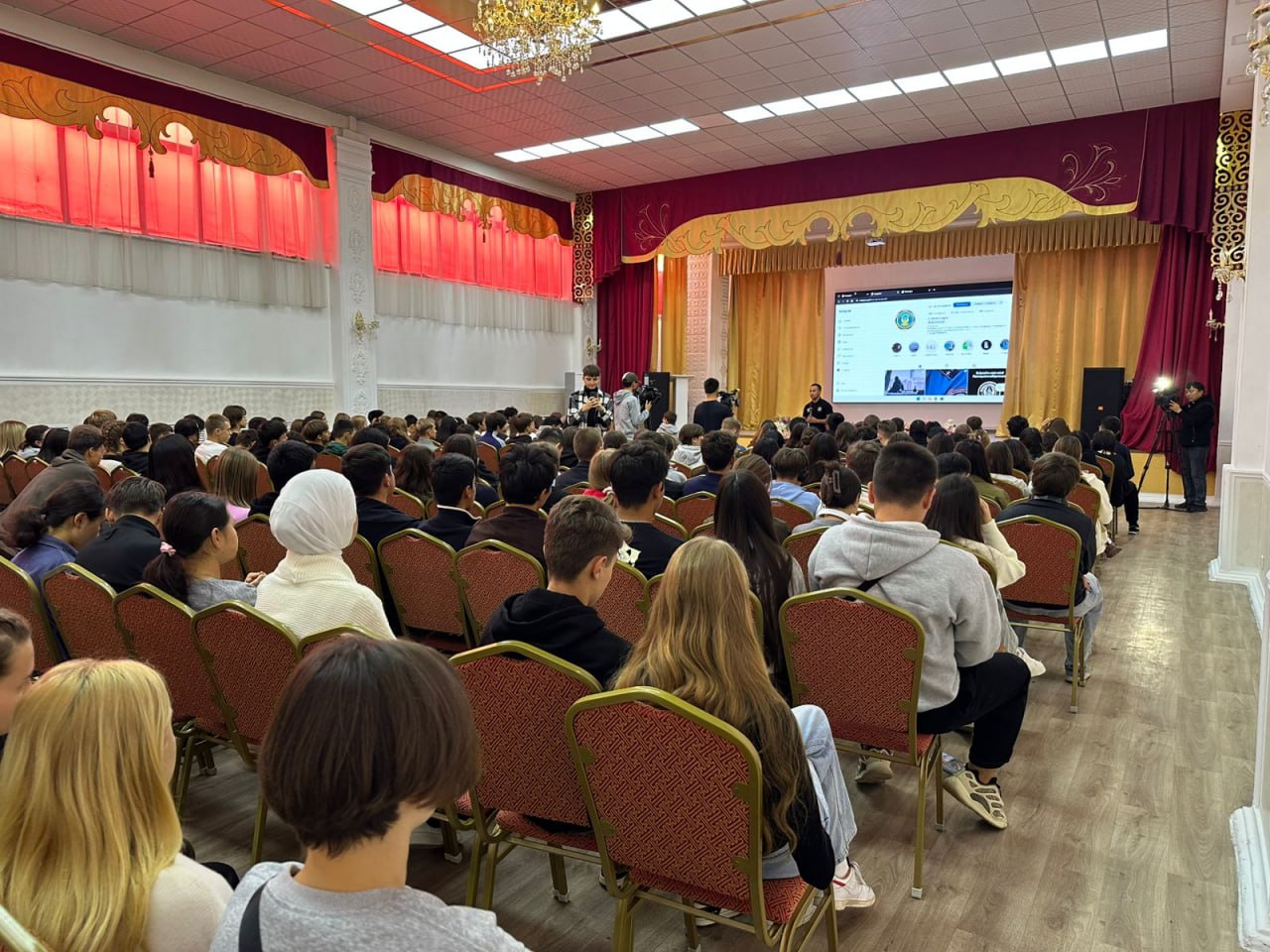
The speaker was the senior criminal investigation officer of the Drug Crime Control Department of the Karaganda Regional Police Department, Police Lieutenant Colonel Bakhytzhan Mustafayev. The law enforcement officer presented students with a detailed picture of what the modern drug market looks like. Special attention was paid to new synthetic substances that are disguised as harmless goods and actively advertised online as "legal" alternatives to traditional drugs.
A separate section was dedicated to the legal aspects. Students learned that even a single use of narcotic substances can lead to administrative liability, while possession and distribution can lead to criminal liability. Lieutenant Colonel Mustafayev emphasised that a criminal record for drugs seriously limits life prospects: such individuals will not be able to work in government bodies, obtain certain licences, or travel freely around the world.
For their part, the students did not limit themselves to passively listening to the lecture. They asked direct questions about how to recognise a drug addict among friends, what to do if offered "light" substances, and how to help someone who has become addicted. Some were interested in the technical details of law enforcement work, methods of detecting drugs, and the specifics of investigating such crimes.
Simultaneously, an equally important meeting took place at the Karaganda College of Nutrition and Service, dedicated to the problem of bullying. The event was held under the motto "Stop Bullying: Respect, Support, Trust" and was organised by the Karaganda City Youth Resource Centre.
The centre's psychologist, Aliya Askambayeva, chose a fundamentally different format for working with the audience. Instead of a traditional lecture, students were offered interactive exercises, role-playing games, and group discussions. This approach allowed not only the conveying of theoretical information about the nature of bullying and cyberbullying, but also gave participants practical tools to resist psychological pressure.
"Bullying is not just offensive words or actions, but psychological pressure that can leave a deep mark on a person's soul," explained Aliya Askambayeva. "Our task is to show young people that there is always a way out, there is always support. It is very important to learn to talk about problems and seek help in time. Such meetings help young people feel that they are not alone."
During the meeting, students analysed real-life situations: how to react to a collective boycott, where to turn if bullying turns into physical aggression. The psychologist demonstrated techniques for emotional self-regulation, explained how to properly document cases of cyberbullying, and spoke about the work of helplines and psychological support centres.
The audience was particularly interested in exercises for developing empathy and teamwork. Participants learned to put themselves in the place of a bullying victim, understand the psychology of the aggressor, and seek compromises in conflict situations. According to the organisers, this approach helps not only to protect potential victims, but also to prevent ordinary teenagers from turning into bullies.
At the same time, events of a completely different nature were unfolding in the city of Shakhtinsk. In the "Assorti" shopping centre, with the active participation of the city prosecutor's office, volunteers, and active young people, a campaign called "Hand in Your Vape – Choose Health" was launched. This event was part of a national preventive campaign to combat the use of electronic cigarettes and tobacco products.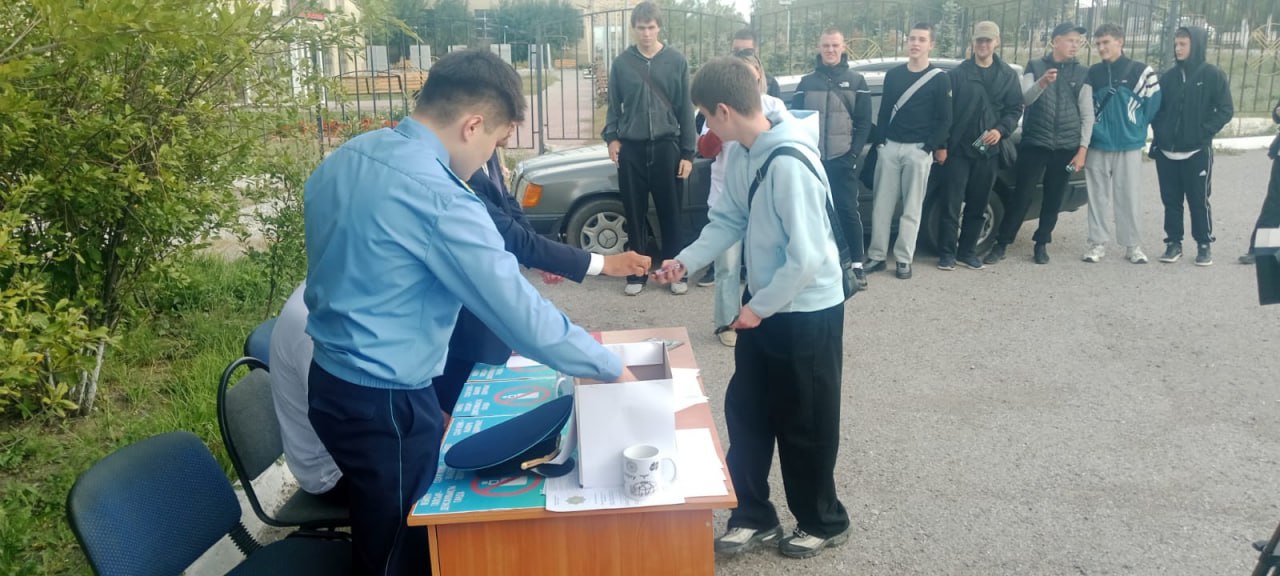
The organisers of the campaign took a creative and large-scale approach. Special collection points were set up in the shopping centre, where residents could hand in not only vapes, but also electronic smoking devices, nicotine-containing liquids, and regular cigarettes. Each participant in the campaign received a symbolic gift – a keyring or badge with a healthy lifestyle logo, information booklets about the dangers of nicotine, as well as invitations to sports sections and cultural events.
Representatives of the prosecutor's office used the opportunity for legal education of citizens. They spoke about the fact that selling vapes to minors is an administrative offence, explained how to correctly report instances of illegal tobacco product trade, and informed people about changes in legislation.
Volunteers, mainly students from local universities and colleges, shared personal stories of quitting smoking, gave practical advice on overcoming nicotine addiction, and talked about how vaping affects sports performance and appearance. Many of them could demonstrate the benefits of a healthy lifestyle based on their own experience.
The medical component of the campaign was provided by specialists from the local clinic. They conducted rapid consultations, measured blood pressure and blood oxygen levels, and explained how nicotine affects the respiratory, cardiovascular, and nervous systems. Special attention was paid to young women – they were told about how smoking affects reproductive health and appearance.
Over the course of the day, the organisers collected several dozen vapes and electronic cigarettes, distributed hundreds of information booklets, and conducted dozens of individual consultations. What is even more important – many participants signed up for sports sections and expressed their willingness to take part in similar future events.
According to the organisers, such meetings give young people the understanding that problems can and must be dealt with, not hushed up. When students see their peers openly talking about bullying or asking "uncomfortable" questions about drugs, it removes the taboo from topics that were previously only discussed in whispers.
Let us recall that on 14 August in Karaganda, two events took place aimed at improving the legal literacy of the population and preventing drug addiction among young people.