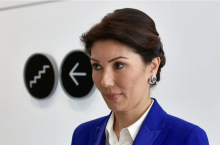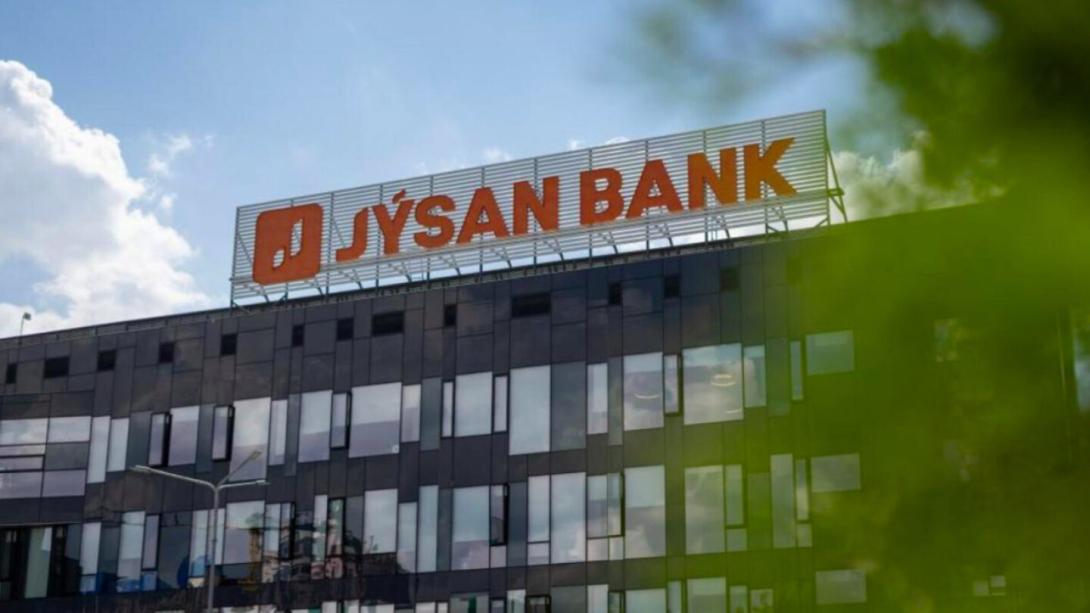
«Jusan Bank» received payments from a debtor – a well-known Kazakh businesswoman and stylist Liliya Rakh – for two years without reducing her debt. When the case went to court, it turned out that the bank had presented three different documents with varying debt amounts: a loan balance statement, a response, and enforcement documents. Furthermore, the bank refused to provide a reconciliation statement even to the court.
According to sotreport.kz, ultimately, the private bailiff refused to take action against the debtor until the situation was fully clarified, and the bank was forced to recalculate. It turned out that the actual debt amount was half of what the bank had claimed.
For two years, the bank submitted an enforcement order for a debt of 1.7 billion tenge, but after recalculation, the debt turned out to be 761 million tenge. The bank then withdrew the enforcement order and presented a new debt of 1.3 billion tenge, despite the loan balance statement indicating 1.2 billion.
It all began in 2018 when the court declared Liliya Rakh a debtor and ordered her to pay the bank 4.7 billion tenge. She transferred collateral property (valued at 5 billion tenge), inventory and materials (worth 759 million tenge), and personal real estate to the bank.
It is reported that the bank then sold the collateral property to itself at a reduced price and did not write off the debt amount for the seized assets. Proceeds from the sale of cars and a dacha were also directed towards repaying the debt, but the bank did not confirm writing off these amounts.
The stylist went to court because the debt amount was not decreasing despite the payments. Rakh's lawyers requested that the bank's actions be declared illegal, as it did not credit the seized assets towards the debt repayment. The court ordered a state-commissioned expert assessment, which revealed an overpayment of 666 million tenge and a debt of 341 million tenge, instead of the 1.3 billion claimed by the bank.
However, the court itself did not believe the results but neither initiated another expert assessment; it simply ignored them when reaching its verdict. As a result, the debtor continues to pay the bank, which refuses to provide a reconciliation statement.
"They did whatever they wanted with the figures, wrote off what they wanted, added what they wanted. Am I not a citizen? Doesn't the Constitution apply to me? Yes, I took a loan from the bank. But I am paying you money, you are taking the property, I am handing it over voluntarily. But why am I not informed about where and how much money you have allocated? Why? How can a citizen of this country bring in money and not know where it's going? And the debt amount hasn't changed for two years," Liliya Rakh complains indignantly.
The bank did not dispute the charges made after 2018, explaining this as "specific features of the banking system's operation."
"During the proceedings, they openly said – 'these are holiday deferments' that were additionally charged. Our second representative was outraged then: 'so you are now confirming that after the court decision came into force, you added extra sums?' He stood there openly and said: 'we have the right to do that.' We argued tooth and nail, the experts were outraged that this was not allowed. But the bank stood its ground: 'that's how our system calculates it.' But they shouldn't calculate it that way. We have payment schedules for all loan agreements; all the figures are specified there. And incidentally, additional charges were only applied to 12 out of 50 contracts. Why is that? Because all the additional charges were on contracts where Liliya Rakh acted as a guarantor. This was done to keep her in debt and continue receiving money," commented lawyer Victoria Melentsova on the situation.
Meanwhile, employees of the Institute of Forensic Examinations of Almaty believe that, for some reason, the bank did not credit the proceeds from the sale of the dacha and car, or the paid state fees, towards the debt repayment, and inexplicably added holiday deferments to a number of contracts.