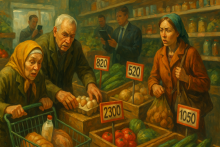
The situation in Aktobe is becoming more acute regarding the availability of socially significant food products (SSFP). City residents have been facing a shortage of basic goods, whose prices are regulated by the state, for several months now.
According to data from retail outlets, beef disappeared from shelves back in December 2024. Hen eggs have not been supplied since the end of November, poultry meat since September, and sunflower oil has been absent since August last year. Sugar, flour and pasta were last available for sale in December.
Meanwhile, according to data from the Bureau of National Statistics, prices for available goods are holding at an average level: first-grade flour – 162 tenge per kilogram, bread – 158 tenge, pasta – 297 tenge. The prices of basic vegetables also fit the overall picture: potatoes – 182 tenge, carrots – 153 tenge, onions – 151 tenge per kilogram.
It is worth noting, however, that official data may not reflect the real picture. Statistical services often update information no more than once a week, conducting market surveys only at the start of the week. On other days, prices can differ significantly from those recorded in the reports.
The paradox of the situation is that the price stabilisation mechanism through the stabilisation fund exists, but is not working effectively. The stabilisation fund is a special state regulation tool created for purchasing food during periods of low prices, storing it, and subsequently releasing it onto the market to restrain sharp price spikes. This mechanism is intended to ensure the availability of essential goods for the population, especially during difficult periods.
According to information from sources close to suppliers, the Social-Entrepreneurial Corporation (SEC) "Aktobe" has not been making payments for delivered products for several months. But the problem goes much deeper. The volume of goods supplied through the SEC accounts for only about 2% of the entire regional market. Such an insignificant volume cannot significantly influence pricing or effectively curb price increases.
The situation is further aggravated by the quality of goods supplied through the SEC, which is often inferior to that of other suppliers, making social goods uncompetitive. Suppliers also face bureaucratic barriers: to obtain a loan through the SEC, they must meet strict requirements, including having collateral or a bank guarantee, which is difficult for many entrepreneurs.
One cannot ignore the role of the regional trade department, which is supposed to regulate prices by monitoring markets and applying penalty sanctions against sellers who exceed the permitted 15% markup. However, the effectiveness of these measures is also questionable.
The price increase is also linked to objective factors: suppliers bear logistics costs and go through permitting procedures, which is reflected in the final cost of products.
The question of the reasons for the current situation remains open. Perhaps the problem lies in imperfections in the financing mechanisms, delays in budgetary funds, or internal processes of the SEC "Aktobe".
One thing is clear: the system designed to ensure the availability of basic food products for the population is in urgent need of revision. In the meantime, it is probably worth asking, where have the millions allocated to the stabilisation fund disappeared to, and why has the state mechanism, created to protect citizens, left them without social support in the form of affordable products?