
Every year in Kazakhstan, cases of people being poisoned by disinsection preparations are recorded. For example, in October 2023 in Aktau, two young children died after a neighbour carried out bedbug treatment in the apartment without contacting a specialised service. A few days later, in another district of Aktau, household bedbug poison injured two adults and three children.
In January 2024, the developer of a five-storey building in Aktobe treated the basement with bleach without warning the local residents. As a result, residents of the building experienced identical symptoms of poisoning: watery eyes, a sore throat, and difficulty breathing. Later, in Uralsk, residents of a multi-storey building suffered chemical poisoning after carrying out their own pest control.
Unfortunately, it is still not possible to call on the public not to buy preparations without studying the toxicology of the active ingredients, to warn others about the use of chemical preparations in the home, and to generally take a responsible approach to the process of carrying out disinsection work.
At the same time, it is difficult to talk about responsibility on the part of the public when executive bodies, directly responsible for carrying out the treatment, ignore the requirements of the law and regularly expose the population of Kazakhstan to the risk of poisoning, instead of eradicating the problem.
For the second year running, the editors of the FBK have been analysing what is used to poison insects in the regions of the country, calling on akimats to take a conscientious approach to the issue of disinsection. We have repeatedly noted how dangerous the pesticides are that are used in the urban environment with the approval of local authorities, and what impact they can have on living organisms, including on people.
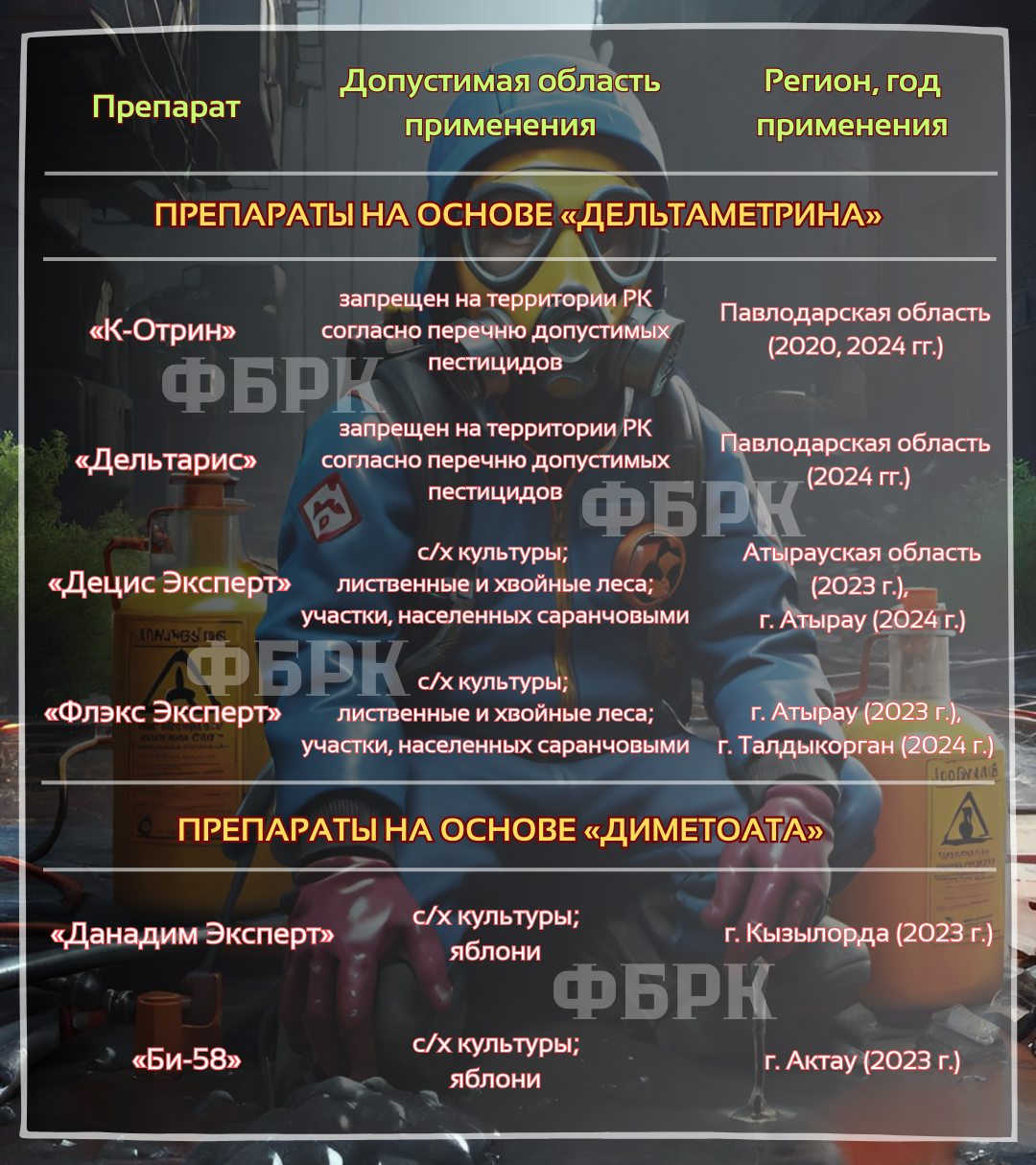
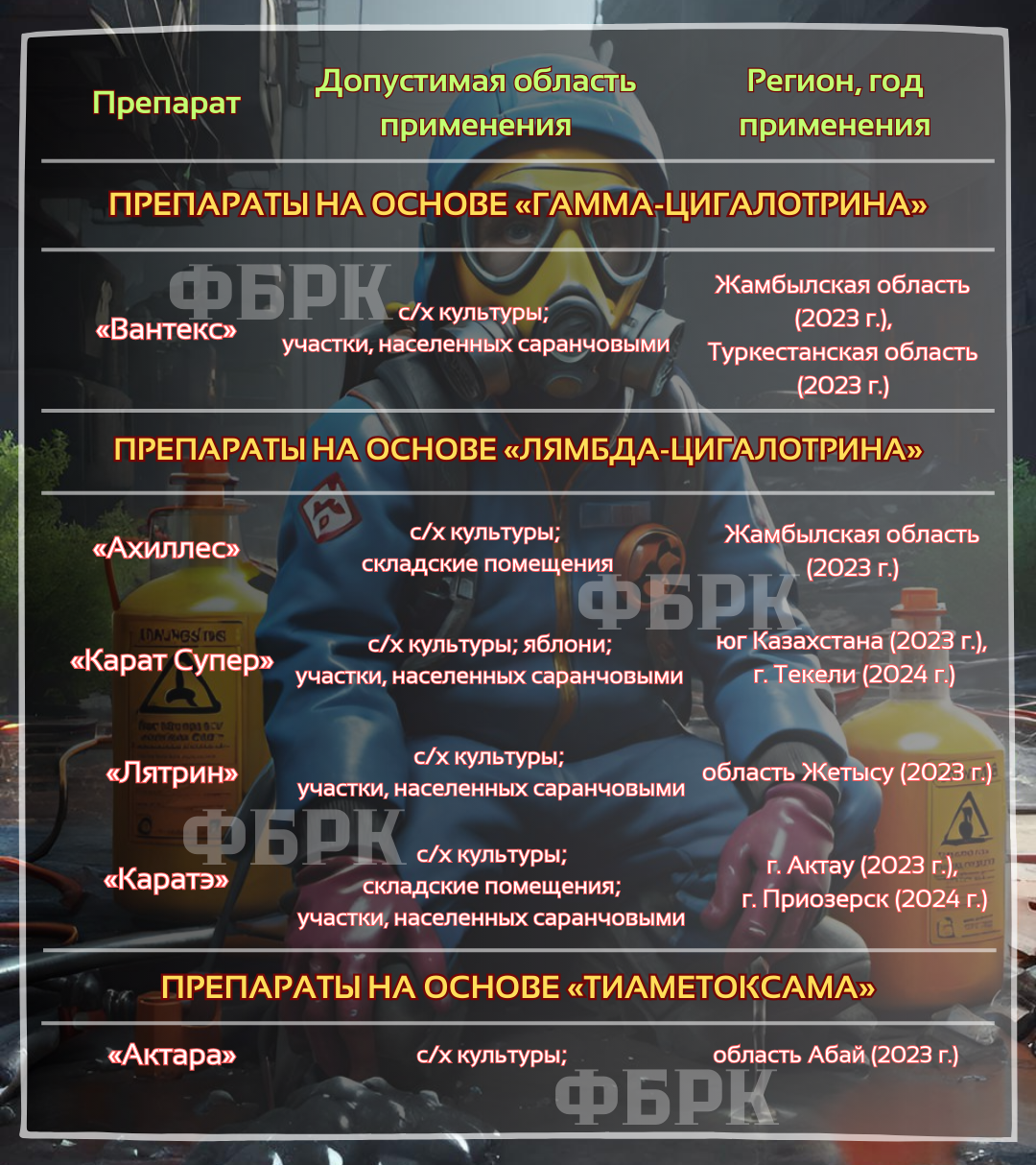
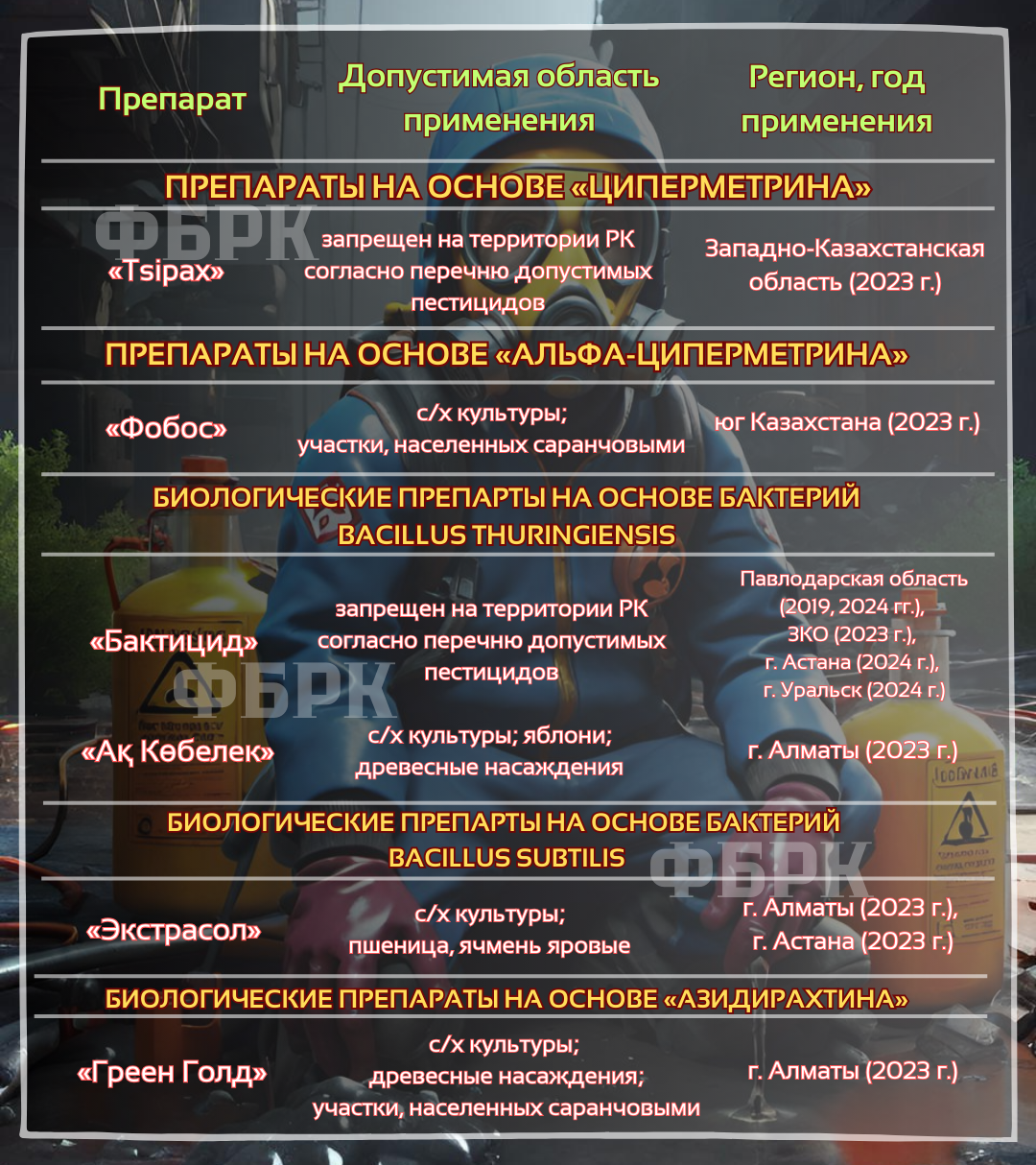
The main preparations used in treatment to protect against leaf-chewing and sap-sucking pests in the regions of Kazakhstan are preparations based on the substances: ‘Imidacloprid’, ‘Diflubenzuron’, ‘Deltamethrin’, ‘Dimethoate’, ‘Cyhalothrin’, ‘Thiamethoxam’, ‘Cypermethrin’, ‘Chlorpyrifos’ and ‘Tetramethrin’.
Most regions, when carrying out disinsection work in the urban environment, use pesticides permissible for use in Kazakhstan in agriculture, justifying this by saying they are ‘permitted on the territory of the Republic of Kazakhstan’. But, most regrettably, there are also those regions which do not intend to even verify the legality of the preparations used.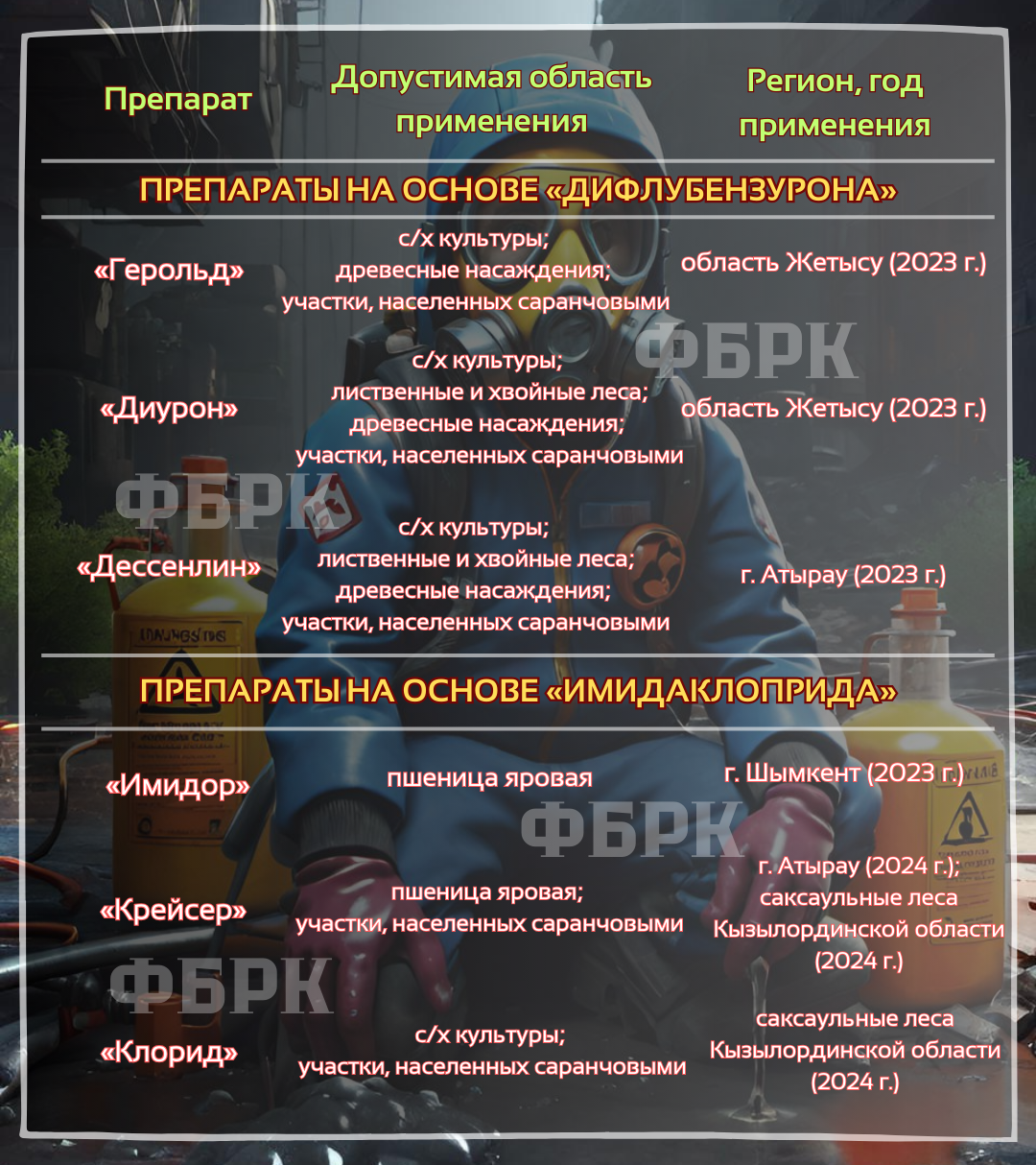
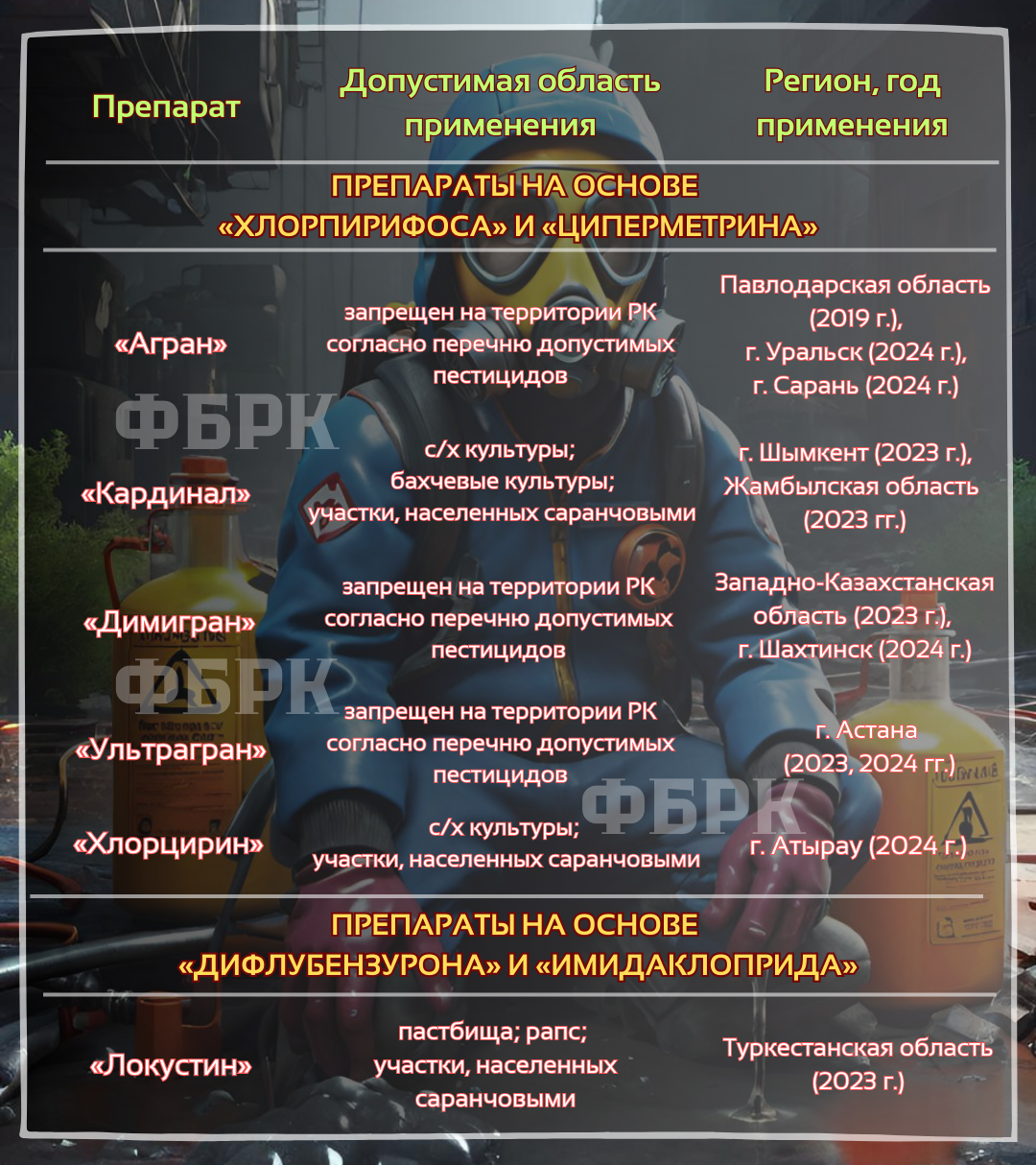
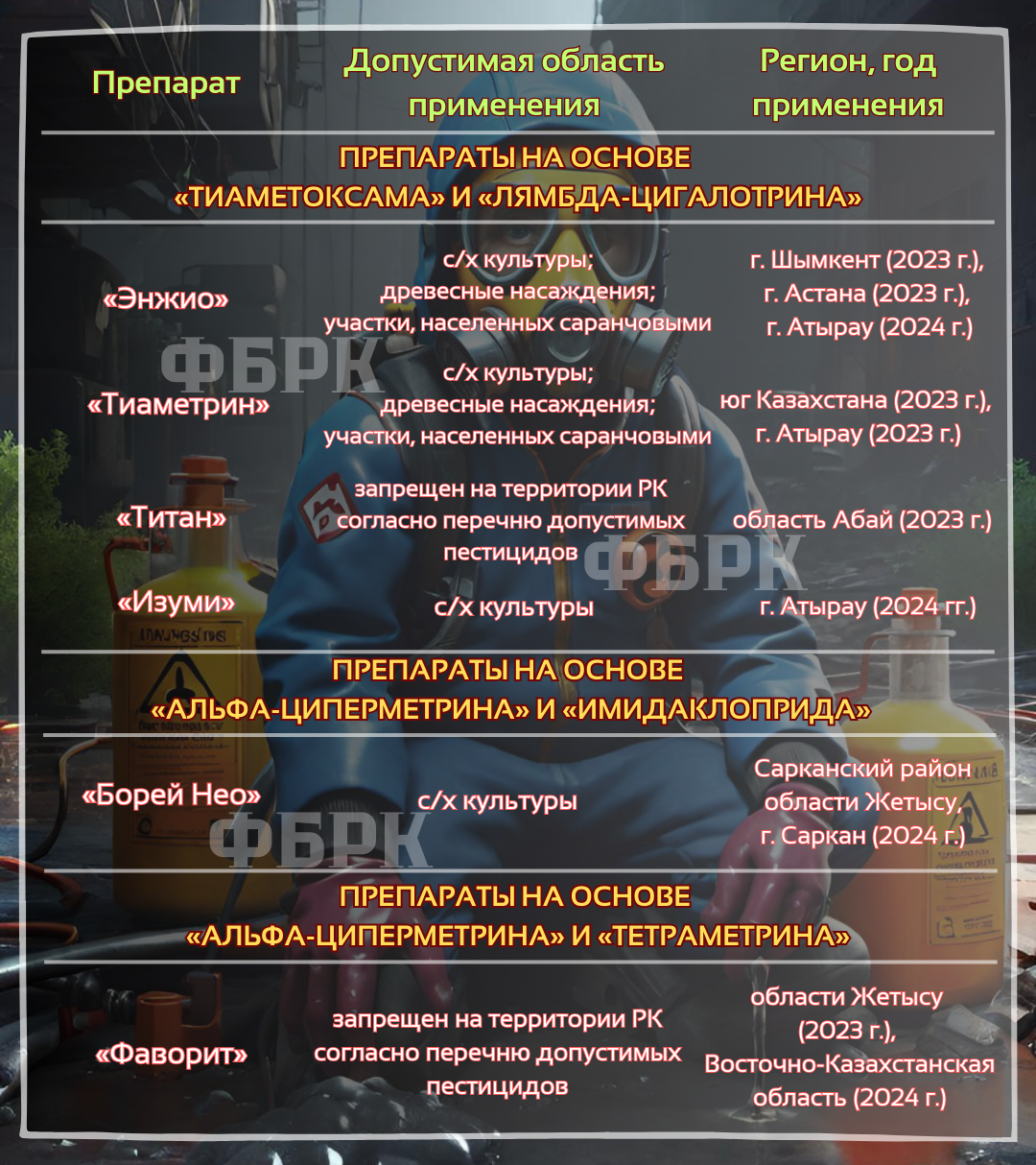
Since July 2023, Kazakhstan has assumed the chairmanship of the Shanghai Cooperation Organisation (SCO), which is responsible for environmental issues. Noting the importance of cooperation in the field of environmental protection, on the initiative of President Kassym-Jomart Tokayev, 2024 has been declared the SCO Year of Ecology. The Kazakh side has developed a number of important documents such as the Action Plan for the SCO Year of Ecology 2024, the Register of Environmental Problems, and others.
And while the government of Kazakhstan reaches new heights on the international stage, there are still plenty of problems within the country itself, one of which is that local executive bodies cannot provide Kazakhstani citizens with environmental safety.
Regarding the toxicological characteristics of the preparations used in Kazakhstan, let us examine in detail the harmful effects of the most common among them.
IMIDACLOPRID
‘Imidacloprid’ belongs to the class of neonicotinoids, which are similar in their action to nicotine and have a harmful effect on various organs and tissues, mainly the liver and kidneys. The substance is moderately toxic to warm-blooded animals and humans, highly toxic to birds, and lethal to bees.
In 2020, a team of American researchers concluded that the use of neonicotinoids has led to a significant decline in bird numbers in the USA. In addition, neonicotinoid pesticides lead to the extinction of bumblebees, honeybees and other pollinating insects, which is why they are banned in the countries of the European Union.
‘Imidacloprid’ can cause overstimulation of the nervous system in humans, leading to tremors of the limbs, increased body temperature, nausea, difficulty breathing, increased heart rate, convulsions, and consequently paralysis and death.
The substance is characterised by high persistence in soil: the half-life process takes up to 100 days. When absorbed by plants, ‘Imidacloprid’ breaks down within 2-3 weeks.
Preparations based on ‘Imidacloprid’ include ‘Imidor’, which was used in Shymkent in 2023, as well as the preparations ‘Cruiser’ and ‘Clorid’, currently used in the saxaul forests of the Kyzylorda Region.
DIFLUBENZURON
‘Diflubenzuron’ is slightly toxic to birds, mammals, freshwater and marine fish, and is not toxic to bees. However, the substance is highly toxic to freshwater invertebrates, including crustaceans and molluscs. Studies show that diflubenzuron affects their reproductive function, growth, reproduction, and survival. In humans, ‘Diflubenzuron’ causes headache and difficulty breathing.
Preparations based on ‘Diflubenzuron’ include ‘Herold’ and ‘Diuron’, which were used in the Zhetysu Region last year, and the preparation ‘Dessencin’, previously used in Atyrau city.
Continue reading in the next part of the material: What is used to poison Kazakhstani citizens during disinsection. Part 2