The FBRK editorial team continues its series of publications dedicated to the analysis of the financial statements of Kazakhstan's social-entrepreneurial corporations (SECs). Today, we will examine the financial statements of SEC "Kokshe" for 2023 — the regional development institute of the Akmola region, demonstrating stable financial indicators despite a number of controversial points noted by independent auditors.
The financial results of SEC "Kokshe" in 2023 showed a significant volume of operational activity: revenue from contracts amounted to 765.6 million tenge, and gross profit reached 633.3 million tenge. These indicators testify to the effective work of the corporation's management team in the face of regional economic challenges.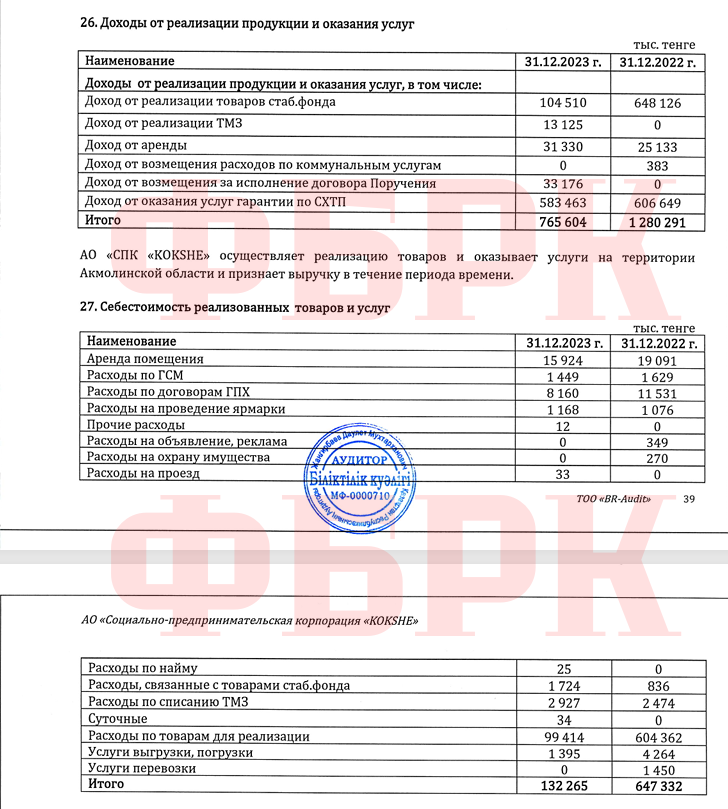
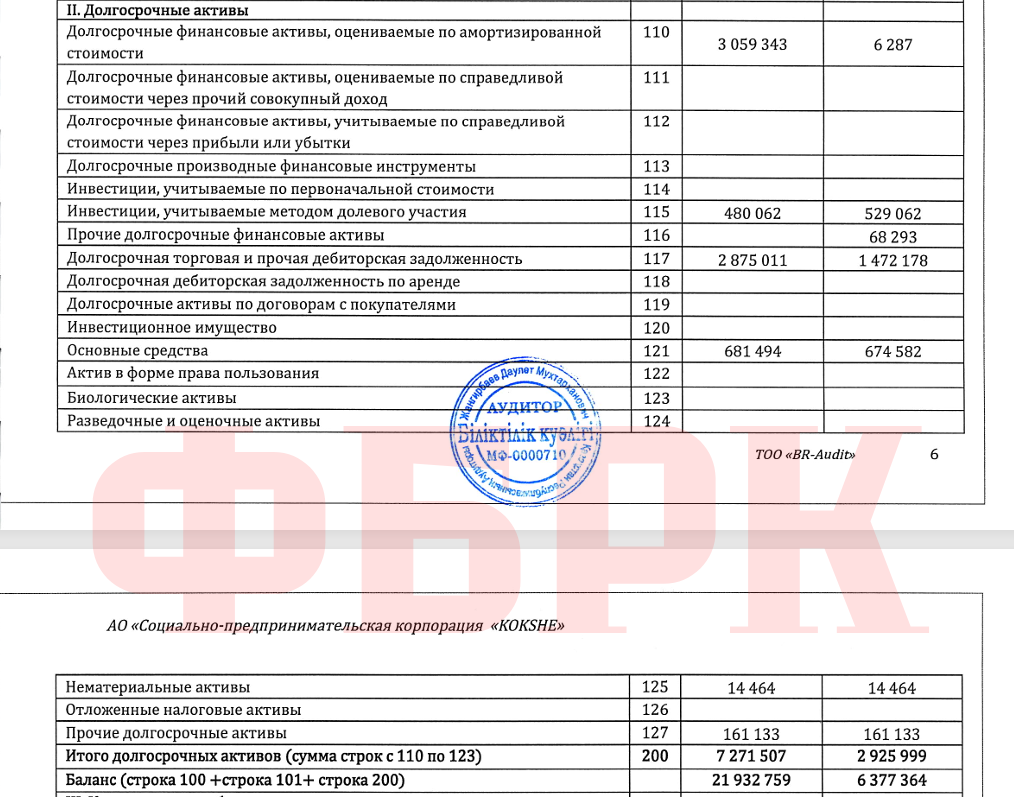
Special attention is drawn to the structure of the corporation's assets, the total volume of which amounted to 21.9 billion tenge. At the same time, current assets (14.7 billion tenge) are more than double non-current assets (7.3 billion tenge), which may indicate the corporation's readiness to respond quickly to market changes. This balance sheet structure is typical for development finance institutions focused on an active investment policy.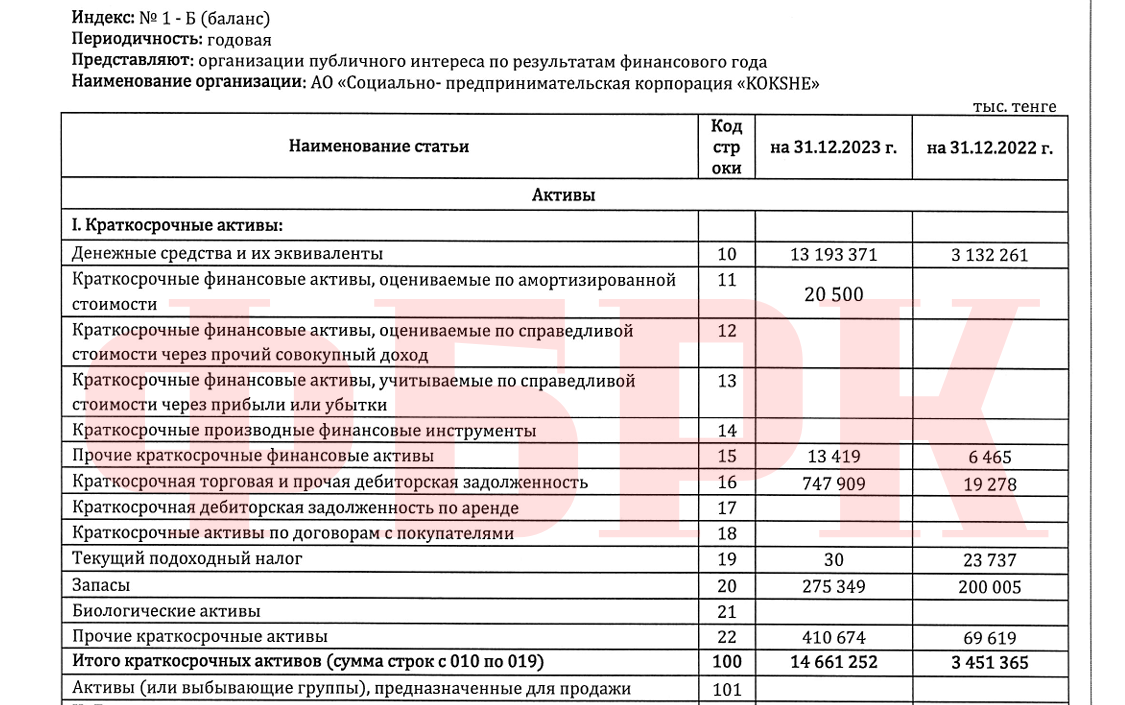
The conservative approach to liquidity management was confirmed by the substantial volume of cash in bank accounts – 13.2 billion tenge. This provided SEC "Kokshe" with a significant safety margin for implementing strategic projects and maintaining stability in the regional market.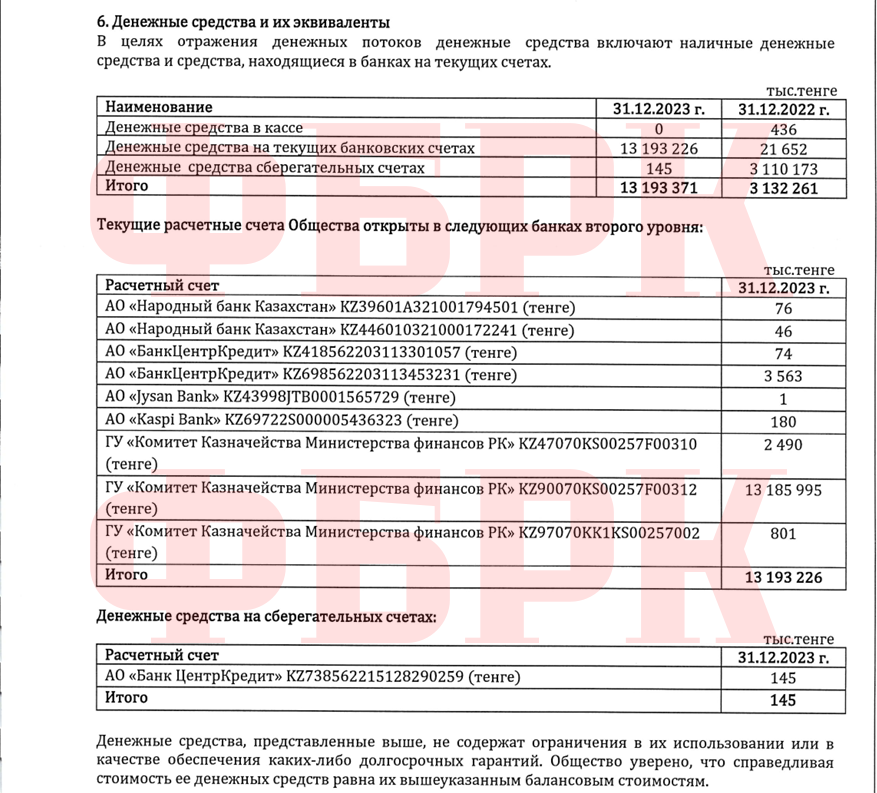
One of the key areas of the corporation's activity was the management of the Stabilisation Fund. Income from the sale of goods from the stabilisation fund amounted to 104.5 million tenge with minimal expenses of 1.7 million tenge, which demonstrated the high efficiency of this socio-economic policy instrument. The stabilisation fund plays an important role in regulating prices for socially significant goods in the region.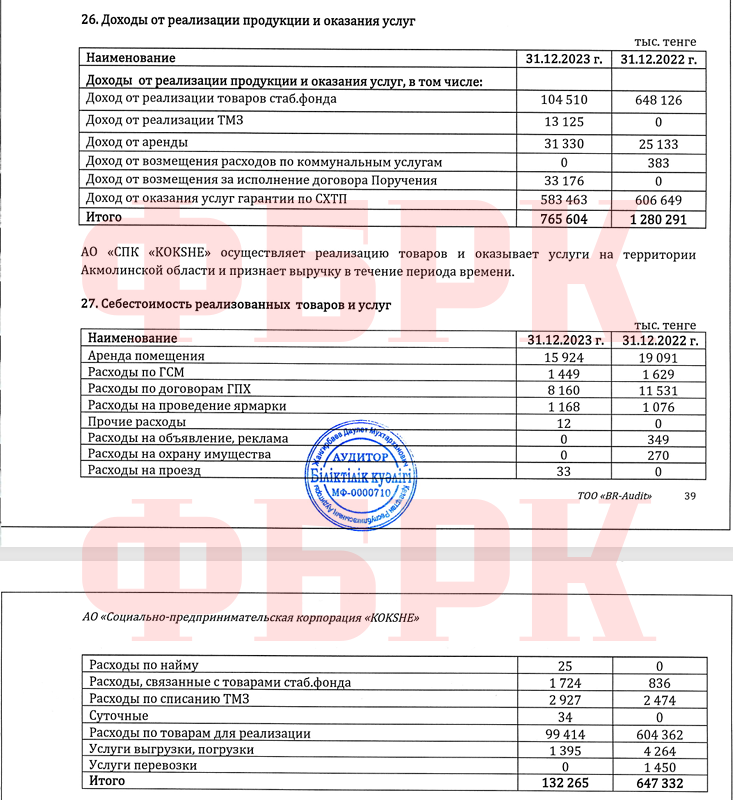
It is important to note that the activities of SEC "Kokshe" go beyond purely commercial objectives. The corporation actively participated in state programmes aimed at developing rural areas and the agricultural sector. In particular, the SEC was involved in the microcredit programme for the rural population under the "Auyl Amanaty" programme with commitments of 1.2 billion tenge, as well as in lending to investment projects in the agricultural sector totalling 15 billion tenge.
A significant role in the corporation's activities was played by loan agreements with state institutions. In 2023, SEC "Kokshe" concluded several significant contracts: for the formation of reserves of the stabilisation fund of goods (328 million tenge), for the stabilisation of prices (898 million tenge), and for microcredit for the rural population (15 million tenge). These funds were presumably directed towards maintaining economic stability in the region and developing entrepreneurial activity, although the actual use requires further analysis.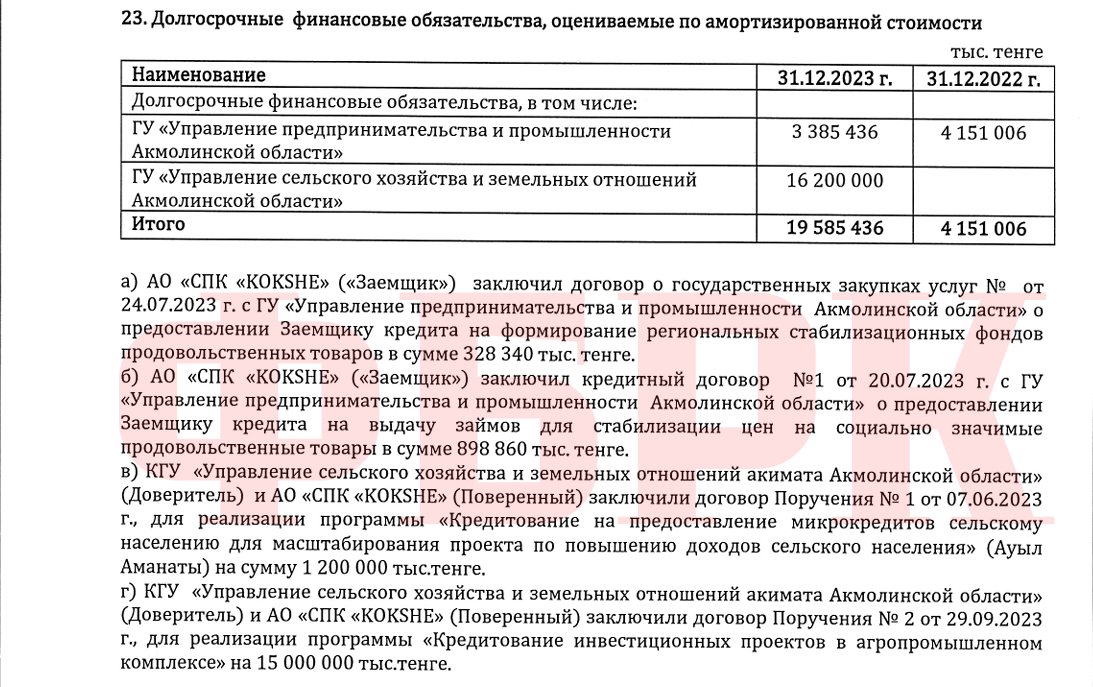
Staff costs, amounting to 119.8 million tenge for the payroll of administrative employees and 23.7 million tenge for remuneration of management personnel, were within reasonable limits for an organisation of this scale. This indicates a balanced personnel policy aimed at attracting professional employees while maintaining the efficiency of administrative expenses.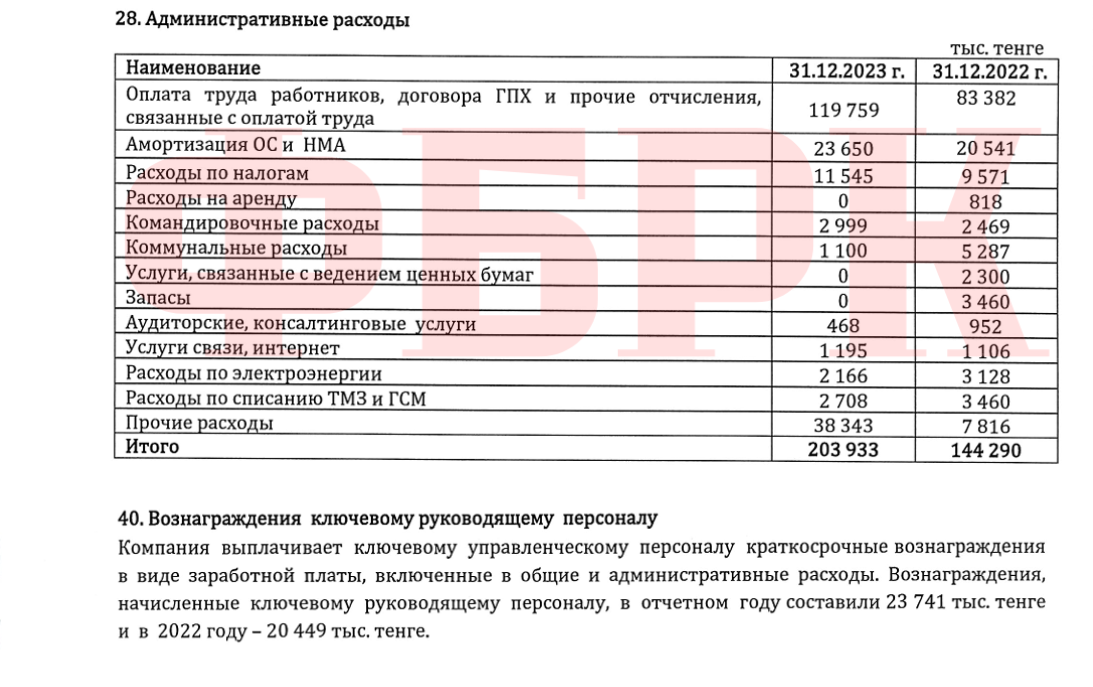
At the same time, the independent audit of the financial statements of SEC "Kokshe" revealed some problematic aspects. The audit firm "BR-Audit" LLP expressed a qualified opinion, pointing to insufficient evidence regarding the balance at the beginning and end of the reporting period for the balance sheet item "Repurchased own equity instruments" amounting to 505.3 million tenge. This raises questions about the transparency of some of the corporation's financial operations and the need to improve internal accounting procedures.
Despite this qualification, the auditors confirmed that the financial statements of SEC "Kokshe" have been prepared, in all material respects, in accordance with the requirements of International Financial Reporting Standards and give a true and fair view of the financial position of the corporation as of 31 December 2023.
Attention should be paid to the structure of the corporation's capital: with an authorised capital of 6.9 billion tenge, SEC "Kokshe" had almost complete placement of the declared shares — 2.80 billion out of 2.81 billion.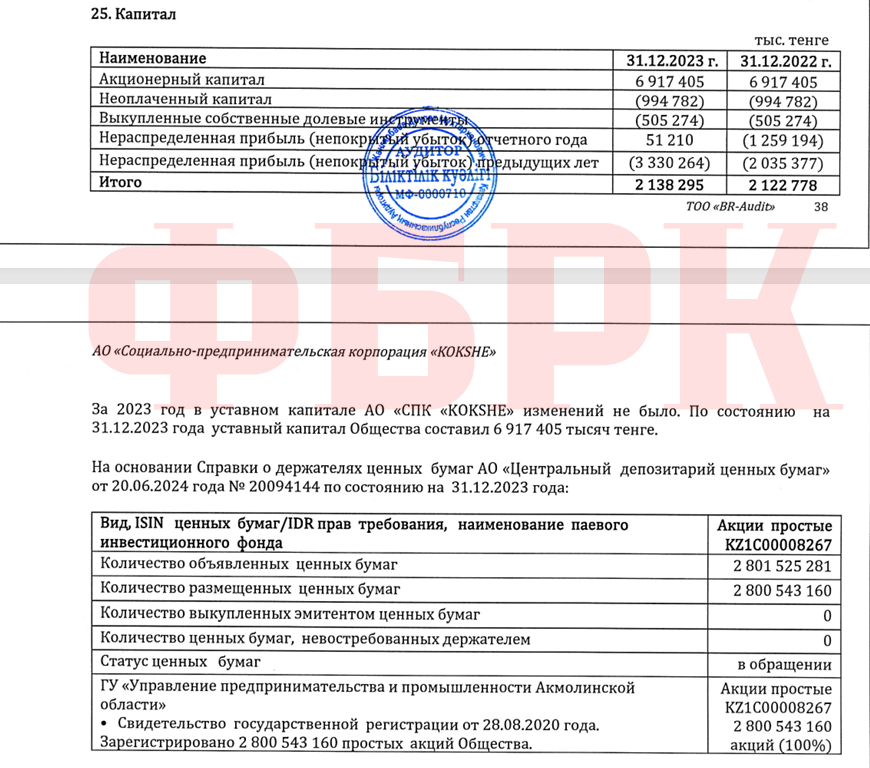
At the same time, the balance sheet did not list any repurchased own shares, which contradicts the data in the audit report, which indicates the problematic amount of 505.3 million tenge under the item "Repurchased own equity instruments". This inconsistency confirms the validity of the auditors' remarks and indicates the need to improve corporate governance.
Overall, the financial picture of SEC "Kokshe" for 2023 reflects the model of a socially-oriented development institution, balancing between commercial efficiency and the fulfilment of socially significant tasks. The corporation demonstrated a moderately conservative approach to asset management, maintaining a significant share of liquidity for responding promptly to economic changes.
The further development of SEC "Kokshe" depends on the corporation's ability to effectively use available resources to stimulate economic activity in the region, support agriculture, and ensure price stability for socially significant goods. At the same time, an important factor for success could be increasing the transparency of financial operations and improving the corporate governance system in line with the recommendations of independent auditors.
Recall that we previously analysed the financial statements of SEC "Almaty" for 2023. In subsequent publications, the FBRK editorial team plans to continue the analysis of the financial statements of other regional SECs, which will allow for a comprehensive picture of the effectiveness of these development institutions and their contribution to the economy of Kazakhstan.
To be continued...