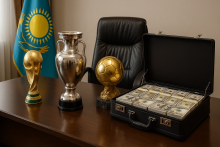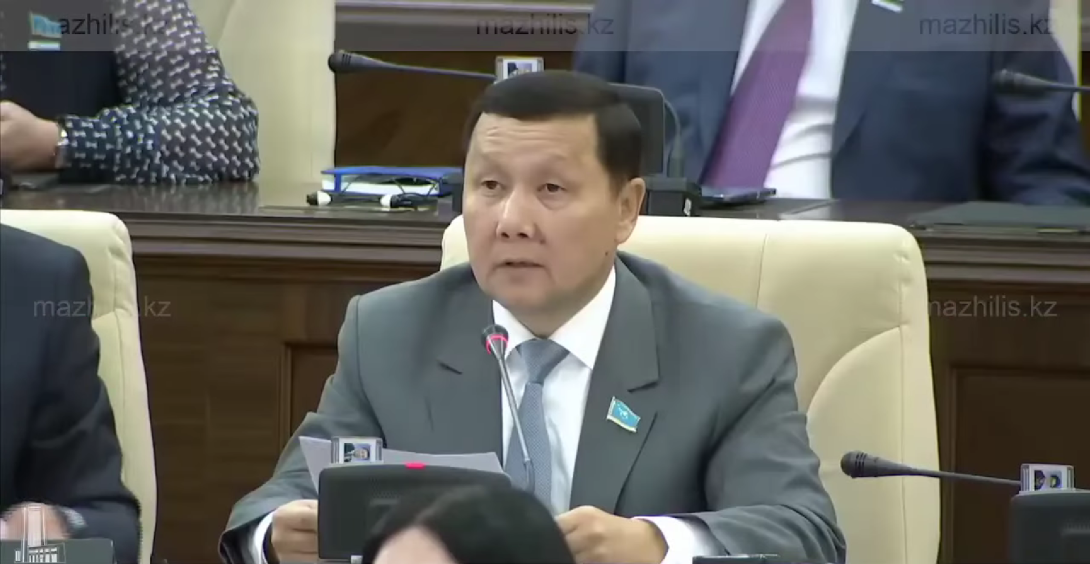
Mazhilis deputy Abzal Kuspan spoke at the first plenary session of the Mazhilis in the fourth session of the eighth convocation, making a statement on corruption in Kazakh football, and sent a deputy's request to the Prosecutor General's Office demanding a comprehensive investigation into match-fixing and financial fraud in this area.
In his speech, the deputy stated that he had become aware of documents related to dubious schemes in football, which shocked him. According to him, the state allocates huge sums to sport, but billions of tenge directed towards football remain practically unaccounted for and uncontrolled.
“I am not a football fan and I don’t even watch matches. But I am a deputy. That means any problem that concerns my constituents becomes my problem too,” — wrote Kuspan on his Facebook page.
The Mazhilis member highlighted the contrast in approaches to oversight:
“Our law enforcement agencies carefully track every tenge allocated to agriculture. But the billions going to football remain practically unaccounted for and uncontrolled.”
In the deputy's request addressed to the Prosecutor General, Kuspan demanded a comprehensive investigation into match-fixing and financial fraud in Kazakh football. The request is accompanied by materials with specific evidence of violations.
The deputy promised to report back on the results of his appeal and stressed the importance of public oversight over the expenditure of state funds in the sports sector.
CONTEXT OF THE PROBLEM
The topic of corruption in Kazakh football has been actively discussed in recent months. In August, the FBRK editorial team published a series of articles revealing systemic violations in this area.
In the first part of the material, the editorial team showed the scale of the problem: according to data from the international company Sportradar, Kazakhstan ranks 4th in the world for the number of suspicious matches. At the same time, over the last 10 years, not a single match has been officially recognised as fixed in the country, despite international data and admissions from participants.
In an interview with the deputy, Abzal Kuspan revealed the mechanism for using sports federations for corruption schemes involving ministers and heads of law enforcement agencies. According to him, sport has become a convenient loophole for corruption, where billions are “laundered” elegantly through match-fixing.
In the second part of the investigation, the editorial team analysed specific cases of purchasing championships in the Kazakhstan Premier League (KPL) in recent years, where every “won” title had its own detective story involving sums, methods, and participants.
In the third part of the material, we analysed the mechanism of resistance of the corruption system to reforms and showed how key figures of the old system maintain their influence, turning the fight against corruption into a sham.
INTERNATIONAL DIMENSION OF THE PROBLEM
The deputy previously cited statistics, according to which 18 football clubs received over 200 billion tenge in budget funds over 6 years, while Kazakhstan sits near the very bottom of the world FIFA ranking. These figures illustrate not just the inefficiency of investment, but the systemic flaw in the funding model.
UEFA actively cooperates with Sportradar in the fight against match-fixing, and this organisation's analytical systems have recorded suspicious activity in the First and Second Leagues of Kazakhstan.
The admissions of system insiders are particularly alarming. Yermukhamed Maulen, a former press secretary for the national team and representative of the Kazakhstan Football Federation (KFF), openly stated that club directors themselves approach referees and participate in match-fixing.
Abzal Kuspan's appeal to the Prosecutor General's Office creates a precedent for a systemic investigation into corruption in Kazakh sport. Law enforcement agencies now face the task of providing a legal assessment of the facts presented. The deputy's request could become a turning point in this fight.