(11 February 2026 | Source: Lada.kz)
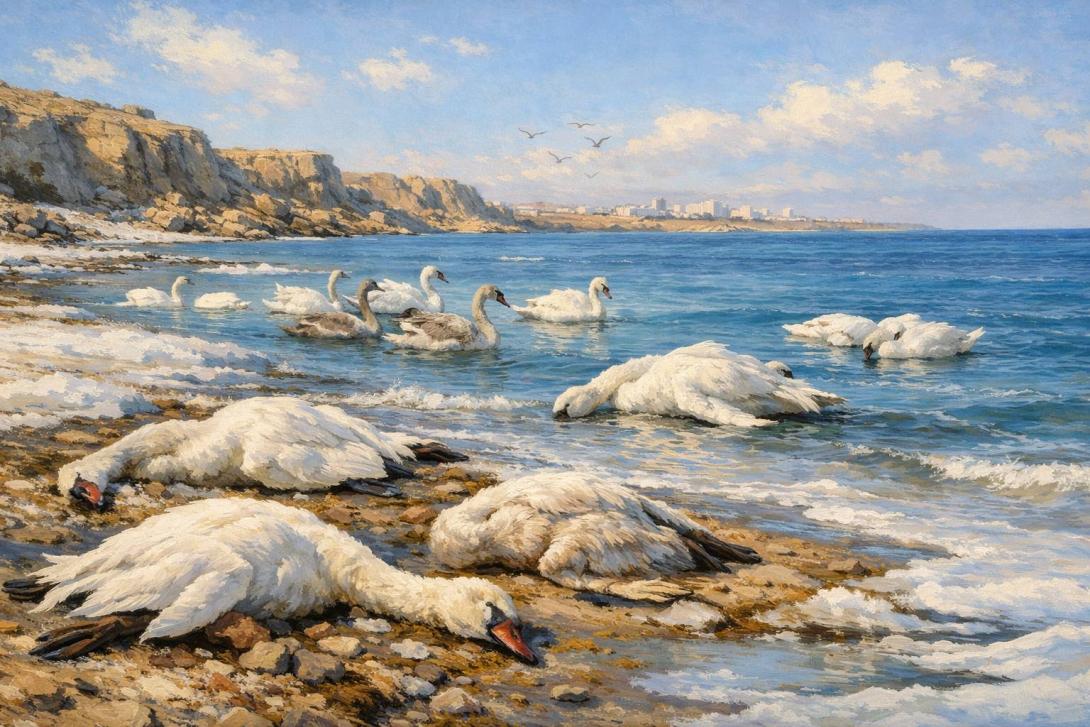
In the Mangystau Region, a mass wintering of swans is being recorded on the Caspian Sea — according to estimates from the forestry inspection, there are around 25,000 of them. At the same time, cases of death among young individuals have been recorded at several coastal points, for which laboratory testing is being carried out.
HOW MANY SWANS ARE WINTERING IN MANGYSTAU
According to information from the regional inspection of forestry and wildlife, there are approximately 25,000 swans living in the Mangystau Region and the waters of the northern Caspian Sea. The majority of the birds are concentrated on the islands of the northern part of the Caspian Sea, while around 3,500 individuals are located on Lake Karakol, reports Lada.kz.
Head of the inspection Gabbas Dosatov noted that many reports of swans in unusual places concern young birds that are not yet strong and have temporarily fallen behind the main flock. According to him, during the winter period swans do not require a large amount of food, as they build up fat reserves in advance.
Furthermore, in recent weeks specialists and residents have noted an unusually large gathering of swans along the coast of Aktau, which has not been observed for a long time.
FACTS ABOUT BIRD DEATHS
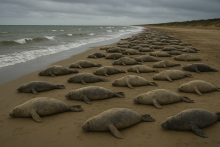
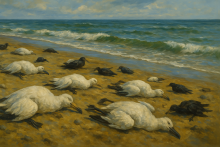
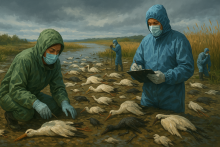
On 10 February, the inspection recorded 9 dead swans near the village of Sain Shapagatov. District veterinary specialists took samples from the carcasses and seawater for analysis, and the bodies were collected and disposed of in a designated area.
Earlier, on 8–9 February, 11 dead swans were found on the coastal plots of the 14th and 4A microdistricts, as well as the residential area Akzhelken (Primorsky).
According to information from blogger Azamat Sarsenbaev, mass bird deaths were recorded in a settling pond at km 24 near the village of Sain Shapagatov, where water is discharged from a local recreation centre and a neighbouring enterprise. The birds, mostly young, gather around the perimeter of the settling pond.
CAUSES AND CONDITION OF THE BIRDS
According to Gabbas Dosatov, in the vast majority of cases, it involves young birds that are not yet ready for long-distance flights.
Data on a direct link between the water discharge and the death of the swans is not yet available — sample collection and laboratory tests are being carried out.
Swans choose areas with a suitable food supply, warmer conditions and the absence of waves, which makes the northern part of the Caspian Sea attractive for wintering.