Specialists from the laboratory and analytical control department of the Mangistau region ecology department conducted field investigations after residents reported finding dead seals on the seashore of Bautino, Tupkaragan district.
According to the agency's press service, on 3 November, staff took samples of seawater in the areas of the settlements of Fort-Shevchenko and Bautino to identify possible pollutants or other factors that could have contributed to the animals' deaths.
Together with the regional fisheries inspection office, the agency monitored the coastline of the Tupkaragan district — from the settlement of Asan to Cape Bautino.
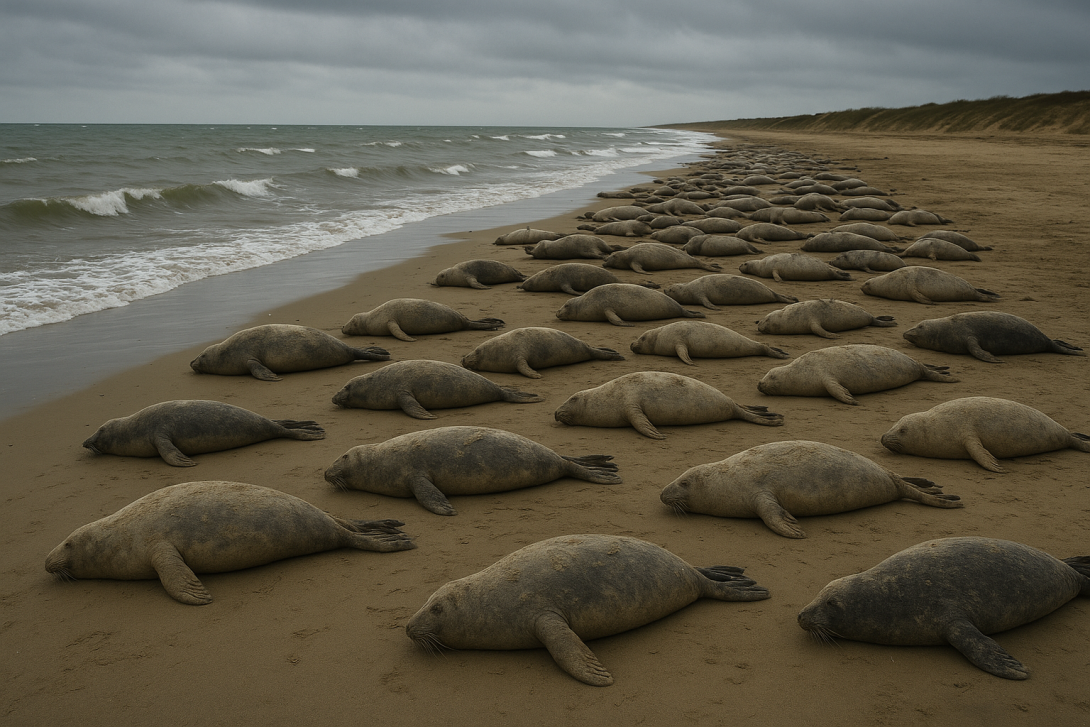
During the survey, specialists discovered 112 carcasses of Caspian seals. Specifically, from the village of Asan to Fort-Shevchenko beach, 39 carcasses were found, and from Fort-Shevchenko beach to Cape Bautino, 73 carcasses were found.
The causes of the seal deaths have not yet been determined. According to preliminary data, analysis of the water samples and pathological examination of the animals will require additional time.
It will be recalled that mass animal deaths on the Caspian Sea coast have previously been recorded in the Mangistau region. In early July of this year, a fish kill was recorded in the region. Dead animals were also found there on several occasions: 1 May — the remains of 88 seals, 9 May — dozens of dead seals and birds, and at the end of May, in the Fort-Shevchenko area, 117 dead seals were discovered over two days.
Ecologists and residents of the region link some of these incidents to the activities of oil-producing companies, one of which is the international consortium North Caspian Operating Company (NCOC).
Meanwhile, in August, ecologists reported that the level of the Caspian Sea is falling by approximately 70 centimetres each year. According to the international movement Save the Caspian Sea, in some areas of Kazakhstan the shoreline has already receded by 18 kilometres.
Experts draw parallels with the dried-up Aral Sea, emphasising that inaction could lead to the loss of the body of water. It was later reported that 305 million tenge had been allocated from the government reserve to study the environmental problems of the Caspian Sea.