In the village of Dongulagash in the Zerendi district of the Akmola region, the cause of a mass livestock death is being investigated.
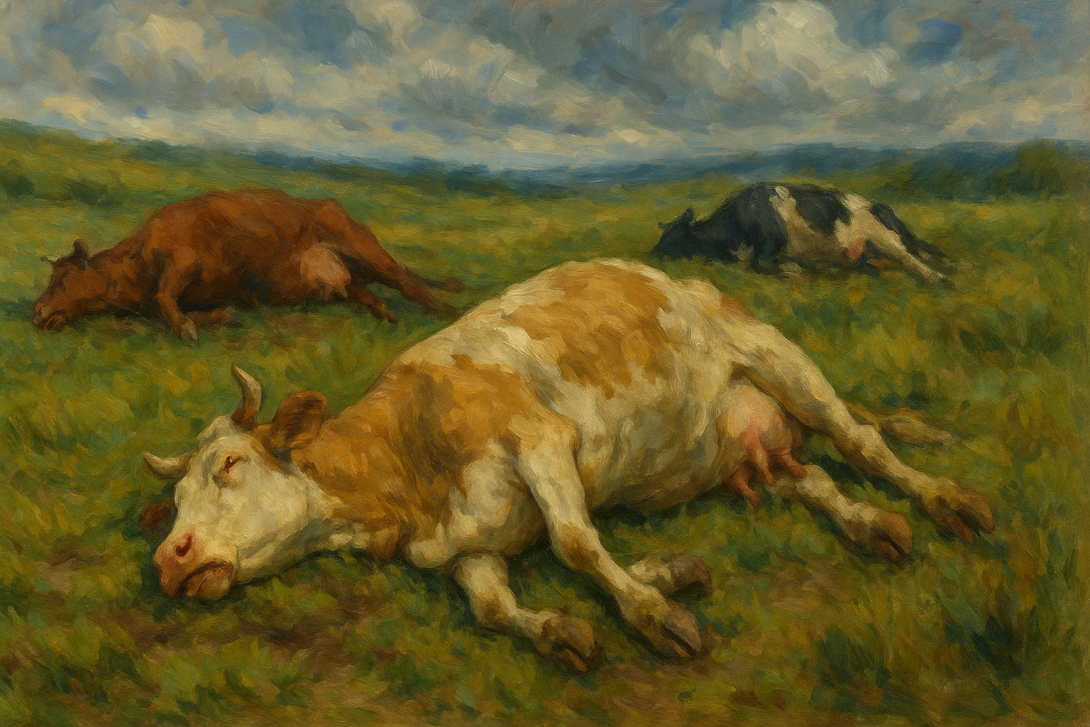
According to KTK, at least 28 cows and calves have died in the last few days alone, and owners have been forced to slaughter another nine animals. Residents report a rapid deterioration in the condition of the livestock and fear the spread of a dangerous infection, although the authorities are currently leaning towards a theory of feed poisoning.
Local residents say the animals are “dying in terrible agony”. It is reported that the cows and calves first abruptly refuse food and water, after which they develop severe, debilitating diarrhoea that continues until death. According to villagers, both adult cows and calves are dying, often while out at pasture.
The dead animals show signs of abdominal bloating, and autopsies reveal an enlarged liver, which may indicate toxic damage to the body. The illness has been recorded in seven households, and only two farms still have completely healthy livestock.
Veterinary specialists are working on site: they are examining the internal organs of the dead animals, taking samples of feed and biological material for analysis, and continuing to monitor the condition of the surviving animals.
Local residents say the situation is causing serious alarm. People are urgently requesting the introduction of a quarantine and fear that the disease could be contagious.
However, the veterinary service reports that initial tests for particularly dangerous infections, including anthrax, have come back negative.
“An examination has been carried out. Pathological materials and feed samples have been delivered to the veterinary laboratory. Initial tests for particularly dangerous diseases have been conducted. There are currently no suspicions; we are leaning towards the theory of feed poisoning,” said the deputy head of the Akmola region veterinary department, Agibay Syzdykov.
Earlier, the prosecutor's office of the North Kazakhstan region identified systemic violations of veterinary legislation affecting several districts of the region and creating risks for sanitary safety. For example, in the Ualikhanov district, the veterinary service inflated vaccination figures by 10,000 head of livestock.