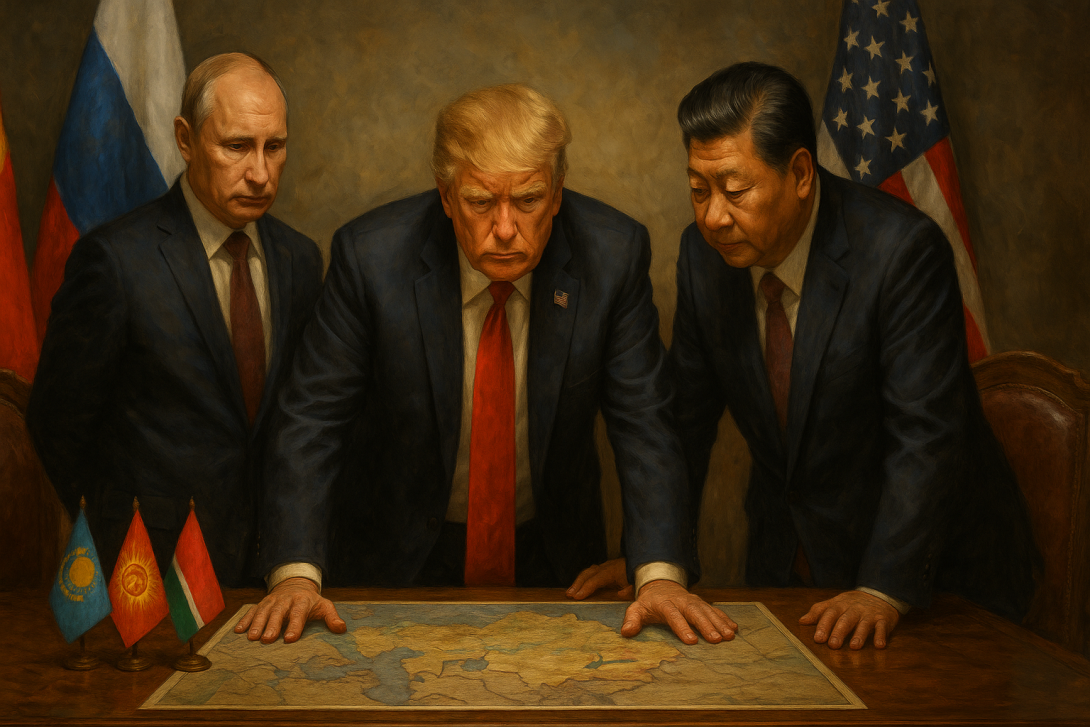
According to the American publication Oil Price, the administration of Donald Trump risks finally losing its grip on Central Asia, where the US still lags significantly behind Russia and China. The statistics of personal diplomacy do not favour Washington, but there appears to still be a chance to turn the situation around.
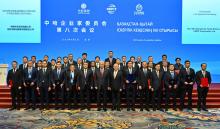
In early September, the leaders of Kazakhstan, Kyrgyzstan, Tajikistan, Uzbekistan and Turkmenistan met at an expanded session of the Shanghai Cooperation Organisation (SCO) in the Chinese city of Tianjin. All of them are members or partners of the SCO and BRICS — structures which the President of the United States of America (USA), Donald Trump, called created with “a bad purpose”, while simultaneously threatening them with tariffs for attempts at de-dollarisation (replacing the US dollar in international settlements and finance with other currencies or assets).
Meanwhile, the statistics of personal diplomacy eloquently show the balance of power in the region. For example, Vladimir Putin has made 76 visits to Central Asian countries, Xi Jinping — 15. While no American president has ever been to Central Asia. In 2022, Putin held more than 50 meetings with regional leaders, while former US President Joe Biden limited himself to a one-hour photo opportunity on the sidelines of the UN General Assembly in 2023.
As American media write, the Trumpian approach of economic pressure is largely ineffective here, as among the five republics, Kazakhstan ranks only 54th among US trading partners, while Tajikistan ranks 208th.
It is logical to assume that the Central Asian republics would prefer to deal with three major powers simultaneously to maintain balance and avoid dependence on bilateral relations with one stronger partner. The region has linguistic and business ties with Russia, continues to receive significant Chinese investment, sees Iran as a promising market, and also invests in Taliban-controlled Afghanistan.
Washington, for its part, could play a key role in addressing the region's environmental challenges — from the drying up of the Aral Sea to large-scale methane emissions in Turkmenistan — by offering modern technology and financial support. However, this has not happened yet. The initiative was seized by the President of Uzbekistan, Shavkat Mirziyoyev, who invited Donald Trump to visit the region, and such a visit could well become a starting point for a new format of cooperation.
For Central Asia and especially for Kazakhstan as the region’s economic leader, the stakes are high. After all, no matter how you look at it, dependence on two neighbours turns the republics into hostages of their confrontation with the West — Kazakh exports suffer from sanctions against Russia, while the US-China trade war hits investments.
The appearance of the American factor would radically change the balance of power. Washington could offer what Moscow and Beijing do not: access to advanced technology without political conditions, investment in green energy and diversification away from oil and gas dependence, and integration into global supply chains bypassing Russian and Chinese monopolies.
For ambitious Kazakhstan, which aspires to be a bridge between Europe and Asia, an American partnership is a chance not just to balance between neighbours, but to become an independent player on the international stage.
For now, all that remains is to watch, whether Central Asia can transform from the periphery of great powers into an independent centre of power — a fully-fledged middle power — or whether it will remain an object of other people’s geopolitical ambitions.