308 saiga calves died while crossing the Saryozen River in the Kaztalovka District of the West Kazakhstan Region, unable to overcome a sharp drop in height on a shallow stretch of the river.
According to KTK TV channel, the adult animals managed the crossing, but the young became trapped — with a depth of just over a metre, the steep riverbank prevented the calves from climbing out.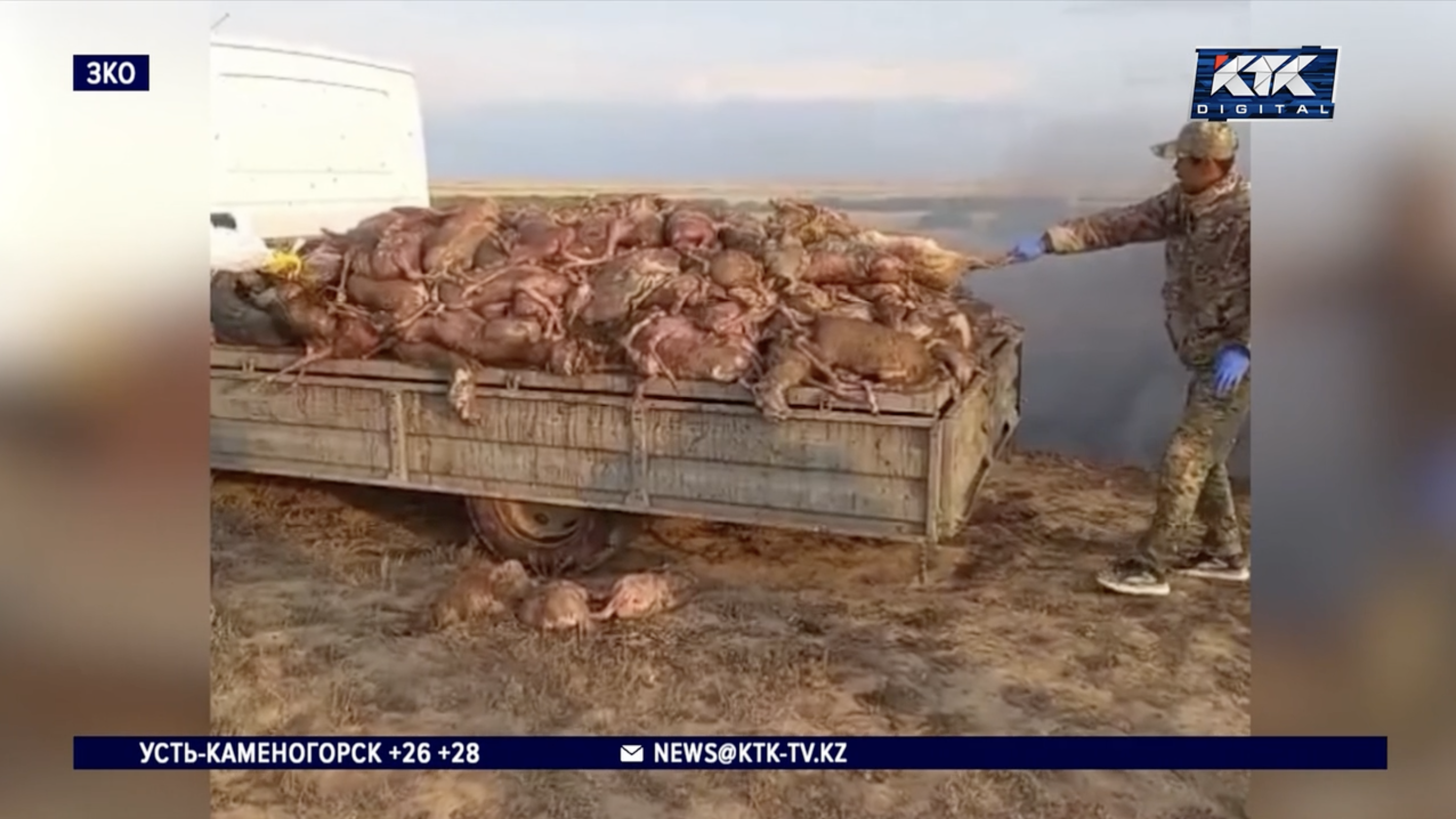
"They will grow up, and hopefully, there will be no more cases like this of them drowning in future," commented the head of the territorial inspection of forestry and wildlife of the West Kazakhstan Region, Nurlan Rakhimzhanov.
It is reported that all the dead animals were disposed of at a specialised livestock burial site in accordance with sanitary regulations.
Shortly before the tragedy on the Saryozen, Vice-Minister of Ecology Nurken Shabiyev reported to deputies on the expected record number of saiga — over 5 million individuals compared to 2.8 million last year. Based on these figures, the ministry completed the development of a roadmap for regulating the population size and is preparing to propose to the government a "transition to the sustainable use" of the animals.
The editorial board of FBRK has repeatedly pointed out problems with the ministry's counting methodology. Aerial surveys are carried out along pre-planned routes in areas of herd concentration, and then the data is extrapolated to the entire habitat area. At the same time, natural mortality does not appear to be taken into account in the calculations at all. When animals die, the ministry prefers to explain it by natural causes, but when counting the head for culling, that same mortality seemingly magically disappears from the formulas.
Particularly telling is the recent statement by Minister Yerlan Nysanbayev that "they will find out the exact number of saiga next week". This implies that all previous figures, on the basis of which decisions on population regulation were made, were inaccurate. If the ministry is only now determining the real data, what were the confident statements about the permissibility of removing 20% of the population, which Mr Shabiyev previously discussed, based on?
The Ministry of Ecology continues to demonstrate its ability to radically change its position on the fate of the saiga every few weeks. Over recent months, the department has gone from triumphant announcements about abandoning inhumane methods to discussing the industrial processing of thousands of animals per day, as our editorial board has already written about in detail here.
The tragedy on the Saryozen, where saiga calves could not overcome a one-metre drop in height, becomes a harsh metaphor for ministerial policy. Nature is indeed unpredictable, but even more unpredictable are the officials who first fabricate fantastic figures of population growth, and then, based on them, prepare plans for mass removal.
Perhaps it is worth reconsidering the counting methodology before again taking up the "regulation" of a population which, judging by recent events, remains far more vulnerable than the reports suggest?