While the Ministry of Agriculture was polishing its image in the media, a very different battle was unfolding in the fields of Kazakhstan. Official statistics report a 90% victory over locusts, but the insects seem to mock the impressive figures, continuing to devour the harvest. Meanwhile, the production of synthetic drugs in the country's underground is growing at an explosive rate. Coincidence? The editorial team at FBRK attempted to find a link between these seemingly unrelated phenomena.
The story, as usual, begins with ministerial arithmetic that simply defies logic. Five years ago, in 2020, the media acknowledged half a million hectares of infested land. By 2024, this figure had grown sixfold, reaching 3.1 million hectares. The Food and Agriculture Organization of the United Nations (FAO) gives an even more pessimistic estimate — an increase of nearly 18 times, from 0.63 million hectares in 2021 to 11.26 million hectares in 2024. Given this trend, one would logically expect a state of emergency, but instead, the air is filled with triumphant reports of almost one hundred percent effectiveness.
The answer lies in how exactly this magical 90% is calculated. We have several versions of this statistical alchemy. The first suggests that only fields with a critical pest population are included in the plan — the rest are simply ignored until the next season. The second version is that high mortality is only recorded at the time of treatment, but no one accounts for what happens a week later when swarms migrate from neighbouring territories.
But the most interesting version concerns the quality of the preparations themselves. Farmers are complaining: why is the locust active again just a few hours after chemical treatment? The answer may lie in the insecticide supply chain, which turns out to be (surprisingly?) opaque.
If you look at the current technical specifications for the Ministry of Agriculture's public procurement, you'll notice that the contractor independently purchases, transports and stores the chemicals, while the state only receives the final certificate of completed works. GPS monitoring is not mandatory, the concentration of the active ingredient is not checked before use, and no balance of preparations is kept. 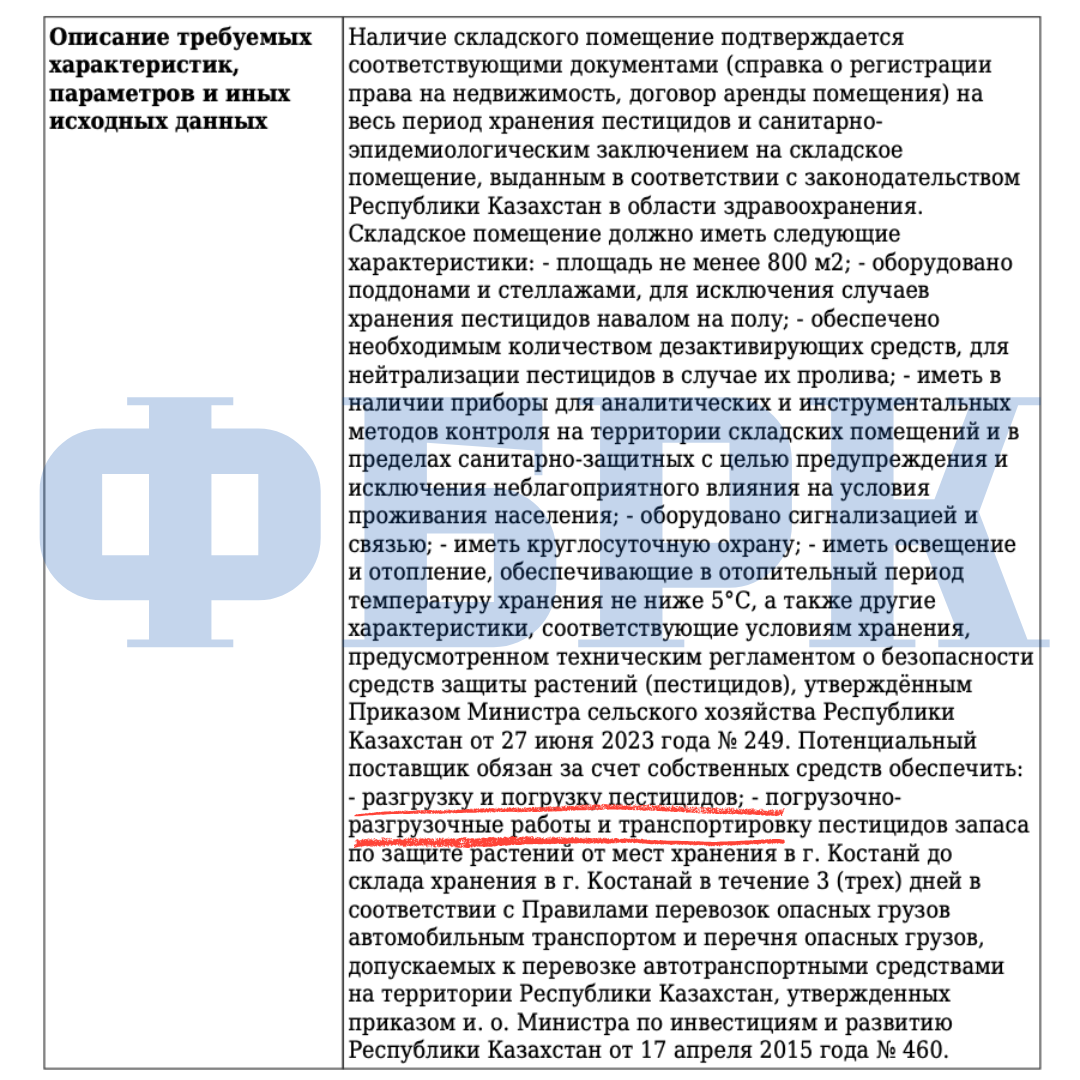
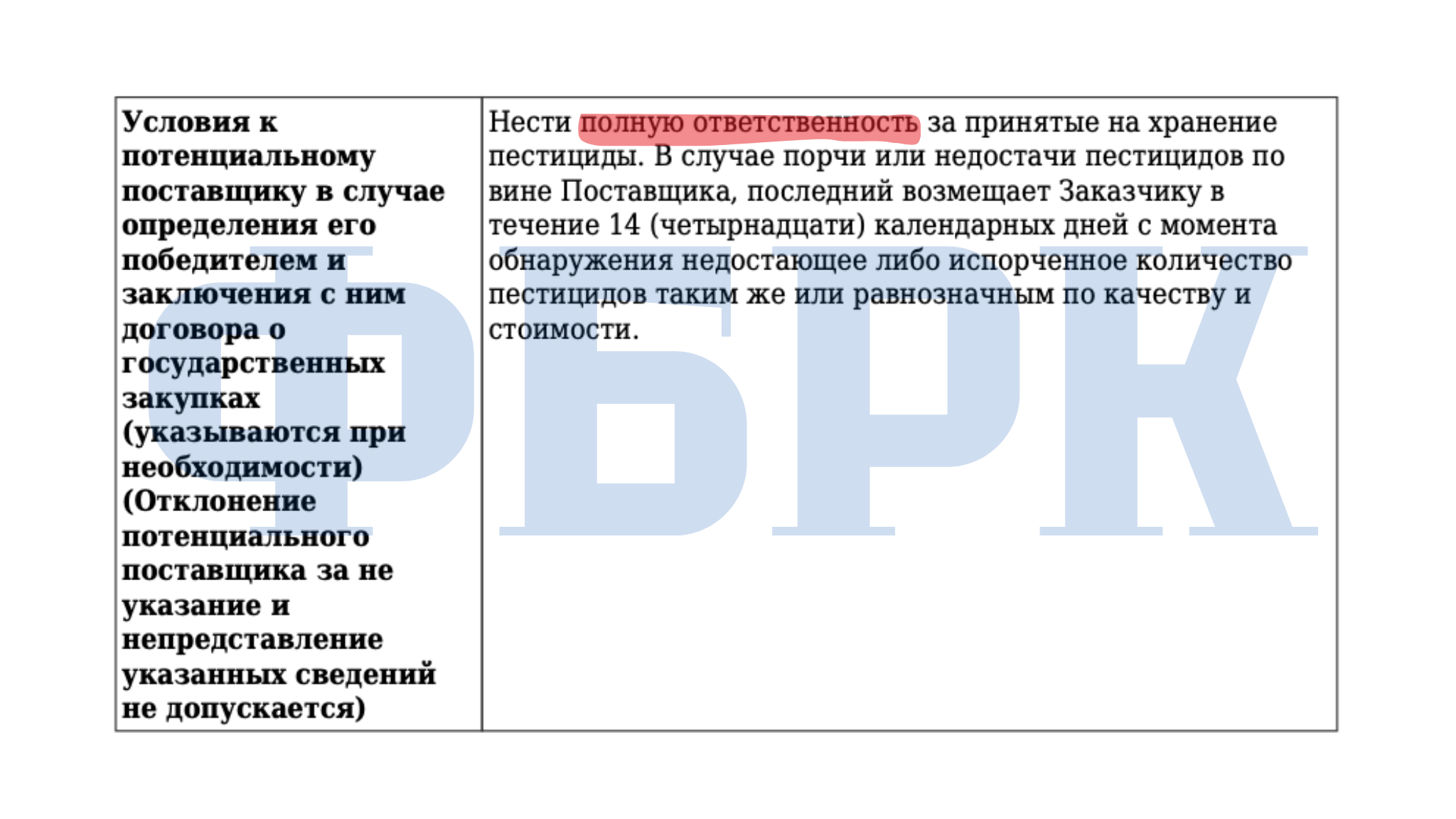
Source: Official Public Procurement Portal of the Republic of Kazakhstan (goszakup.gov.kz), lot No. 13543381-1, procurement for insecticide storage, organiser — State Institution "Committee of State Inspection in the Agro-Industrial Complex of the Ministry of Agriculture of the Republic of Kazakhstan"
Now for another interesting fact: last year, Kazakhstan recorded an explosive growth in drug production. While in 2020, law enforcement liquidated only 8 underground laboratories, by 2023 that number had grown to 75. At the same time, hundreds of tonnes of chemical precursors are seized, the sources of which remain a mystery.
For reference: Precursors are chemical substances used to produce drugs and psychoactive substances.
The answer may lie in the composition of the insecticides themselves, intended for destroying or controlling insect populations, including large-scale and dangerous pests like locusts. The basis of these preparations is organic solvents — xylene, toluene, acetone. These substances are in high demand for the underground synthesis of mephedrone and other drugs. Moreover, the solvents are not considered precursors and are not subject to special control, making them ideal raw materials for the shadow market.
The technology for extracting solvents from insecticides does not require complex equipment. Simple dilution with water, filtration and distillation can yield a high-quality solvent suitable for drug synthesis. For example, from five litres of insecticide concentrate, enough raw material can be extracted to produce 300 grammes of mephedrone.
It is not hard to guess that the economics of such a scheme could look extremely attractive to unscrupulous contractors. Part of the expensive concentrate could easily be sold on the black market, while the remaining preparation is diluted with water to a minimally acceptable concentration. Formally, the plan is fulfilled, the report is signed, but the real effectiveness of the treatment approaches zero.
Indirect confirmation of this theory comes from the geography of the growth in drug production, which strangely coincides with the regions actively fighting locusts. It seems that the more the state spends on insecticides, the more raw material ends up in underground laboratories. However, for particularly discerning experts, we would emphasise that this is merely a hypothesis.
Admittedly, the expert agencies might do well to pay more attention to monitoring and accounting issues. After all, the control system in this area seems to be practically non-existent. It's as if no one is tracking how much preparation actually reaches the field, no one is checking its concentration, and no one is comparing procurement volumes with treatment effectiveness. Perhaps it's time to ask: is the state, with its money, feeding two monsters at once — the locusts and the drug mafia?
A few simple questions could clarify the situation. For instance, how exactly is treatment effectiveness calculated? How much time passes between inspection and spraying? Who controls the concentration of insecticides immediately before application? And how is the fate of solvents from purchased batches tracked? These are precisely the questions the FBRK editorial team put to the relevant departments.
And while they remain unanswered, the locusts continue to feast in the fields, and the underground laboratories churn out tonnes of synthetic drugs. There is a suspicion that a far closer connection exists between these processes than is ready to be admitted in the ministerial offices, where they bravely fight the unofficial position. And yes, trust only official sources.
To be continued...