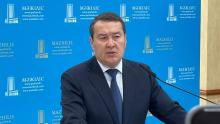
The Supreme Audit Chamber (SAC) has identified an increase in the inefficient use of budget funds, the failure to achieve dozens of state indicators, and problems with the administration of budget revenues based on the results of 2025. The auditors' main findings were reviewed at a plenary session of Parliament.
WHAT THE AUDITORS NOTED
The execution of the budget in 2025 took place under the new Budget Code. As reported by SAC Chairman Alikhan Smailov, administrators of budget programmes gained more independence, while the accountability of budget process participants and parliamentary control were strengthened.
State auditors also noted that the digitalisation of the budget process remains incomplete. The traceability of republican budget funds is only ensured down to the second level, and performance indicators are not yet reflected in existing information systems.
According to Alikhan Smailov, the integration of digital resources across state bodies has not been fully completed, and data at local and central levels in some cases remain incomparable. Furthermore, problems with the prioritisation of expenditure persist.
WHAT PROBLEMS WERE IDENTIFIED IN BUDGET EXECUTION
According to the SAC, during 2025, budget funds amounting to 2.4 trillion tenge were redistributed. For some administrators, the volume of redistribution reached 90% of planned targets.
A total of 99 projects with a combined cost of 75 billion tenge were excluded from the budget. Meanwhile, of more than 600 investment projects scheduled for completion during the year, over 20% were not implemented.
The amount of inefficiently used funds increased by 1.7 times compared to 2024. At the central level, an average of 5% of budget programme indicators were not achieved, and in the regions, 33% were not achieved. Overall, auditors recorded the failure to achieve 11 key national and more than 30 target indicators in the areas of digitalisation, agriculture, water management, ecology, and other sectors.
WHAT HAPPENED WITH BUDGET REVENUES
State auditors calculated that, despite the gross domestic product forecast being exceeded by 9 trillion tenge — reaching 159.9 trillion tenge — the budget received 335 billion tenge less than expected.
According to the SAC's conclusion, one of the reasons was shortcomings in planning and inflated tax forecasts. By the auditors' estimates, in 2025, payments amounting to 154 billion tenge relating to 2026 were credited to the budget, and the amount of unrefunded value-added tax (VAT) approached 900 billion tenge.
Furthermore, at the end of the year, the allocated 244 billion tenge was not disbursed, and a significant amount of accounts payable accrued.
The SAC also drew attention to the increase in the number of court disputes between taxpayers and tax authorities. According to auditors, over the last four years, more than half of the contested amounts were awarded in favour of taxpayers.
WHAT WAS REPORTED ABOUT THE QUASI-PUBLIC SECTOR
In the auditors' assessment, the influence of the quasi-public sector on the economy and the system of public finances remains significant. The pace of implementation of the Comprehensive Privatisation Plan has slowed, and the dependence of the quasi-public sector on budget funds has increased.
In 2025, 812 billion tenge was allocated for these purposes, of which 57% was distributed through the mechanism of state assignments. Additionally, quasi-public sector entities received a further 1.4 trillion tenge through the public procurement system.
WHAT ISSUES AROSE CONCERNING EXTRA-BUDGETARY FUNDS
One of the innovations of 2025 was the integration of extra-budgetary funds into the budget process. However, as stated in the SAC's conclusion, comprehensive accounting and data on their actual number are still lacking.
In the auditors' opinion, the disclosure of information regarding the Social Health Insurance Fund (SHIF), the State Social Insurance Fund (SSIF), the Victims' Compensation Fund (VCF), and the Special State Fund (SSF) remains insufficient.