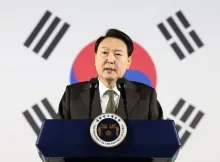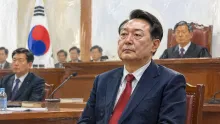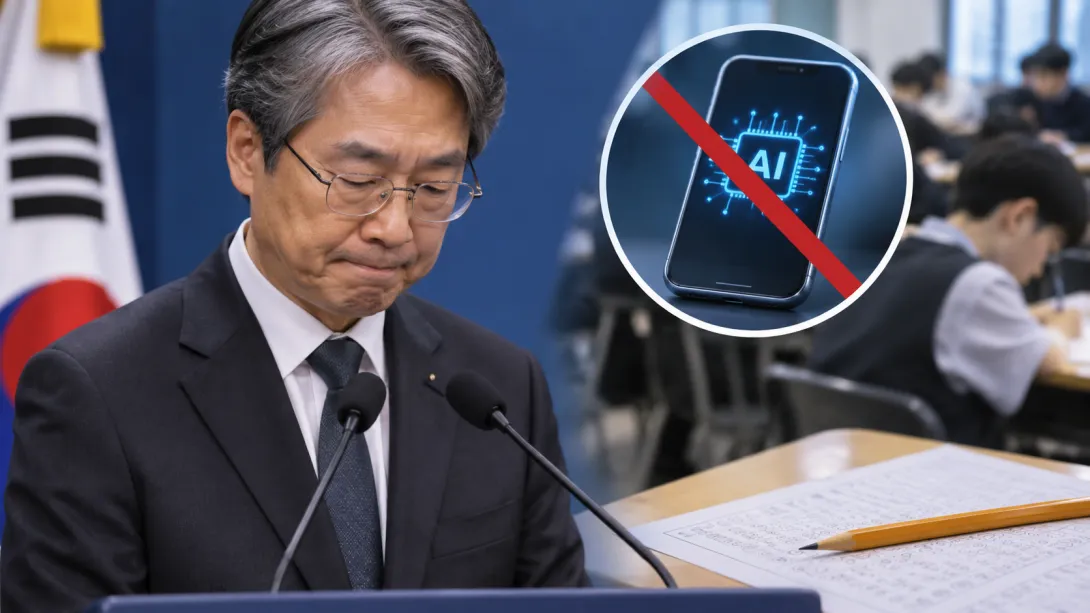
South Korea's Education Minister Choi Kyo-jin has resigned following widespread discontent over new rules for the university entrance examination. The restrictions, aimed at tackling cheating with the help of artificial intelligence (AI), were introduced immediately before the test. President Lee Jae-myung accepted the minister's resignation.
WHY THE MINISTER RESIGNED
As reported by Yonhap, on 22 November 2026 the head of the education ministry, Choi Kyo-jin, announced his departure from the post, acknowledging insufficient preparation for the national entrance examination Suneung (CSAT), which took place on 19 November.
The minister said the last-minute rule changes had caused inconvenience for exam candidates and the public.

"As the responsible minister, I cannot escape criticism for the fact that we were unable to prepare in advance," his statement said.
President Lee Jae-myung accepted the resignation about an hour after it was announced. The procedure for appointing a new minister will follow the established process.
WHAT RESTRICTIONS WERE INTRODUCED FOR PUPILS
The new measures were aimed at preventing cheating using artificial intelligence, hidden cameras and electronic devices.
Immediately before the exam, the authorities introduced additional restrictions:
Candidates were allowed to bring only pencils into the examination halls.
Buttons on clothing had to be covered with special stickers to rule out the use of miniature cameras.
During the exam, the authorities sent emergency notifications three times to mobile phones across the country in order to identify candidates who had not handed in their devices.
Pupils and teachers criticised the changes, saying the new requirements had heightened anxiety ahead of one of the country's most important exams.
HOW MANY VIOLATIONS WERE DETECTED AT THE EXAM
According to the education ministry, 111 suspected cases of cheating using electronic devices were recorded during the test.
The ministry did not specify, however, how many of these episodes were directly linked to the use of artificial intelligence.
Further criticism was prompted by a speech in parliament by 72-year-old Choi Kyo-jin. Responding to a lawmaker's question about whether he could guarantee the detection of AI-assisted cheating, the minister said he was not sure he could, because of his age.
WHY THE SOUTH KOREAN AUTHORITIES FEAR AI-ASSISTED CHEATING
The tightening of the rules followed a scandal at the professional examination for tax consultant qualification. A candidate who scored the maximum number of points admitted to using a miniature camera, a smartphone and generative artificial intelligence.
Another high-profile case relates to the examination for admission to law schools (LEET). A man who achieved the top result and faced accusations of cheating was found dead on 19 November. Police said the investigation into the circumstances of the suspected violation was continuing.
In South Korea, the Suneung examination is of particular significance, since university admission results largely determine graduates' future career opportunities.