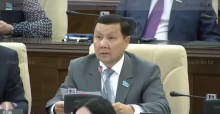
Mazhilis Deputy Magerram Magerramov stated that problems with match-fixing and corruption risks persist in Kazakh football. According to him, such phenomena undermine the trust of fans and require systemic solutions.
WHAT THE DEPUTY SAID
In an interview with the TV channel Khabar, Magerram Magerramov noted that, despite the development of technology and increased transparency, such cases continue to occur.
“Of course, such phenomena in the 21st century, when everything would seem to be transparent, are certainly disappointing. Fans want to see fair play, and when such things happen, it leads to disappointment and doubts about fairness. This is a complex problem that affects everything. Therefore, it must be fought. I believe that both the public and state bodies should make joint efforts to eradicate this,” the deputy noted.
He also expressed the opinion that transferring football clubs into private hands could help reduce such risks, as investors are interested in the financial stability and reputation of the teams.
WHAT PROBLEMS ARE BEING RECORDED
According to Sportradar, 1,116 suspicious matches were recorded worldwide in a year, with around 76% of cases occurring in football and basketball.
It is noted that Kazakhstan was previously among the countries with an elevated risk of such incidents. In subsequent years, detailed statistics by country were not published.
It is noted that Kazakhstan was previously among the countries with an elevated risk of such incidents. In subsequent years, detailed statistics by country were not published.
WHICH CASES ATTRACTED ATTENTION
Against this backdrop, individual cases within the national championship also became a topic of discussion.
In particular, at FC Aktobe, nine footballers placed bets totalling approximately 110 million tenge.
Furthermore, the match between Ordabasy and Atyrau caused public outcry, after which referees Sanjar Iskakov and Tatyana Sorokopudova were temporarily suspended.
National category referee Alibek Aubakirov also stated there was possible pressure on VAR officials.
“Since 2022, referees of the Kazakhstan Premier League have been under pressure from both third parties and leaders of the Kazakhstan Football Federation. During the broadcast of the match, unauthorised individuals were visible, one of whom interfered in the work of the VAR team, including in the episode involving the disallowed goal. However, it is not specified exactly who these individuals were, nor why information about them was not disclosed to the football community,” the referee noted.
At the same time, refereeing in Kazakh football is paid according to a fixed system. The main referee receives over 713,000 tenge per match, assistants receive around 400,000 tenge, and VAR system referees receive approximately 340,000 tenge.
Despite the established level of payments, experts point to a continuing shortage of personnel and the need to develop the referee training system.
HOW IS PRIVATISATION LINKED TO THE FIGHT AGAINST CORRUPTION
The report notes that one tool for reducing risks could be the privatisation of football clubs. With state funding, there may be problems with transparency and financial discipline.
A private management model implies that owners have a vested interest in the club's reputation and stable income, which could reduce the motivation to participate in match-fixing.
CONTEXT
The problem of match-fixing and corruption risks in Kazakh football has previously been the subject of public discussion.
In 2025, the editorial team of FBRK published a series of articles devoted to this topic. In particular, citing data from Sportradar, it was reported that Kazakhstan was among the countries with the highest number of suspicious matches.
Certain aspects of the problem were previously raised by Mazhilis Deputy Abzal Kuspan, who drew attention to systemic issues in the field of football.
The articles also examined individual cases in the national championship and issues of sector management.