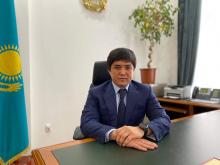
The former head of the Office of the President of Ukraine, Andriy Yermak, has been released from pre-trial detention after posting bail in the amount of 140 million hryvnias (about $3.2 million). The funds were raised in three days, and the total amount received exceeded the bail set by the court.
HOW THE BAIL WAS RAISED
According to the publication Ukrainska Pravda citing the High Anti-Corruption Court of Ukraine (HACC) and lawyer Ihor Fomin, the necessary amount was collected by the morning of 18 May.
As the publication's sources clarify, the money arrived in approximately 200 payments, with some transfers made for symbolic amounts — as little as 1 kopeck. The total volume of receipts amounted to 154 million hryvnias, exceeding the bail set by the court.
Later, Channel 5 reported that Andriy Yermak had been released from pre-trial detention. According to him, while in custody he was held in a paid cell, which his lawyer covered the cost of.
WHY YERMAK WAS REMANDED IN CUSTODY
On 14 May, the HACC imposed a preventive measure on Andriy Yermak in the form of detention for a period of two months, with the alternative of release on bail in the amount of 140 million hryvnias.
Earlier, the Specialised Anti-Corruption Prosecutor's Office (SAPO) of Ukraine had asked the court to set bail at 180 million hryvnias. Following the court's decision, Yermak stated that he did not have such a sum at his disposal, but that his acquaintances and friends were ready to help.
According to Ukrainska Pravda, 30 million hryvnias were contributed by the former head coach of the Ukrainian national football team, Serhiy Rebrov.
WHAT THE FORMER HEAD OF THE PRESIDENT'S OFFICE IS SUSPECTED OF
According to the investigation, Andriy Yermak and other individuals involved in the case may be linked to the laundering of more than $10 million during the construction of luxury housing near Kyiv. The investigation claims that the construction project was partially financed with funds obtained through corruption schemes at the company Energoatom.
The National Anti-Corruption Bureau of Ukraine (NABU) and SAPO had previously informed Yermak and at least several other individuals involved in the case that they were under suspicion. The actions of the suspects are classified under Part 3 of Article 209 of the Criminal Code of Ukraine ("Legalisation of property obtained through criminal means"). This article carries a penalty of up to 12 years in prison.
WHAT IS KNOWN ABOUT THE OTHER INDIVIDUALS INVOLVED IN THE CASE
NABU and SAPO also informed six other individuals involved in the case of laundering 460 million hryvnias during the construction of the residential complex Dynasty in the Kyiv region that they were under suspicion. The official statement from the agencies did not disclose the names of the suspects. It was only specified that those involved included a former vice prime minister of Ukraine, a businessman, and "other persons".
The publication Babel, citing sources, wrote that this could refer to former vice prime minister Oleksiy Chernyshov and businessman Timur Mindich, who is described as a long-time partner of Volodymyr Zelenskyy. According to the publication, Mindich left the country shortly before the searches were carried out.
The case materials state that during the period from 2021 to 2025, approximately 460 million hryvnias may have been legalised through the luxury housing project.
HOW THE CASE IS CONNECTED TO THE 'MIDAS' INVESTIGATION
In November 2025, NABU and SAPO announced an operation called Midas, related to an investigation into corruption in the energy sector.
Furthermore, in December 2025, Ukrainian media reported about searches at Andriy Yermak's premises in connection with this case.
According to the investigation, a group of officials and businessmen created a scheme around Energoatom, under which participants could receive kickbacks from contractors amounting to 10–15% of the contract value. Investigators believe the funds were then channelled out through a network of foreign companies.
Law enforcement agencies estimate that approximately $100 million may have passed through the alleged scheme.