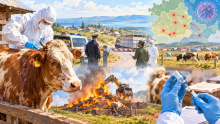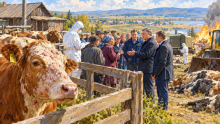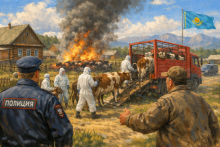
In the Irkutsk Oblast, quarantine has been lifted in the outbreak areas of lumpy skin disease (LSD), which in the autumn led to the seizure and destruction of farm animals from residents. Livestock owners were paid about RUB 76 million from the regional government's reserve fund. However, the authorities have still not disclosed the number of animals destroyed, and some restrictions will remain in place for another year.
HOW QUARANTINE WAS INTRODUCED IN THE IRKUTSK OBLAST
According to "Siberian Express", Governor of the Irkutsk Oblast Igor Kobzev signed a decree lifting the quarantine in the settlements where outbreaks of lumpy skin disease had previously been detected.
Restrictive measures began to be introduced on 3 September 2026. Initially, outbreaks were detected in two private subsidiary farms in the village of Butyrki. According to local authorities at the time, there were 21 animals there.
The quarantine was then extended to other settlements. The list included the villages of Koty, Butyrki, Turskaya, Pozdnyakova, Shiryaevo, Moskovshchina and Revyakina, the villages of Khomutovo and Oyok in the Irkutsk municipal district, as well as the village of Zakhal in the Ekhirit-Bulagatsky district.
WHY RESIDENTS WERE OUTRAGED BY THE SEIZURE OF LIVESTOCK
Along with the introduction of quarantine, the seizure of cattle, small ruminants and pigs began. The decision caused discontent among animal owners.
Residents claimed that they were not provided with test results confirming that their livestock was diseased. In addition, people were concerned that outwardly healthy animals were also subject to seizure. Some villagers said that veterinarians did not identify signs of the disease during examination.
People demanded an explanation of which examinations the decisions to destroy animals were based on and why owners were not shown the test results. Additional discontent was caused by the initial amounts of compensation. In video recordings published at the time, rates of RUB 224 per kilogram for cows, RUB 307 per kilogram for small ruminants and RUB 190 per kilogram for pigs were cited. Later, the payments were increased.
In early September, the authorities also introduced a state of emergency in the territory of the Oyok administrative district. Head of the Irkutsk municipal district Leonid Frolov urged residents not to obstruct veterinary measures.
HOW MUCH WAS PAID FOR SEIZED ANIMALS
According to the regional veterinary service, livestock owners were paid compensation from the reserve fund of the government of the Irkutsk Oblast and municipal budgets.
The total amount of payments directly from the reserve fund was about RUB 76 million.
At the same time, the agency did not state the total number of seized and destroyed animals. Previously, the veterinary service had also refused to disclose this information in response to a request from a local media outlet, explaining that the information was official in nature.
HOW MANY ANIMALS WERE VACCINATED AND WHAT BANS REMAIN
In the Irkutsk municipal district and the Ekhirit-Bulagatsky district, cattle and small ruminants were vaccinated. In total, more than 21 thousand head of farm animals received vaccinations against LSD.
Despite the lifting of quarantine, restrictions will continue to apply in the territories of the former epizootic outbreak areas for one year:
- the importation of susceptible animals not vaccinated against LSD is prohibited;
- the export of susceptible animals outside the affected settlements is prohibited, except for sending them to specialised enterprises or equipped slaughter points;
- the holding of agricultural fairs, exhibitions, markets and other events associated with the gathering of susceptible animals is prohibited.