(18 March 2026 | Source: FBRK, ulysmedia.kz, CMN.kz)
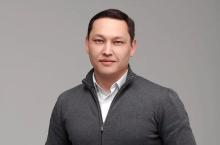
One of the most recognisable public activists in Kazakhstan in recent years, Sanzhar Bokayev, became known for his campaign against the recycling fee on cars. Today, his name features in a criminal case — and this path has turned out to be far more winding than it appeared from the podium of a people's defender.
FROM THE RECYCLING FEE TO POLITICS
Bokayev gained widespread recognition as the author of the petition against the recycling fee (the "NoRecyclingFee" movement), which was published on the state portal ePetition in early March 2024. It gathered over 50,000 signatures and, by law, had to be considered by the government. However, dialogue with the authorities was unusual from the very start.
Bokayev simply did not attend the first working group meeting in June 2024 because he refused to comply with the procedural requirement to leave his phone at the entrance to the Ministry of Industry and Construction building. At the final public hearing in Almaty on the issue of abolishing the recycling fee, Bokayev also chose not to participate.
PARTY, CONNECTIONS, AND UNANSWERED QUESTIONS
Long before the well-known campaign against the recycling fee, Bokayev announced the creation of the digital party Namys. In 2022, he and his associates held a press conference where they stated that registering the party was impossible due to imperfections in Kazakhstani legislation. In the 2023 elections for the Mazhilis, Bokayev ran as an independent candidate but did not get into parliament.
Sanzhar Bokayev's connections were also quite interesting. The FBRK editorial team repeatedly drew attention to the composition of the "NoRecyclingFee" movement's activist base. Among its participants was, for example, Berik Zairov, at the time chairman of the Small and Medium Business Committee of the "Atameken" National Chamber of Entrepreneurs, as well as a number of individuals affiliated with business structures in the car market.
Our editorial team also raised the question of the activist's own career history. According to available information, at various times he worked in the team of Akhmetzhan Yesimov — the former akim of Almaty and ex-head of "Samruk-Kazyna", after which, according to some reports, he came under the wing of Kairat Sharipbayev — a major businessman in the gas industry, whom a number of media outlets unofficially link to the family of the first president of the Republic of Kazakhstan.
Furthermore, according to information from FBRK sources, during the time Dariga Nazarbayeva worked in the "Nur Otan" party, Bokayev had an office on the same floor as her and was often seen in her circle. And if earlier this might have seemed merely a coincidence, today such details increasingly look like missing pieces of the puzzle explaining his real connections.
INVESTIGATIONS AND DEPARTURE
In 2025, Bokayev actively published videos about violations in the urban infrastructure of Almaty. After his video about the secret removal of granite slabs from the embankment, the city's akim issued reprimands to district akims, and the Deputy Prosecutor General announced the initiation of a criminal case.
However, in February 2026, it emerged that Bokayev was in the USA, where he had opened a company and was doing business. He explained his departure as due to disappointment: according to him, the public work he had done had not yielded results, and he no longer wanted to be a source of "negativity".
DETENTION
Shortly after this admission, Bokayev was detained in Almaty. According to the Prosecutor General's Office, he is suspected of distributing deliberately false information, as well as misappropriation of financial funds on an especially large scale through fraud.
Perhaps it would be fair to say that Sanzhar Bokayev is an example of an activist whose public reputation was built on the contrast between the image of a "people's fighter" and actual actions. Petitions which he himself sabotaged. Ties to big business, political elites, and representatives of the so-called "old Kazakhstan" alongside an image of an independent voice.
It is precisely this gap between declared independence and actual connections, between public rhetoric and practical actions, that largely defines the perception of his figure today. What will come of Bokayev's activities this time is for the law enforcement agencies to determine.