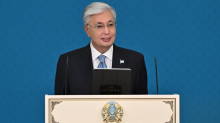
(23 February 2026 | Source: response by Aida Balaeva to a request from members of the Majilis of the Parliament)
Deputy Prime Minister of the Republic of Kazakhstan Aida Balaeva has presented a response to a parliamentary request on the protection of information security for children and adolescents. The document reports a shift from fragmented technical solutions to a systematic state policy in this area.
HOW THE STATE CONTROLS THE DIGITAL ENVIRONMENT
During 2025, the relevant authorities, together with the Ministry of Internal Affairs of the Republic of Kazakhstan (MIA RK) and the National Security Committee (NSC), monitored mass media and online platforms to identify illegal content.
As a result of the monitoring, 128,483 instances of legislative violations were identified. Based on 1,243 directives, access to 33,624 internet resources and links was restricted.
In addition, 4,918 response documents were sent, resulting in the removal of 94,859 illegal materials.
When signs of criminal offences are detected, materials are forwarded to the MIA and NSC with an evidence base for procedural measures.
WORK OF THE 'CYBERSURVEILLANCE' SYSTEM
It is reported that the 'Cybersurveillance' information system operates for inter-agency coordination.
In 2025, 113,328 internet links were entered into it, triggering response measures.
Among the content identified were:
- 2,127 links containing information harmful to a child’s moral and spiritual development;
- 1,197 links including materials promoting cruelty and violence;
- 423 links showing signs of promoting suicidal behaviour.
PREVENTIVE MEASURES AND PARENTAL CONTROL
In addition to restrictive measures, government bodies carry out preventive work.
In 2025, more than 7,000 events were organised in educational institutions aimed at improving digital literacy and preventing bullying.
It is noted that parental control systems, including Kaspersky Safe Kids, Google Family Link, and built-in features of iOS-based devices, are used to restrict access to undesirable content.
Television channels also cover issues of children's digital safety and the strengthening of family values.
WHAT CHANGES ARE PLANNED
On 29 January 2026, the government approved the 'Children of Kazakhstan' Concept for 2026–2030, providing for 158 measures.
The document envisages the introduction of new mechanisms for protecting children in the information space, mandatory training for teachers on identifying digital risks, and the use of artificial intelligence technologies in the educational process.
Telecommunications operators are to be recommended to include parental control functions in their tariff plans.
The response also states that international experience is being studied, including that of Australia and France, regarding the possible restriction of registration of minors on online platforms. Amendments to draft laws on online platforms and mass media are at the approval stage.
Earlier, FBKK reported that, as part of social media monitoring in Kazakhstan, the level of removal of illegal content on TikTok had reached 91%. At that time, the government also provided data on the identification of tens of thousands of materials advertising online casinos, promoting drugs, and running financial pyramids, as well as informing about the preparation of legislative amendments to regulate online platforms.