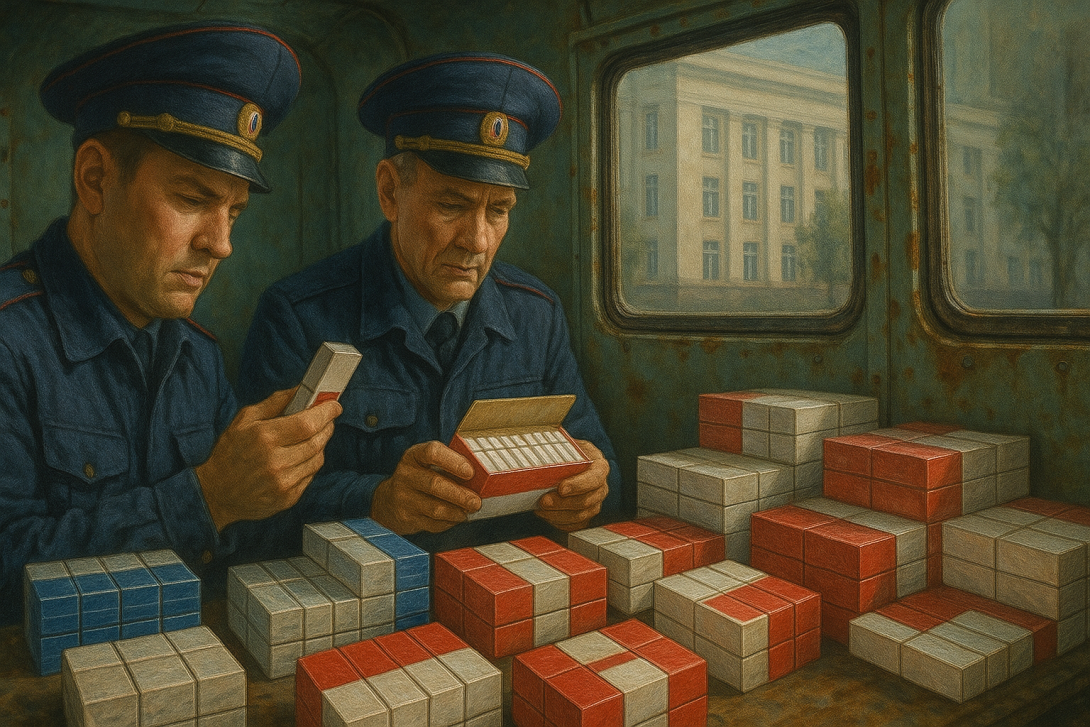
FBRC founder Kirill Pavlov presented an investigation into the scale of illegal cigarette trafficking in Kazakhstan. The journalist managed to purchase contraband products in several cities across the country, including a purchase at a market in Shymkent in close proximity to the state revenue office. The material contains an analysis of state budget losses and reveals the workings of the grey market for tobacco products.
In a new episode of the YouTube channel “Kazakh Chuvash”, the author demonstrates in practice the availability of illegal cigarettes to ordinary buyers. The footage was shot in Shymkent, Astana and Temirtau. Contraband products were purchased at markets, with sellers using characteristic methods of concealment: black bags for packaging and the separation of payment and product collection points.
The author links the growth of the shadow market to the country's economic crisis. When household incomes fall or remain stagnant while prices rise, consumers look for ways to cut costs. Contraband cigarettes cost half as much as legal ones: a pack of Marlboro sells for 400 tenge, Oris for 500 tenge. The state, meanwhile, receives neither excise duties nor taxes from these sales.
The scale of the problem is confirmed by official data. The investigation cites information from MPs about discrepancies in reporting at the border between Kazakhstan and China for 2024 alone — almost $14 billion. The journalist notes that these funds could have allowed the government to avoid raising VAT for businesses or increasing utility tariffs. The material also reveals the minimum entry threshold for the illegal business.
Geographical analysis shows the greatest grey market activity in the south of the country, in Almaty and Shymkent. The eastern regions, the centre and parts of western Kazakhstan are also affected by illegal trade. The grey market share stands at between 15 and 20%, with the highest figures in the southern capital.
The FBRC founder presents detailed calculations of the volume of contraband products and potential budget losses, using data from his own analytics and foreign partners. He draws a direct link between budget losses from smuggling and the increased tax burden on citizens.
For Pavlov's detailed calculations, conclusions and proposals on combating smuggling, see the full version of the investigation via the link.