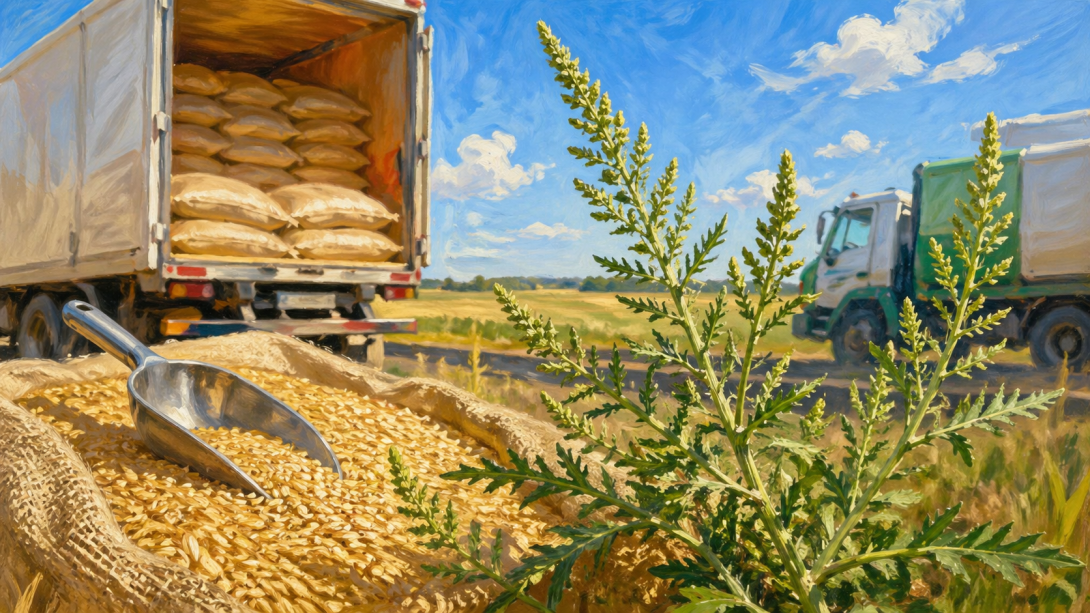
In Kazakhstan, the import of batches of agricultural products contaminated with quarantine weeds has been stopped. This involves barley and guar seeds from Russia, which could have posed a risk to agriculture and public health.
WHAT HAPPENED
According to the Committee of State Inspection in the Agro-Industrial Complex of the Ministry of Agriculture, cases of contamination of imported products with quarantine weed plants were identified during phytosanitary monitoring.
In the Uzunkol district of the Kostanay region, during a re-inspection of a batch of guar seeds weighing 3 tonnes originating from Russia, specialists found signs of contamination. Laboratory analysis confirmed the presence of common ragweed.
A similar violation was recorded in the Aktobe region. During an inspection of a batch of food barley weighing 50 tonnes imported from Bashkortostan, contamination with two types of quarantine organisms was identified — common ragweed and giant ragweed.
WHAT MEASURES HAVE BEEN TAKEN
Administrative protocols have been drawn up for both incidents. The materials have been sent to court, and further decisions will be made in accordance with the legally established procedure.
The identified batches were not allowed to be imported, which prevented the spread of quarantine organisms within the country.
WHY RAGWEED IS CONSIDERED DANGEROUS
Ragweed is classified as a particularly dangerous quarantine weed. It depletes the soil, reduces the yield of agricultural crops, and spreads rapidly.
Furthermore, the plant's pollen can cause severe allergic reactions in people, making it not only an agricultural issue but also a public health concern.
CONTEXT AND SIGNIFICANCE
Earlier, the FBGK drew attention to problems with the control of grain turnover and import supplies in Kazakhstan. In particular, an investigation noted a discrepancy between official statistics and independent harvest estimates, as well as the existence of grain re-export schemes through the country's territory.
According to industry sources, some imported products may be documented as being produced domestically and then exported to Central Asian states. The materials also indicated that such schemes are possible due to the peculiarities of accounting and control at certain stages of supply.
Against this backdrop, phytosanitary control takes on additional importance, as it makes it possible to identify violations during the import of products at an early stage and reduce the associated risks for agriculture.