In an era of economic turbulence, the activities of regional development institutions are of particular interest. The editorial board of FBRK is launching a series of publications dedicated to analysing the financial statements of social-entrepreneurial corporations in Kazakhstan.
In the first article, we will examine the most recently published (for 2023) financial statements of the Social-Entrepreneurial Corporation (SEC) «Tobol» – a regional development institution for the Kostanay Region.
In 2023, the assets of SEC «Tobol» demonstrated an interesting paradox: with revenue falling almost by half, the corporation managed to increase net profit by 37% and grow assets 2.1 times.
Could these figures be the result of a strategic transformation of the regional development institution's business model?
Meanwhile, with declining operational indicators – revenue from contracts fell from 1.47 billion to 822.8 million tenge – the corporation demonstrated growth in capitalisation.
Share capital almost doubled, reaching 62 billion tenge, and total assets exceeded 88 billion tenge.
The structure of cash funds attracted particular attention: out of 14.5 billion tenge, almost 3 billion were placed on fixed-term deposits. Paradoxically, the SEC annually requests financing from the akimat, despite holding significant funds in deposit accounts.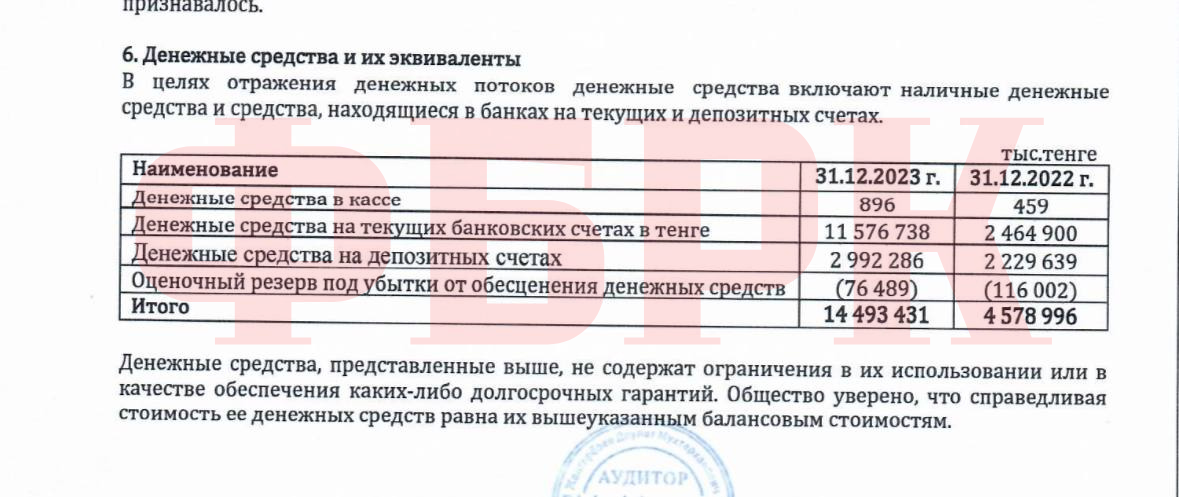
The social component of the corporation's activities is also noteworthy. SEC «Tobol» actively participated in the «Auyr amanaty» programme with commitments of 16.6 billion tenge, aimed at microcrediting for the rural population.
Furthermore, the corporation allocated 55 million tenge to charity, arguably demonstrating a balance between commercial efficiency and social responsibility.
An important aspect of the SEC's activities is the maintenance of the Stabilisation Fund, intended to ensure food security in the region. In 2023, the Stabilisation Fund's operations were loss-making: with income of 759.6 million tenge, expenditure amounted to 883.3 million tenge, resulting in a loss of 123.7 million tenge.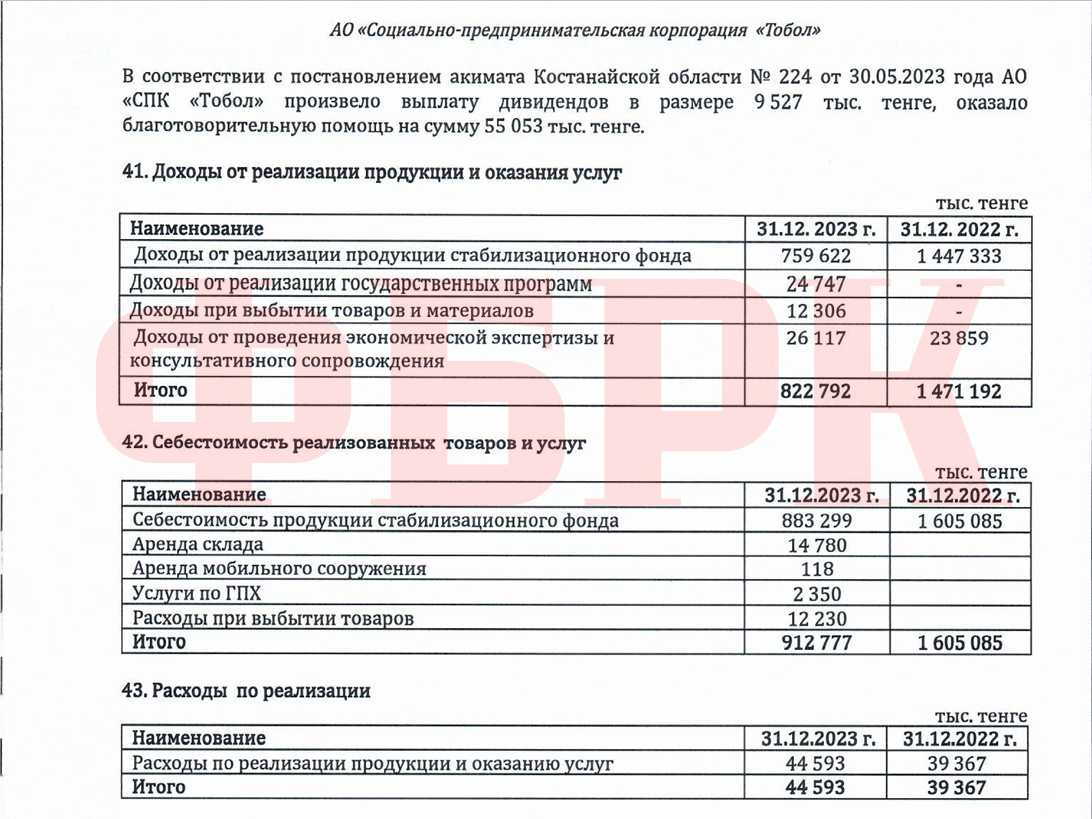
The SEC's guarantee activities warrant particular attention. The corporation acted as guarantor for various credit obligations, including agreements with China Vehicles Import and Export Corporation and Joint Stock Company «Bank of Development of Kazakhstan», indicating its role in attracting external investment and developing regional business.
However, this raises the question of the sustainability of such a development model. The growth of assets and equity capital creates a foundation for future growth, but the decline in operational revenue may signal a need to review management approaches.
The structure of personnel costs is also notable. According to an analytical report, as of 1 January 2024, SEC «Tobol» employed 47 people. With an annual payroll of 481.8 million tenge, the average monthly salary was 854 thousand tenge.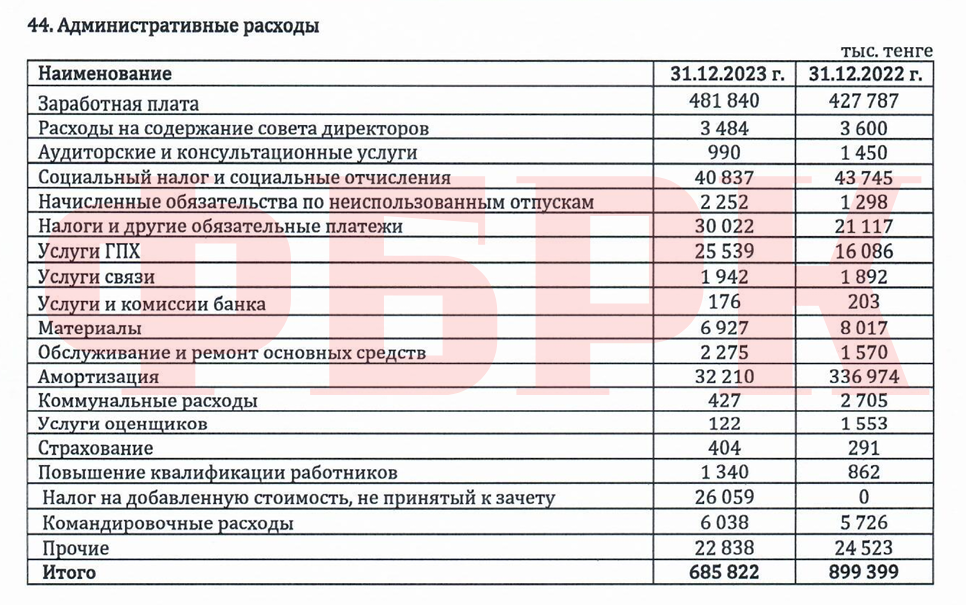
Of course, this calculation is an average; however, a similar approach is used for calculating the average salary nationwide.
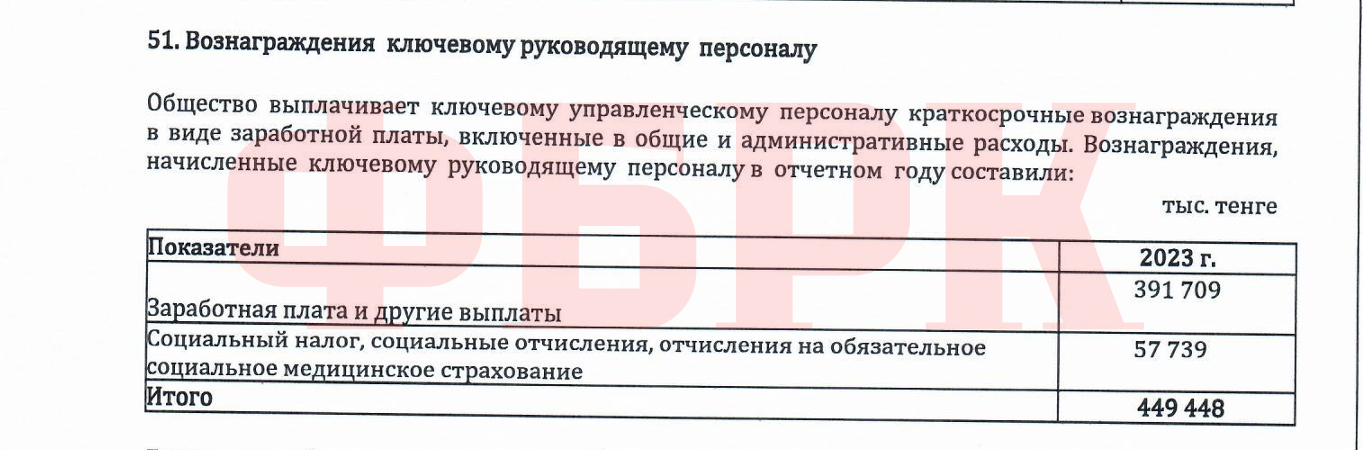
Meanwhile, 81% (391.7 million tenge) of all labour costs were attributable to remuneration for management personnel, including bonuses based on the company's performance.
It is also telling that earnings per share rose from 5.28 to 6.59 tenge, indicating efficient use of capital. At the same time, the amount of dividends paid – just 9.5 million tenge – points to a strategy of reinvesting profits in the corporation's development.
Overall, the financial statements of SEC «Tobol» for 2023 depicted an organisation in the process of strategic transformation. The decline in operational indicators was offset by growth in capitalisation and a strengthened role in developing the regional economy.
However, the question remains: did SEC «Tobol» manage to maintain positive momentum in its financial statements for 2024, and what financial results did the corporation demonstrate?
In subsequent publications, we will analyse the experience of other regional development institutions, which will allow us to assess the role of social-entrepreneurial corporations in the development of Kazakhstan's regions.
To be continued…