Residents of the Adam Armany residential complex in Astana have reported widespread violations by the developer and a lack of building management. Despite the fact that apartments were purchased back in 2022, many residents are still unable to sign contracts with utility services.
According to Ulysmedia.kz, the residential complex was marketed as "comfort class," but in reality it does not even meet the standards of "economy class." For example, the family of Armanay Dosumova bought an apartment in 2022 and only received the documents through the courts in May 2025.
"All these three years we have been waiting for the lifts to be installed. And even now, not all the lifts are working. There are no playgrounds, no parking, the water supply system is suffering. We cannot sign contracts for waste removal, electricity, or the water supply system," she said.
Other residents have faced similar issues: the balcony area is smaller than stated, the parking is unfinished, and the connected utilities are not functional. Due to the building not being registered on the city's balance sheet, residents cannot receive services from the municipal water company, and utility bills are issued unofficially.
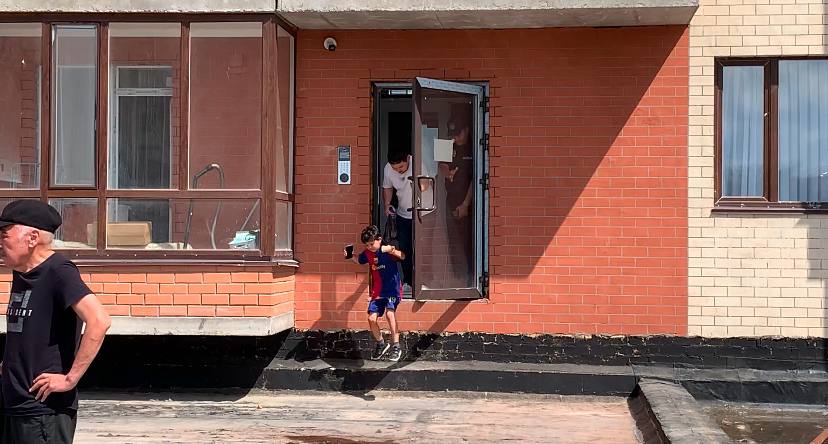
In one of the entrances, the lift is not working. It is reported that an ambulance was unable to evacuate a woman from the eighth floor. Stairs leading to the entrances of some blocks are missing, which is particularly dangerous for children and the elderly.
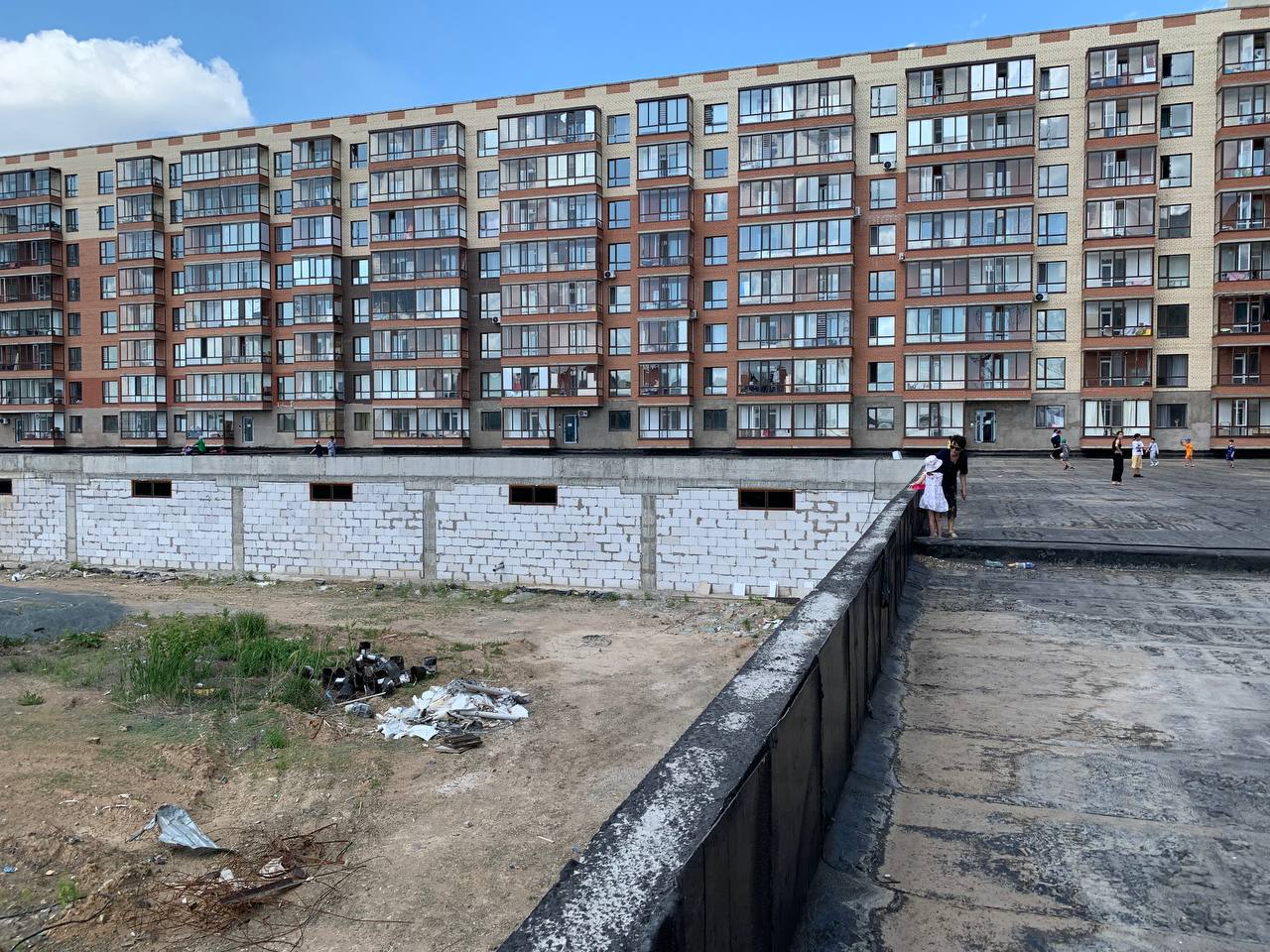
The entrance to the complex is littered with construction waste. Instead of the promised playground and recreational area, there is nothing but barren land. The area is not fenced off and is located several metres high - residents fear for their children's safety.
"Why does something have to happen, does a child have to fall out for someone to hear us? There is no playground. Children are constantly playing on the road. It's the holidays, and we cannot let our children go anywhere," the report states.
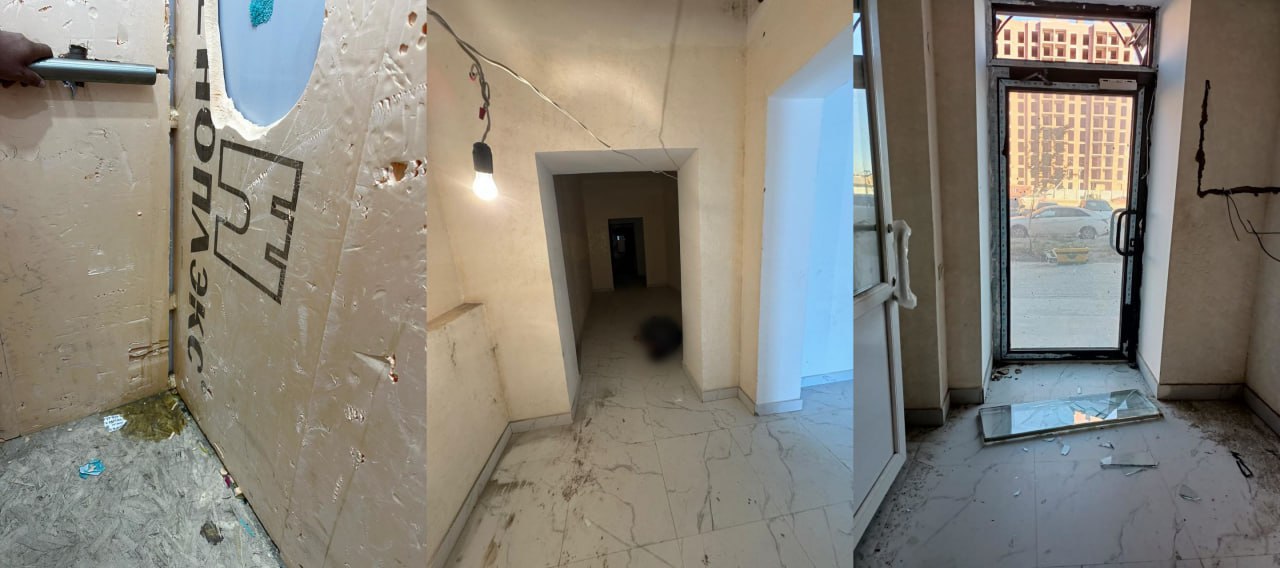
According to residents, rats have infested the parking garage, and human excrement has been found in the entrances.
"Anyone could get in there because the entrance doors wouldn't close properly. After a complaint to the Presidential Administration, cameras were installed," one resident said.
Residents have appealed to local authorities and the Presidential Administration, but no significant changes have followed. According to them, the developer was given a chance to correct the shortcomings, but promises were not kept.
In turn, the head of the construction company, Zharkyn Baltabekov, promised to complete all work shortly.
"My contract with the investor has been finalised and agreed upon; only one issue remains to be resolved. Funding will be available, it's been arranged — in three tranches. I have everything ready to carry out the completion works; I am just waiting for the funds. There is just over a month and a half of work left. Everything will be done in full and to a high standard!" declared the company head, Zharkyn Baltabekov.
Previously, the same company built the Nipi, Tumar, Ai Su, and Kashagan residential complexes. The current state of these projects is unknown.
The warranty period for the building expires in December 2025. Residents are demanding that state authorities ensure the completion of construction, register the building on the city's balance sheet, and bring the complex up to the promised standards.
The editorial board of FBRK has been covering the issues faced by shared-equity investors in the country for several years. One striking example is the long-running saga of the capital's Boston Comfort House residential complex, whose developer is Grand Status LLP, headed by founder Alibek Mukhamedov. The developer illegally built an extra floor, which meant the building could not be commissioned for over five years, and residents regularly encountered various problems. More details about the difficulties of living in Boston Comfort House can be found via this link.
At the same time, our editorial board investigated the activities of two major Karaganda-based companies — RGB Group LLP and Zhily Fond LLP — and uncovered gaps in the regulation of the construction industry and the protection of shared-equity investors' rights. Details of the investigation, including a full analysis of court cases, corporate ties, and company documentation, can be read in our article via this link.