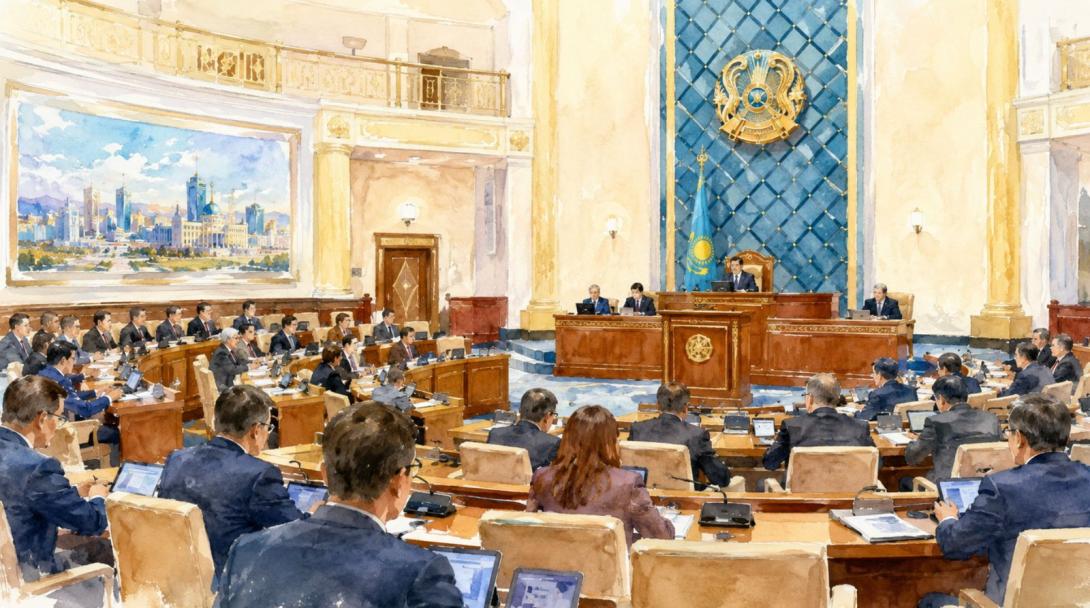
The Senate reviewed and adopted 16 laws affecting the areas of gas supply, electric power, defence, digitalisation, road traffic, telecommunications, wildlife, beekeeping, mechanical engineering and transport. The documents provide for changes in regulation and additional support measures in various sectors.
WHICH LAWS WERE ADOPTED
At the Senate session, 16 laws were reviewed and adopted. These include documents on issues of gas supply and electric power, the legal status of military personnel, enforcement proceedings, digitalisation, road traffic, development of the telecommunications market, wildlife, beekeeping and mechanical engineering.
The adopted norms are aimed at changing the rules in the relevant fields and provide for new regulatory mechanisms.
WHAT HAS CHANGED IN THE GAS AND ENERGY SECTORS
The laws provide for increasing the reliability of gas and energy infrastructure. Gas distribution networks built from the budget will be transferred to the national operator for further operation and maintenance.
Control over the construction and modernisation of gas supply facilities is also being strengthened, intermediaries in gas supplies are being eliminated, measures for rational consumption are being introduced, and transparency in energy resource accounting is being improved.
WHAT MEASURES ARE PROVIDED FOR MILITARY PERSONNEL AND ENFORCEMENT PROCEEDINGS
In terms of the legal status of military personnel, additional support measures are provided. In particular, this concerns increasing payments for participation in emergency response and anti-terrorist operations, as well as introducing field payments for participation in exercises and extended deployments.
A separate law concerns enforcement proceedings. It provides for restrictions on deductions from social payments, improvement of the procedure for maintaining the debtor register, and strengthening control over the activities of private bailiffs.
WHAT DO THE NORMS ON DIGITALISATION AND TELECOMMUNICATIONS PROVIDE
The adopted documents provide for the digitalisation of road traffic control, increased requirements for driver training, and strengthened control over the work of driving schools.
In addition, additional measures are being introduced to protect personal data, ensure cybersecurity, and regulate the use of unmanned vehicles.
In the communications sector, the laws are aimed at improving the quality and accessibility of services. Communications operators will provide free access to socially significant government applications. The construction of communications facilities and data processing centres is also being simplified, and data centres have been classified as strategic facilities.
WHAT CHANGES AFFECTED WILDLIFE AND THE AGRICULTURAL SECTOR
In the field of hunting management, a ban is being introduced on the use of drones and thermal imagers during hunting. Additional measures are also provided for the protection of animals and birds during the operation of infrastructure facilities.
Furthermore, criminal and administrative liability for illegal trafficking of wild animals and violations of hunting rules is being tightened.
In the field of livestock breeding and beekeeping, a veterinary passport for apiaries is being introduced, a single republican chamber of beekeepers is being established, requirements for the placement of apiaries are being set, as well as protective zones for the preservation and breeding of bee strains.
WHAT MEASURES AFFECTED MECHANICAL ENGINEERING AND TRANSPORT
At the initiative of deputies, a law was adopted aimed at increasing the investment attractiveness of domestic mechanical engineering, introducing new technologies, and expanding the export potential of the industry.
The document provides for support measures for industrial clusters, creating conditions for the development of component and machinery production in Kazakhstan, as well as improving regulation of the transport sector.