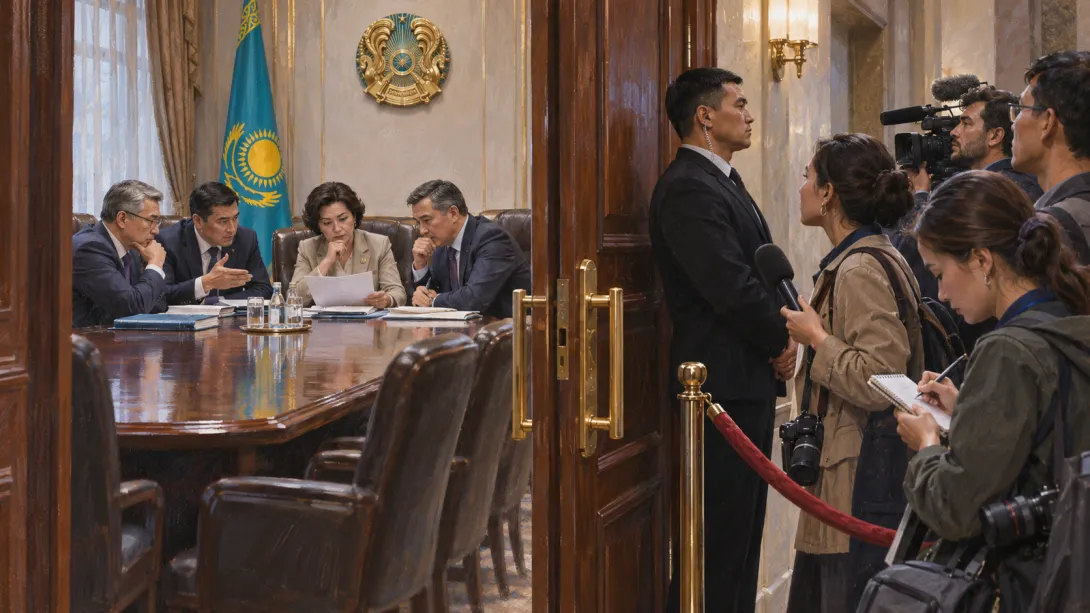
Journalists' access to meetings of the Public Chamber under the Kurultai of Kazakhstan will depend on a decision by its Council. Under the approved regulations, media representatives do not have an independent right to attend meetings, and they may be invited only with the Council's consent.
WHO DECIDES ON ADMITTING JOURNALISTS
As reported by Exclusive.kz, according to paragraph 31 of the Regulations on the Public Chamber, journalists may be invited to meetings only by decision of its Council.
The Council consists of four people: the chair of the chamber, their two deputies and the executive secretary. All are appointed by the Bureau of the Kurultai, to which they are also accountable.
Members of the Public Chamber do not take part in electing the Council's leadership.
WHAT POWERS THE CHAMBER'S COUNCIL HAS BEEN GIVEN
The Council's powers are not limited to matters of media access. According to paragraphs 9 and 10 of the Regulations, it also:
- approves the Public Chamber's work plan;
- approves recommendations on draft laws;
- takes decisions on the early removal of chamber members.
Thus, four appointed officials take decisions on key matters concerning the organisation of the chamber's work.
HOW OPENNESS OF MEETINGS IS ENSURED
Among the Public Chamber's objectives is public discussion of issues. However, the Regulations do not establish mandatory publication of the decisions and recommendations adopted.
Information on the chamber's composition will be posted on the Kurultai's official website. Dissemination of this information through the media is provided for only where necessary.
According to the document, most meetings are expected to be held by videoconference.
WHAT THE PUBLIC CHAMBER WAS CREATED FOR
Deputies took the decision to create the chamber on 16 September 2026.
It may comprise no more than 50 people. The body's main task is to scrutinise draft laws and prepare recommendations for the Kurultai's committees.
The committees will consider the proposals received in the ordinary course of business.
At the same time, the document does not provide for the mandatory presence of journalists at meetings or the publication of final recommendations. Consequently, the openness of the chamber's work to the media depends on decisions by its leadership.