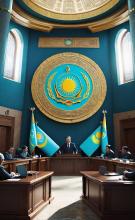
Experts from the so-called independent dialogue space Astana Open Dialogue propose privatising existing state media at the central and regional levels, leaving the state only thematic media, national news agencies and the “Kazakhstan” TV channel.
As stated in the document, this would increase the independence of news outlets and minimise the risks of oligarchic media emerging, which could be used as a tool to pressure state policy.
“Often the ultimate beneficiaries of the media, as well as the mechanisms for financing media activities, remain hidden from the general public. In our view, it is important to ensure greater transparency in this matter. Another risk for the development of the media market is the fact that news outlets pursuing a breaking news agenda predominantly dominate the market. At the same time, authors who write analytical pieces are moving to social networks or Telegram channels”, the statement says.
According to the experts, this trend narrows the field for the development of analytical and specialised media, making them a niche product that does not reach a broad audience.
“As a result, the media are increasingly losing the skill of explaining complex things to a large audience, and that audience can no longer grasp them. At the same time, no serious attempts to change this situation are evident. Moreover, experts note an approach towards creating even more quasi-state media structures, which, receiving direct funding from the state budget, have no interest in the commercial success of their own products or in ensuring content quality. This trend is observed at both the central and local levels”, the statement says.
The authors argue that the so-called state information order, which accounts for a significant portion of spending within the country’s information policy, is insufficiently effective. The experts note that it is aimed not at developing the industry, but rather at leading to its degradation.
“It has become common practice for quasi-state structures to use these budgets to impose a ban on covering negative news in the media. As a result, many problematic issues and controversial topics are not widely discussed, do not come to the attention of the authorities, and can lead to the creation of hotspots of tension in society”, the document says.