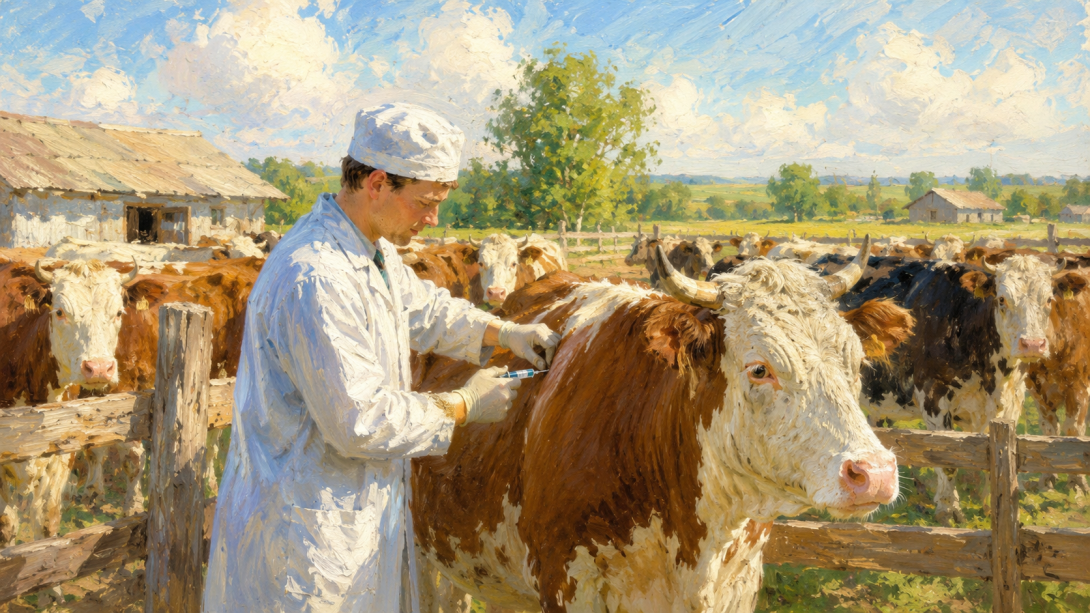
The prosecutor's office has uncovered cases of fictitious vaccination of farm animals and distortion of livestock data in the Kostanay region. The inspection also revealed violations in the storage of veterinary drugs and non-compliance with vaccination schedules, which is directly linked to biosecurity issues in the agricultural sector.
WHAT VIOLATIONS THE INSPECTION UNCOVERED
According to the Kostanay regional prosecutor's office, supervisory activities in the Kamysty district established cases of fictitious vaccination of 1,910 head of farm animals, as well as the inflation of statistical reports on livestock numbers by 537 head.
The inspection showed that the violations were not limited to documentation. At two veterinary points, violations of the rules for the transport and storage of veterinary drugs were identified. This involves more than 20,000 doses that were stored in breach of requirements due to the absence of thermal containers.
Furthermore, the prosecutor's office recorded violations of vaccination schedules for young animals, non-compliance with the frequency of revaccination, and deviations from the established dosage of drugs. The materials do not specify which diseases or types of animals are involved.
WHAT MEASURES HAVE BEEN TAKEN
Following the inspection, the prosecutor's office issued acts of prosecutorial response. 8 officials were brought to administrative responsibility, and 12 to disciplinary responsibility. Additionally, costs related to the fictitious vaccination, amounting to 744.3 thousand tenge, have been reimbursed to the state budget.
WHY THIS MATTERS
Violations in the vaccination system and storage of veterinary drugs are significant not only as administrative offences but also as a matter of biosecurity. Timely vaccination, adherence to storage conditions for drugs, and accurate livestock records are fundamental elements of the system for preventing infectious diseases in animal husbandry.
The topic of veterinary control in Kazakhstan has attracted increased attention in recent weeks amid discussions of infectious risks in livestock farming. In this context, any violations in the work of veterinary services take on added significance, as the effectiveness of prevention directly depends on the reliability of records and the quality of vaccination.