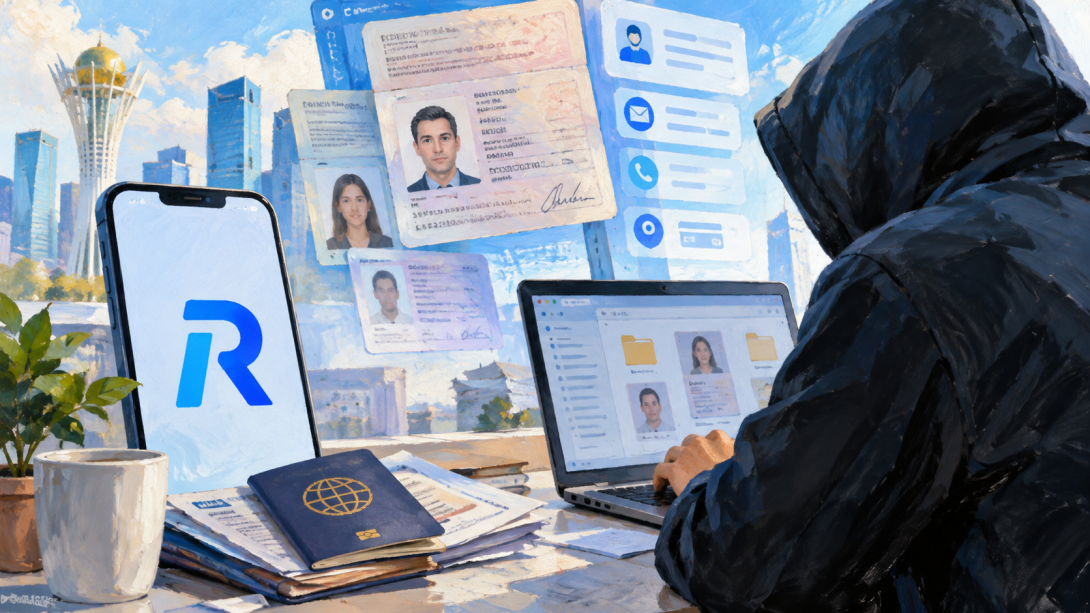
A data leak of customers of the British fintech service Revolut has entered a new stage: attackers have begun publishing users' documents and are demanding a ransom from the company, threatening further disclosure of information.
HOW THE LEAK HAPPENED
According to TechCrunch, the attackers used an email address on a genuine government agency domain to send Revolut fake requests for the provision of information. The company considered the requests legitimate and disclosed data belonging to some clients.
Revolut stated that a "very limited" number of clients were affected, but did not disclose the exact number of users. The company also did not name the government agency or the market affected by the incident.
WHAT DATA WAS DISCLOSED
According to a Revolut notification reviewed by TechCrunch, the compromised information may have included dates of birth, postal and email addresses, phone numbers, as well as copies of passports and driving licences.
In some cases, the data may have included verification selfies, bank statements and transaction history. Thus, the incident affected not only contact information, but also information related to the identification and financial activity of clients.
THE ATTACKERS HAVE BEGUN DEMANDING A RANSOM
As reported by Blockonomi, a hacker group calling itself Revolut Smilik has begun publishing clients' documents and stated its intention to disclose new data until Revolut complies with its payment demands.
Among those whose data has already appeared in the attackers' publications are tennis player Alexander Shevchenko and the head of the crypto gaming platform Gamdom, Felix Römer.
WHAT REVOLUT SAID
The company said that after discovering the incident it blocked the address used and notified the relevant government agency, law enforcement, data protection regulators and financial authorities.
Revolut also separately stressed that its systems and clients' funds were not affected.
CONTEXT
It was previously reported that Kazakhstan took first place in Central Asia by the number of publications of databases linked to leaks. The country accounted for 57% of such cases, while in terms of the total volume of compromised records Kazakhstan came second after Tajikistan.