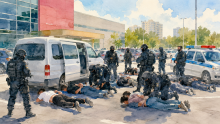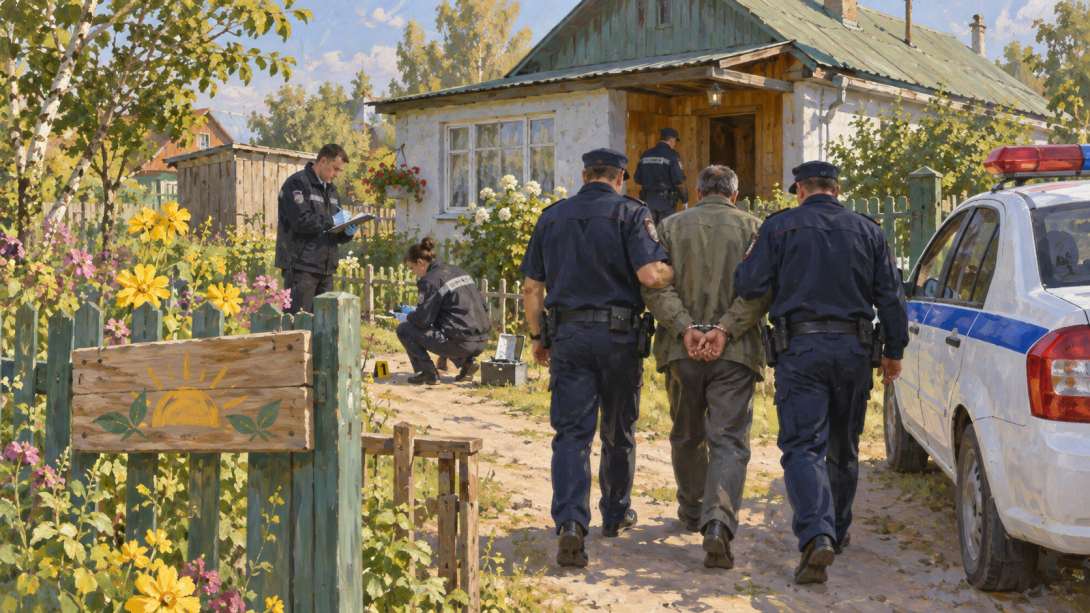
Bodies of a 43-year-old man and a 55-year-old woman with gunshot wounds have been found in a house on the grounds of the Optimist gardening association in Karaganda. Both of the deceased held prominent positions in the local gardening community — the man ran the association and worked as a lawyer, while the woman was an active community figure in the district, which takes this story beyond the scope of an ordinary domestic incident.
WHO THE VICTIMS WERE
The incident took place on 6 September 2026 at the Optimist gardening association in the district named after Alikhan Bokeikhanov, reports Azattyq Rýhy, citing the Karaganda Regional Police Department. The victims' bodies were found with signs of gunshot wounds, and a criminal case has been opened under the “Murder” article.
The deceased man was the chairman of the gardening association and a lawyer by profession. According to police, the woman was a local community activist. Information has circulated on social media that the victims were Ivan Korovin and Nina Serova — however, as of publication there is no official confirmation of these names from police in open sources, so the editorial team presents them as unconfirmed.
WHAT IS KNOWN ABOUT THE DETAINEE
Police officers quickly tracked down and detained a suspect — a 56-year-old resident of Karaganda. The police department's press service reported that the man has given a confession and has been placed in a temporary detention facility. According to the department, the circumstances of the incident and the motive for the crime are still being established — no official version of the motive has been released as of publication.
GARDENING CONFLICTS AS A RECURRING THEME
The Karaganda case is the extreme end of the scale of conflicts that regularly arise around the leadership of gardening associations and cooperatives in Kazakhstan.
Typically, disputes begin with complaints about reporting, membership fees or the procedure for re-electing a chairman, and then play out in the public sphere — on social media, in gardeners’ chats, and in appeals to government bodies.
The causes vary: from genuine mismanagement to campaigns driven by the interests of third parties seeking to gain control over a cooperative's property or cash flows — a scheme broadly known as corporate raiding.
WHAT FBRK WROTE ABOUT THE SCHUCHINSK CONFLICT
The FBRK editorial team has already covered a similar story — the conflict surrounding the cooperative “Shchuchinskoye Voluntary Association of Amateur Gardeners” (“Shchuchinskoye DTSL”) in the Burabay district.
In a May article, the editorial team established that the information campaign against the cooperative's chairman, Bakhtiyar Gabdullin, was linked to the Mikrafon.kz resource, overseen by a representative of the district branch of the OSDP party.
In an August article, the editorial team traced how, three months later, the conflict escalated into appeals to the President of the country and independently unconfirmed claims of criminal prosecution, while trust in the campaign's initiator within the cooperative itself had been almost entirely lost.
The events are in fact unrelated — the Karaganda case has no connection to the Shchuchinsk story. But both cases demonstrate the same thing: the leadership of gardening associations in Kazakhstan regularly finds itself at the centre of intense conflicts that are rarely confined to administrative disputes.