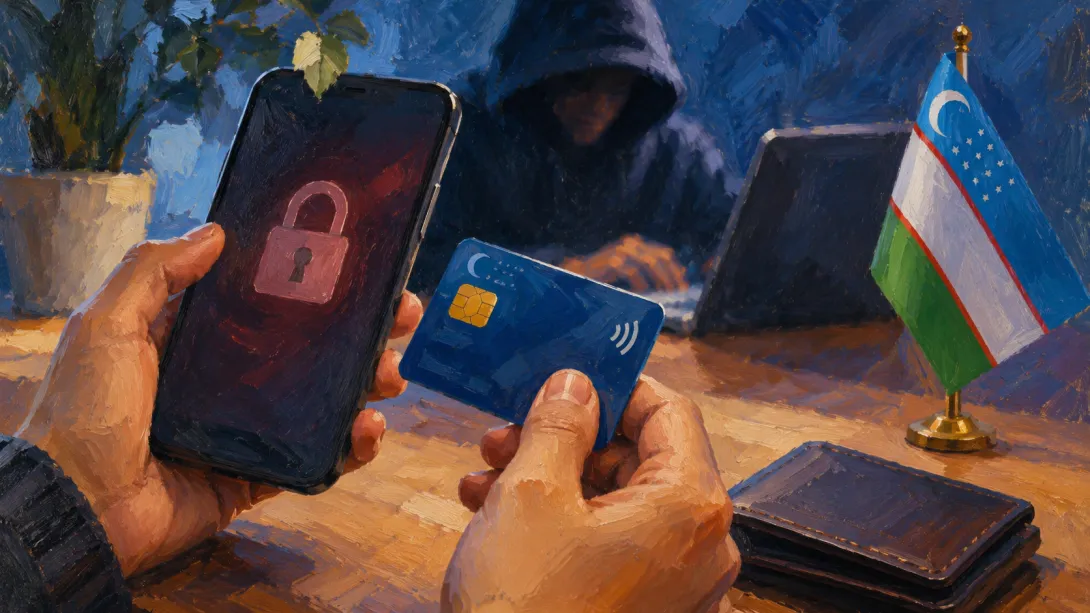
In the first nine months of 2026, almost 39,800 reports of suspected fraud were registered in Uzbekistan. According to the regulator, the total material damage reached UZS 278.3 billion.
MAIN FRAUD METHODS
According to data from the Central Bank of the Republic of Uzbekistan (CBU), the statistics are based on reports registered in the Ministry of Internal Affairs' Cardblock system between 1 January and 1 October 2026.
The most common scheme was the installation of malicious software on smartphones. Over the nine months, 18,830 such cases were recorded, with damage amounting to UZS 79.3 billion.
A further 2,808 reports involved the hijacking of Telegram accounts. Citizens' losses reached UZS 21.9 billion. In 611 cases, people followed instructions from unknown individuals over the phone and subsequently reported damage of UZS 27.7 billion.
In 11,475 reports, however, citizens did not specify the method of the suspected fraud, reporting only that money had been debited from their cards or e-wallets. The total damage in these claims amounted to UZS 98.1 billion.
FINANCIAL PYRAMIDS AND PURCHASE FRAUD
Suspicious investment offers formed a separate category. The CBU registered 1,044 cases involving fake trading platforms and promises of earnings from trading. Damage reached UZS 15.1 billion.
A further 1,086 reports concerned investments in schemes with signs of financial pyramids. Citizens reported losses of UZS 14 billion.
Problems also arose with online purchases. In 3,571 cases, buyers did not receive goods or services after making an advance payment. The damage amounted to UZS 10.5 billion.
The regulator also identified 130 cases of online loans being taken out in citizens' names under the pretext of cancelling a loan. The damage was estimated at UZS 10.6 billion. A further 272 reports involved payments for online games, with losses of UZS 900 million.
MORE THAN UZS 113 BILLION BLOCKED
Thanks to prompt measures, the authorised bodies managed to block UZS 113.1 billion linked to the registered fraud cases. The CBU did not specify, however, what portion of the funds was returned to citizens.
Separately, the regulator reported 2,737 reports that were not confirmed as fraud after verification. It transpired that the funds had been automatically debited to repay loan arrears. The total amount of such debits was UZS 7.6 billion.
Law enforcement agencies are continuing their inquiries and investigations into the registered cases of suspected fraud.
THE ONLINE FRAUD SITUATION IN KAZAKHSTAN
In Kazakhstan, 15,800 criminal offences related to online fraud were registered between January and September 2026. This is 22.4% fewer than in the same period last year, when 20,400 such cases were recorded.
At the same time, established damage rose by 24.3% and exceeded KZT 10.3 billion. According to Ranking.kz, the statistics are based on information from the Committee on Legal Statistics and Special Records of the Prosecutor General's Office of Kazakhstan.
When comparing the figures, it is important to take into account the difference in methodology: in Uzbekistan, the CBU analysed citizens' reports via the Cardblock system, whereas in Kazakhstan, registered criminal offences involving online fraud were counted.
CENTRAL BANK RECOMMENDATIONS
The CBU urged citizens not to download APK files from messengers or unknown sources and not to pass on bank card details or confirmation codes to strangers.
The regulator also recommended enabling two-step authentication in Telegram, checking sellers before making online purchases and avoiding investment offers that promise high returns.
If suspicious debits are detected, citizens are advised to contact their servicing bank or payment organisation immediately, as well as the internal affairs authorities.