(5 March 2026 | Source: press service of the Ministry of Energy of the Republic of Kazakhstan)
A new hydrocarbon exploration project is launching in Kazakhstan. The Ministry of Energy of the Republic of Kazakhstan has signed a contract with Shell Kazakhstan to study the "Zhanaturmys" site in the Aktobe region. The project involves conducting seismic surveys and preparing for the possible drilling of an exploration well.
CONTRACT SIGNED FOR EXPLORATION OF PROMISING SITE
The document was signed by Vice-Minister of Energy Yerlan Akbarov and Senior Vice President and Chairman of Shell in Kazakhstan, Suzanne Koogan.
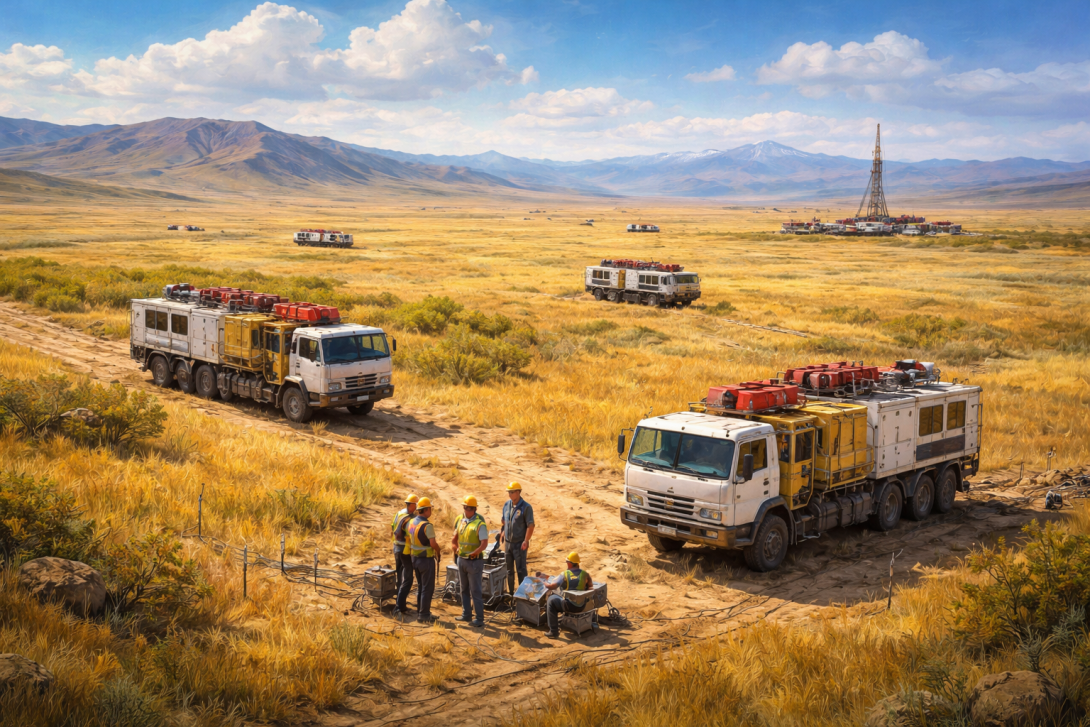
The agreement provides for a range of geological exploration works, including seismic surveys, collection of geological data, and technical assessment of the site's potential. The work will be carried out in accordance with current regulatory requirements after obtaining the necessary permits.
WHAT IS KNOWN ABOUT THE ZHANATURMYS PROJECT
The "Zhanaturmys" site covers an area of 1,377 sq km and is located in one of Kazakhstan's promising oil and gas basins.
The project's work programme includes:
- conducting 3D seismic surveys;
- analysis of the geological data obtained;
- possible drilling of a deep exploration well.
According to Yerlan Akbarov, the project aims to build a long-term hydrocarbon resource base and strengthen the country's energy security.
SHELL'S POSITION
Suzanne Koogan, Senior Vice President and Chairman of Shell in Kazakhstan, stated that signing the contract confirms the company's long-term interest in cooperating with Kazakhstan.
According to her, the company intends to use global experience and modern technologies to participate in exploration projects and expand the country's resource base.
CONTRACT DURATION AND SOCIAL OBLIGATIONS
Given the scale and technical complexity of the project, the contract term has been set until 2032.
The work will be carried out under the terms of an improved model contract. During its term, Shell will allocate at least 100 million tenge to finance the socio-economic development of the region where the site is located.
WHAT DOES THIS MEAN IN PRACTICE?
To understand the real significance of what has happened, we need to go back about a month. On 6 February 2026, Shell Plc CEO Wael Sawan, during a call with analysts, uttered a phrase that was immediately picked up by global media: "This affects our desire to continue investing in Kazakhstan."
The trigger was losing a London arbitration case concerning the Karachaganak field. Shell and its partners may be required to pay the Kazakh government compensation amounting to between $2 and $4 billion. Consequently, the company announced it was suspending new investments in projects in Kazakhstan.
The conflict did not end there. A consortium of international companies — Shell, TotalEnergies, Eni, ExxonMobil, CNPC, Inpex and KazMunayGas — filed a counterclaim in international arbitration, disputing an environmental fine of $4.6–5 billion for exceeding sulphur storage limits at Kashagan. By various estimates, the total value of mutual claims exceeds $200 billion.
In this atmosphere of open legal warfare with the Kazakh government, Shell signs a new exploration contract. But why?
There may be several reasons for this. Shell has operated in Kazakhstan for decades. Karachaganak, a stake in the Caspian Pipeline Consortium (CPC) — these are assets you don't simply walk away from. However, the court battles admittedly create a toxic backdrop: shareholders get nervous, the country's reputation as an investment destination suffers. The contract for Zhanaturmys looks like a signal to the market and to Astana that Shell is not leaving, that Shell remains a player. After all, Sawan himself noted that Kazakhstan has enormous investment potential, and that cannot be ignored.
Another version involves using the exploration contract as a bargaining chip. Exploration is not production. The financial commitments here are minimal compared to operational projects. However, having an active contract creates a legal and political link: Shell is a partner, not just a defendant in court. And that already changes the negotiation atmosphere. Significantly, the contract was signed literally a month after the statement about a "pause". The speed, uncharacteristic of corporate bureaucracy, suggests that negotiations were running in parallel with the arbitration.
It is also worth noting that the legal disputes concern specific projects — Karachaganak and Kashagan. The Aktobe site Zhanaturmys, on the other hand, is a blank slate. By working there, Shell formally does not violate the logic of the "pause" announced by Sawan, as he was referring to not investing in existing disputed projects, rather than a complete withdrawal from the country. The new exploration contract is a form of hedging (managing financial risk by opening an opposing market position to offset potential losses on the primary asset). In other words, even if Karachaganak ends in a legal defeat, Shell will still have a foothold for the future.
WHY KAZAKHSTAN NEEDS THIS
From the Kazakh side, the logic is no less pragmatic, but it works in the opposite direction.
For several years now, Astana has been purposefully squeezing the maximum from agreements signed in the 1990s. And it is doing so on terms that look unfavourable for the country today.
If major Western investors do start to leave, Kazakhstan would be left with a limited number of partners. Primarily, Chinese companies would remain, who would offer different, not necessarily more advantageous, terms. And diversifying the partner base, as is well known, is not just about economics; it is about geopolitics.
According to the Ministry of Energy, there are currently 321 contracts for hydrocarbon exploration and production in the country's subsoil use sector. Ultimately, this is not just about oil, but also about managing relationships with investors.