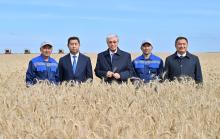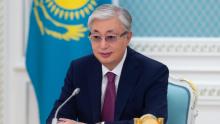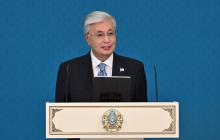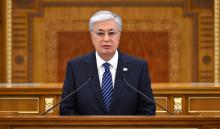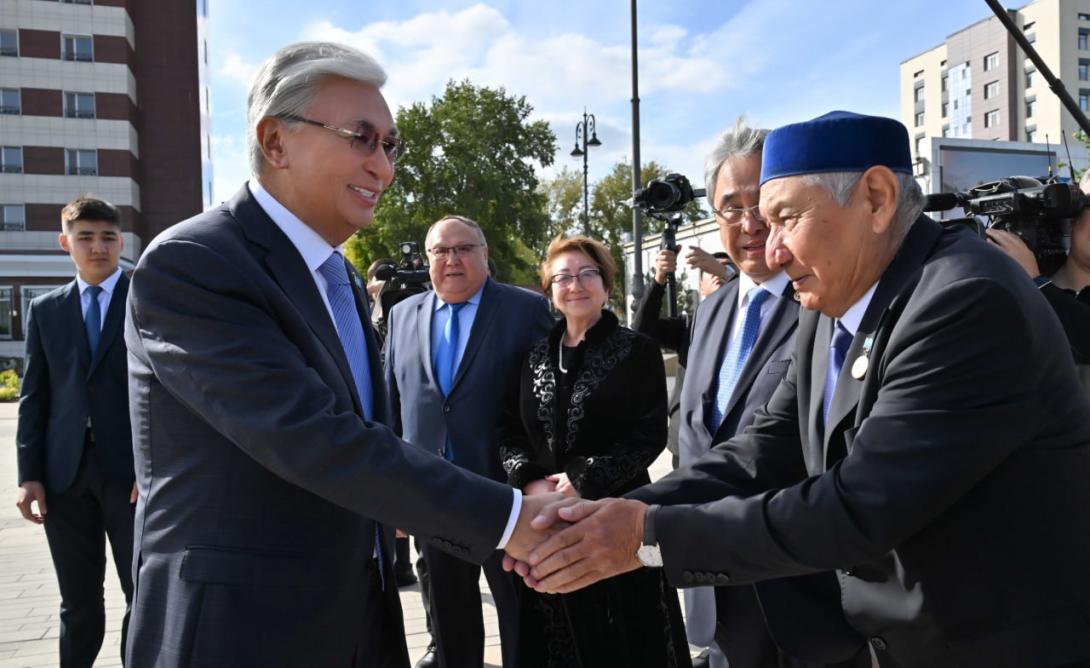
President Kassym-Jomart Tokayev during a working visit to the Akmola Region outlined the key areas for development of the agricultural sector and reviewed the Kokshetau Master Plan until 2050. The Head of State emphasised the digitalisation of agriculture, self-sufficiency in seeds, and coordination between ministries regarding the export of products.
In the field of seed production, Tokayev set the task of increasing self-sufficiency of the Kazakhstani market with its own seeds. He instructed the Ministry of Agriculture to adopt similar support measures in seed production based on the model of subsidising fertilisers. This should reduce dependence on imports.
The President underscored the importance of diversifying sown areas with a focus on profitable, high-margin crops. In the Akmola Region, the area under high-yield oilseed crops has increased by 2.5 times, reaching 495 thousand hectares.
The Head of State devoted a significant part of his speech to the digitalisation of agriculture.
"We will be able to ensure transparency and efficiency in all sectors of the economy only with the help of full digitalisation. The introduction of digital technologies in agriculture should be accelerated," he stressed.
The President instructed the use of digital approaches for full tracking of processes in crop production and livestock farming, establishing cooperation with the IT business. Digitalisation will make the sector more predictable and attractive for investment.
In the context of developing livestock farming, Kassym-Jomart Tokayev announced the development of a special programme, which will be completed by the end of the year. This document will allow for obtaining concessional funds for a long term for the sector's development.
The President touched upon issues of export potential, noting that for the first time a batch of grain amounting to 15 thousand tonnes was sent to Vietnam.
"12 million tonnes of grain export potential is a decent indicator," he stressed.
Kassym-Jomart Tokayev emphasised the importance of a rational approach in developing the agro-industrial complex and the need for effective coordination between agencies.
"The Ministry of Agriculture is responsible for production and sector development. How this product will be marketed, including abroad, is the responsibility of the Ministry of Trade," the President stated.
He set the task for the Government to constantly address this issue, stressing that the work is being done not for the sake of a report, but in substance.
In addition to agricultural matters, the President was presented with the Kokshetau Master Plan for development until 2050. As part of the large-scale project, the construction of a thermal power plant, a multidisciplinary regional hospital, the Civil Protection Academy and a multifunctional sports complex is underway.
An industrial zone is being created with plans to build 60 industrial enterprises. The territory of the regional centre will expand by 7 thousand hectares, including a modern business centre on the shore of Lake Kopa with residential complexes, business centres and public spaces. The city's population is forecast to grow to 500 thousand people, with plans to deliver about 10 million square metres of housing.
Separately, a report was given on the successful launch of a five-year renovation programme managed by the social-entrepreneurial corporation (SEC) "Kokshe". The project's goal is to relocate people from dilapidated houses to modern, energy-efficient apartments and comprehensively upgrade utility networks, courtyards and public spaces.
To date, 13 dilapidated houses have been demolished and 6 apartment buildings built for 365 families. By 2029, it is planned to demolish 175 dilapidated structures and build 35 modern buildings with 3,500 apartments to relocate approximately 11 thousand people.
In conclusion, the Head of State emphasised the principle of targeted support, noting that where there is the possibility of full self-sufficiency, this should be strived for. He also stressed that social assistance from the state should be received precisely by those people who are in dire need of it.