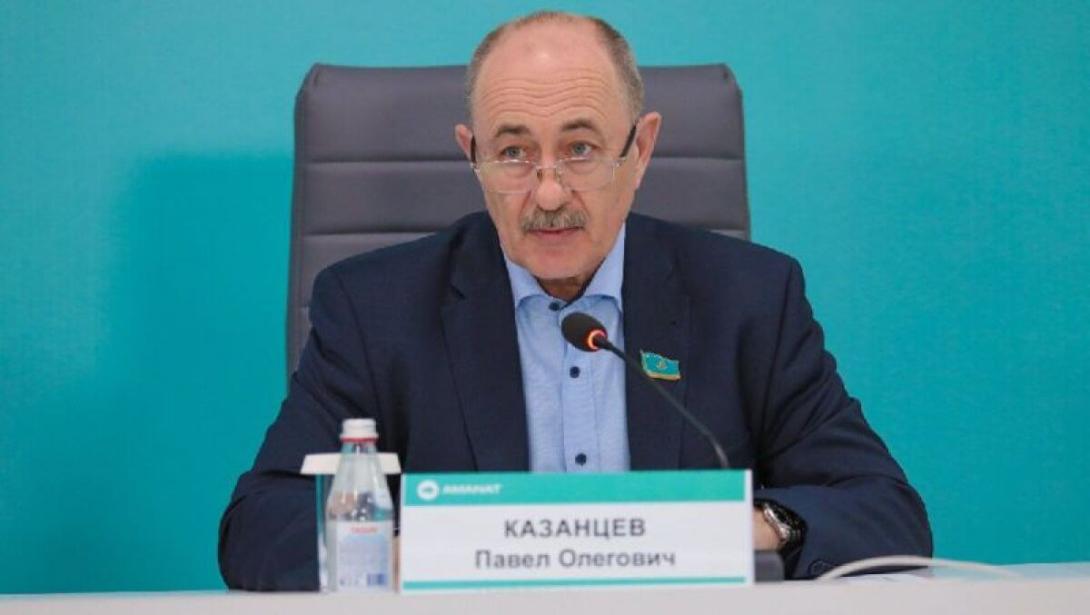
Mazhilis deputy Pavel Kazantsev raised the issue of potential risks to Astana's water supply during a plenary session on 11 May.
According to Bes.media, he reminded that the Astana reservoir, built in 1969 and designed for a population of 500,000 people, remains the only source of drinking water for the city.
The deputy noted that due to rapid population growth and active housing construction, the problem is worsening, as there are no reserve sources in the capital.
In turn, Vice Minister of Industry and Construction Iran Sharkhan reported that two years ago Astana did indeed experience interruptions in water supply, but since the end of 2023 the situation has stabilised.
According to him, Filter Pumping Station No. 3 was put into operation, and now the total capacity of all three operating stations has reached 410,000 cubic metres of water per day, with actual consumption at around 350,000 cubic metres.
"Given the current development, we no longer have a water deficit in the capital", Sharkhan stated.
The Vice Minister said that for a long-term solution to the water supply issue, the department is working on three major infrastructure projects:
- Construction of Pumping and Filtration Station No. 4 and a water pipeline from the Kanysh Satpayev Canal. The project is expected to provide an additional 200,000 cubic metres of water per day. The design and estimate documentation is under development.
- Construction of a water pipeline from the Nura groundwater field, which will add another 38,000 cubic metres per day. The project documentation is ready and is currently undergoing state expert review. The estimated cost of the project is 56 billion tenge.
- Construction of a technical water pipeline from the Telman pumping station. The estimated cost is 17.6 billion tenge. For 2025, 3.2 billion tenge has already been allocated from the local budget.
As Sharkhan noted, the implementation of these projects should ensure a sustainable water supply for the capital in the long term, despite population growth and urban development.
It should be recalled that the editorial board of FBRK previously wrote about the water quality in the Astana reservoir, the main source of water supply for the capital. Our editorial team found some discrepancies between the assessments of the Ministry of Ecology, the Ministry of Water Resources, and the Sanitary and Epidemiological Control Committee. While one agency classifies the water as fourth quality class, requiring deep water treatment methods, others assert full compliance with sanitary standards. Read the details at the link.