In recent years, Kazakhstan has increasingly recorded leaks of personal, corporate and even state information. For instance, to purchase a database of private data these days, you don't even have to search for it: the seller will find you themselves.
Since unauthorised access to personal data is becoming more and more common, the editorial team of FBRK decided to delve deeper into the key aspects of this problem.
As Forbes.kz writes, in 2018-2020 alone, Kazakhstan recorded the leak of 11 million records of personal data and payment information.
As is known, stolen or leaked personal data can be used to steal money or carry out fraud.
Some companies or criminal groups purchase databases with contact information to send out adverts, spam or other unwanted messages.
Others buy such data to gain competitive advantages, using information about clients, partners or market trends.
Sometimes data is purchased to compile detailed profiles of people, which can then be used in marketing or even political campaigning.
Incidentally, our editorial team recently received an advertising message offering to purchase a database of contacts for legal entities in Kazakhstan.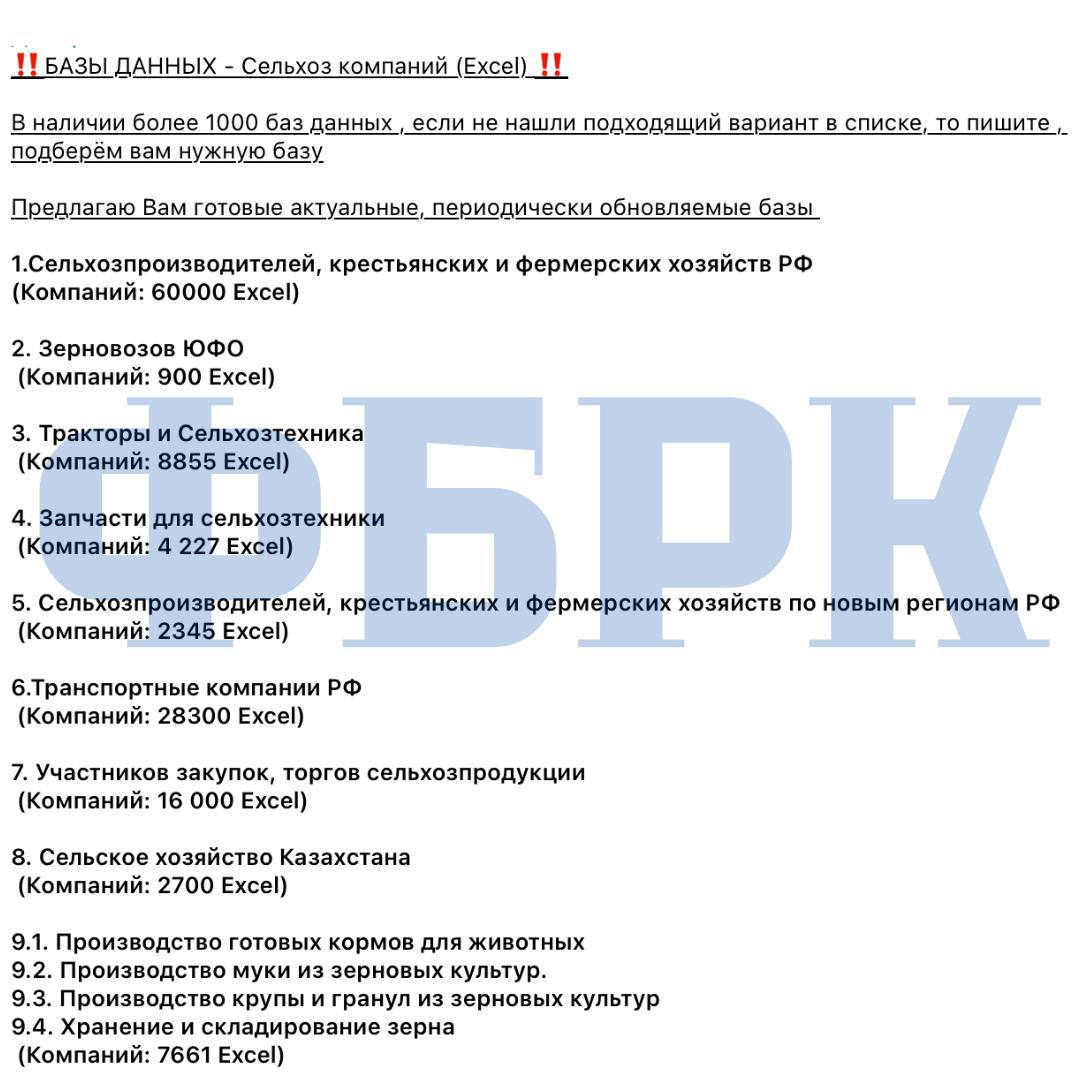
It is important to note here that a database can be either legal or illegal. If the database contains, say, contact information for legal entities, then such data is not considered personal, and its purchase is usually permitted.
However, if the database includes personal information about employees (for example, their names, phone numbers, email addresses, home addresses), then such information falls under the law on the protection of personal data and cannot be distributed without the consent of the owners.
Notably, the email address from which the commercial offer came - [email protected] - apparently belongs to the financial company Fin24.kz. 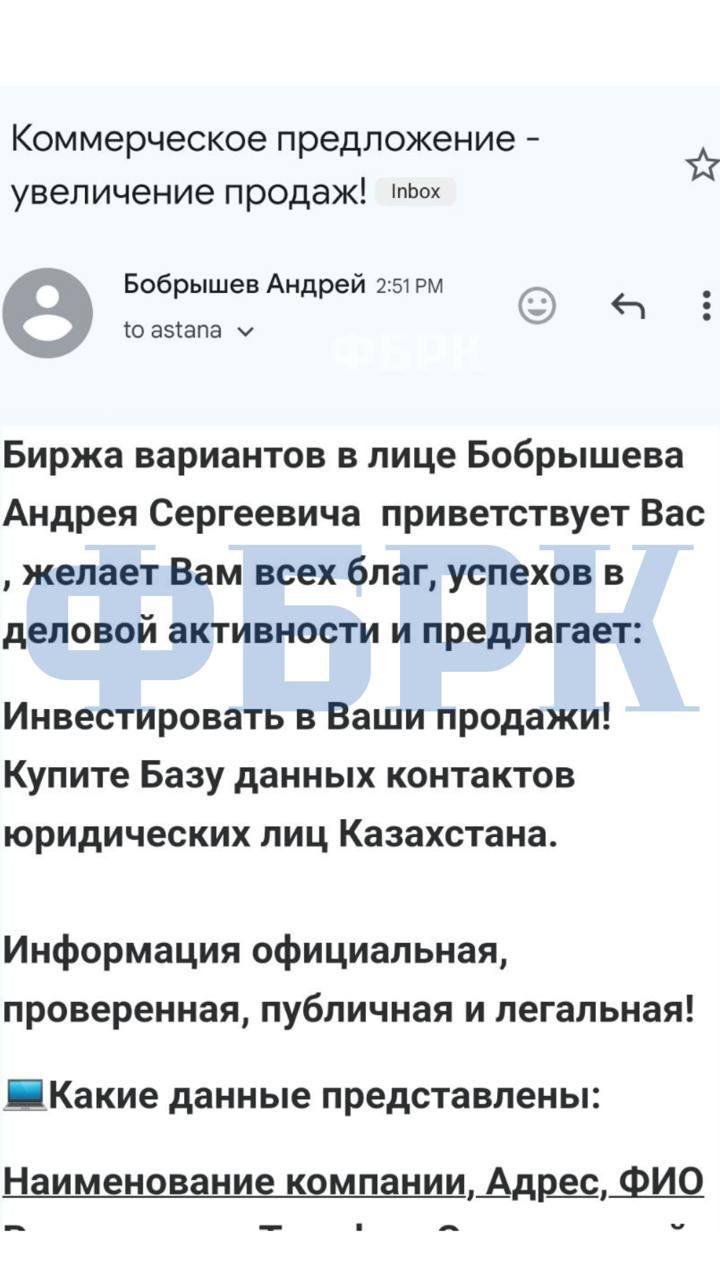
This raises the logical question of where and how the information, which they are now trying to sell, was collected.
There are cases where a data leak occurs due to sheer carelessness.
This is likely exactly what happened recently at a school in the East Kazakhstan Region, which published the personal data of the institution's employees in a government procurement notice.
Another interesting commercial offer, received by our editorial team not long ago, contained databases of agricultural companies in Kazakhstan and Russia.
The seller claimed the data was collected from reliable and open sources.
However, the openness of the sources does not guarantee the legality of processing this data, especially if such data concerns individuals.
It is clear that today, databases are becoming not just a commodity, but an accessible and sought-after tool that can be easily purchased.
The question is, can we continue to ignore the need for stringent measures to protect information against this backdrop, or do we already live in conditions where privacy has become an unattainable illusion?
Let us remind you that in November of this year, the Ministry of Internal Affairs formed a new specialised department for combating cybercrime.
It is reported that the department will focus on identifying and uncovering cyber threats, as well as developing strategic steps to combat them.